Jazz Standards: The Evolution of the Genre's Essential Repertoire
In the world of music, jazz standards are the foundational compositions that form the core repertoire for musicians and listeners alike. These pieces are widely known, frequently performed, and extensively recorded, serving as a common language that allows jazz artists to collaborate across different eras and styles. While there is no single, definitive list of standards, they are generally identified through their presence in fake books—collections of lead sheets containing the essential melody and harmony of popular tunes—and other jazz reference works.
Interestingly, not all standards were written by jazz musicians. A significant portion originates from the Great American Songbook, which includes popular songs from Tin Pan Alley, Broadway shows, and Hollywood musicals. In Europe, the definition expands to include traditional folk songs or music from minority ethnic groups, such as Romani music, provided they are played with a jazz feel by recognized artists. While there is overlap with pop and blues standards, a song only earns the title of a "jazz standard" once it is widely adopted by the jazz community.
Key Facts
- Most Recorded Jazz Composition: "Caravan" by Duke Ellington and Juan Tizol, with over 500 versions.
- Historical Leaders: W.C. Handy's "St. Louis Blues" was the most recorded standard for over 20 years starting in the 1930s, followed by "Stardust" and "Body and Soul."
- Diverse Origins: Standards emerge from ragtime, blues, Broadway, and international styles like Brazilian bossa nova.
- Evolution of Format: The repertoire shifted from dance-oriented Tin Pan Alley hits to sophisticated bebop harmonies and experimental fusion.
The Early Era: Before 1920
At the turn of the 20th century, jazz was primarily music for dancing. This functional purpose heavily influenced the early repertoire. Groups like King Oliver's Creole Jazz Band and the New Orleans Rhythm Kings relied on Tin Pan Alley popular songs. During this time, record company executives often dictated which songs artists recorded, accelerating the "standard" status of certain tracks.
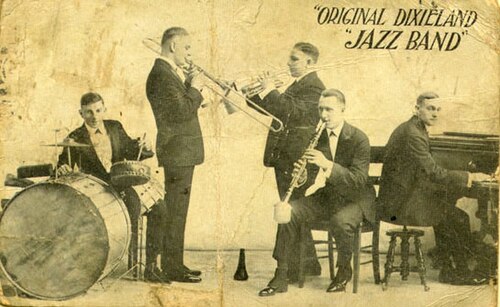
The first jazz recordings appeared in 1916 with "That Funny Jas Band from Dixieland." By 1917, the Original Dixieland Jass Band recorded "Indiana" and "Darktown Strutters' Ball." This early style, rooted in New Orleans traditions such as brass band music, spirituals, ragtime, and the blues, is now often called Dixieland or New Orleans jazz.
Key early standards include ragtime pieces like "Twelfth Street Rag" and "Tiger Rag," as well as blues classics such as "St. James Infirmary" and W.C. Handy's "St. Louis Blues."
The Jazz Age and the 1920s
The 1920s marked the "Jazz Age," where the genre became a dominant force in American popular music, despite pushback from older generations who viewed it as immoral. This era saw the rise of large orchestras led by Paul Whiteman, Fletcher Henderson, and Duke Ellington. While New York eventually became the primary hub, Chicago was a critical center for recording in the late 1910s and early 1920s.
During this decade, pop hits like "Sweet Georgia Brown" and "Bye Bye Blackbird" were staples. Louis Armstrong was one of the first artists granted the freedom to choose his own material, helping to popularize many early standards. This period also saw the emergence of enduring compositions by jazz artists, such as Fats Waller's "Honeysuckle Rose," and the massive success of Hoagy Carmichael's "Stardust." Broadway composers like George Gershwin and Cole Porter also began contributing works that would later become standards, though musicians didn't fully embrace their harmonic complexity until the following decade.
The Swing Era and the 1930s
The 1930s were defined by swing jazz, a high-energy style led by figures like Benny Goodman, Count Basie, and Duke Ellington. Broadway became a primary source of standards during this time, producing timeless pieces such as "Summertime" (1935) and "All the Things You Are" (1939). Johnny Green's "Body and Soul" became a monumental hit following a 1939 recording by Coleman Hawkins.
Duke Ellington's contributions during this era were pivotal, with compositions like "Sophisticated Lady" and "Caravan" cementing their place in the jazz canon.
Bebop and the 1940s
By the mid-1940s, the big band era declined due to the pressures of World War II, leading to a preference for smaller ensembles. This shift gave rise to bebop, a sophisticated style characterized by fast tempos, virtuoso musicianship, and complex harmonies. Led by Charlie Parker, Dizzy Gillespie, and Thelonious Monk, bebop musicians often used 1930s Broadway standards as a foundation for their improvisations.
Bebop also produced its own standards, including Monk's "'Round Midnight"—one of the most recorded pieces written by a jazz musician—and Gillespie's "A Night in Tunisia." Simultaneously, Louis Jordan helped transition some swing elements into rhythm and blues, the precursor to rock and roll.
Modern Evolution: 1950s to the Fusion Era
The late 1950s introduced modal jazz, which moved away from complex chord progressions toward scales (modes). Miles Davis's Kind of Blue (1959) is the definitive example, with tracks like "Round About Midnight" becoming essential. Other influential modern standards include John Coltrane's "My Favorite Things" and Herbie Hancock's "Watermelon Man."
In Brazil, the late 1950s saw the birth of bossa nova, a blend of samba and jazz. Championed by João Gilberto and Antonio Carlos Jobim, the style exploded in the U.S. via the 1963 album Getz/Gilberto. Standards from this movement include "The Girl from Ipanema" and "Desafinado."
The 1970s brought jazz fusion, blending jazz with rock and classical elements. Artists like Weather Report, Chick Corea, and the Mahavishnu Orchestra achieved significant crossover success. Notable fusion standards include Joe Zawinul's "Birdland" and Herbie Hancock's "Chameleon."
| Era | Primary Style | Key Sources/Influences | Example Standards |
|---|---|---|---|
| Pre-1920 | Dixieland / New Orleans | Ragtime, Blues, Tin Pan Alley | St. Louis Blues, Tiger Rag |
| 1920s | Jazz Age / Early Orchestral | Pop hits, Early Broadway | Stardust, Honeysuckle Rose |
| 1930s | Swing | Broadway, Big Band compositions | Body and Soul, Caravan |
| 1940s | Bebop | Complex harmonies, Small groups | 'Round Midnight, Salt Peanuts |
| 1950s+ | Modal, Bossa Nova, Fusion | Brazilian Samba, Rock, Classical | The Girl from Ipanema, Birdland |
Frequently Asked Questions
What exactly is a jazz standard?
A jazz standard is a musical composition that is widely known, performed, and recorded by jazz musicians. These songs form the common repertoire of the genre and are often found in lead sheet collections known as fake books.
Do all jazz standards have to be written by jazz musicians?
No. Many standards originate from the Great American Songbook, including Broadway show tunes, Hollywood musicals, and Tin Pan Alley popular songs. Some may even be traditional folk or ethnic music adapted with a jazz feel.
Which jazz standard is the most recorded?
Among compositions written by jazz musicians, "Caravan" by Duke Ellington and Juan Tizol is one of the most covered of all time, with more than 500 recorded uses.
How did the role of record companies affect jazz standards?
In the early 20th century, record company executives often dictated which songs artists should record. This power allowed certain songs to be pushed into the public consciousness quickly, accelerating their status as standards.
What is the difference between Dixieland and Bebop standards?
Dixieland standards were generally intended for dancing and rooted in ragtime and blues. Bebop standards, emerging in the 1940s, featured more sophisticated harmonies, faster tempos, and were designed for specialized audiences and virtuoso performance.