Javelin History: From Prehistoric Hunting to Ancient Warfare
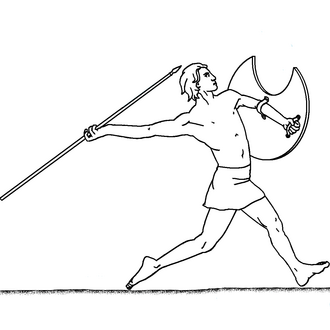
The javelin is a light spear designed primarily to be thrown as a ranged weapon. Unlike bows or crossbows, which rely on mechanical tension to launch a projectile, the javelin is typically thrown by hand. While modern audiences recognize the javelin as a sporting event in athletics, for millennia it was a critical tool for survival and a decisive weapon on the battlefield.
The term originates from Middle English, deriving from the Old French javelin (a diminutive of javelot, meaning spear), which likely has roots in Celtic languages. To enhance distance and power, some cultures utilized assistive devices such as spear-throwers or the amentum (a leather thong used to impart spin and stability).
A soldier whose primary armament consists of one or more javelins is known as a javelineer.
Key Facts
- Ancient Origins: Archaeological evidence suggests javelin use as far back as 400,000 years ago in Schöningen, Germany.
- Roman Innovation: The pilum was a heavy javelin designed to penetrate shields and disable enemy formations.
- Tactical Versatility: Used by diverse cultures from the Numidian light cavalry to the Zulu warriors.
- Mythological Status: Featured prominently in Norse mythology, most notably as Odin's spear, Gungnir.
- Modern Use: Transitioned from a weapon of war to a standardized Olympic sporting event.
Prehistoric Origins
The use of throwing sticks and javelins dates back to the Lower Paleolithic period. In Schöningen, Germany, seven spruce wood spears measuring between 1.83 and 2.25 meters were discovered. Dating to approximately 400,000 years ago, these weapons featured a front-heavy design, indicating they were intended for throwing. Further evidence was found in Boxgrove, England, where a 500,000-year-old fossilized horse shoulder blade shows a projectile wound likely caused by a javelin.
The Classical Age
Ancient Egypt
In Ancient Egypt, the javelin was a lightweight offensive weapon. It typically featured a long thin shaft with a leaf-shaped, spear-like, or four-sided head. A unique feature of the Egyptian javelin was a strap or tasseled head at the lower end, which allowed the thrower to recover the weapon after it was cast. These were used by light infantry alongside shields and sidearms like clubs or curved swords, and were also carried in quivers on war-chariots.
Ancient Greece
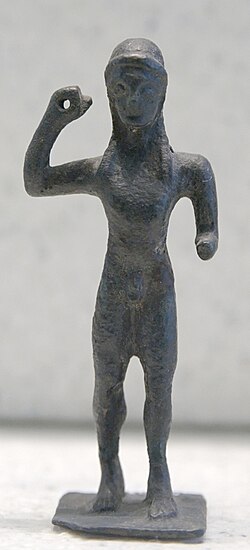
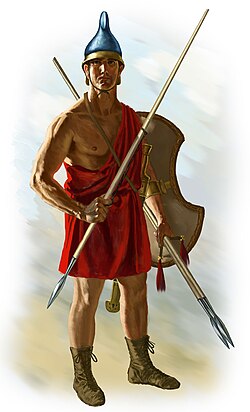
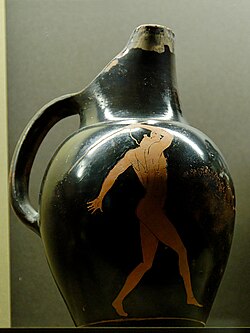
Greek warfare saw the use of javelins by peltasts (light infantry), as well as the thureophoroi and thorakitai, who combined javelins with thrusting spears and short swords. Beyond the battlefield, javelins were used for hunting large game and were a staple of the Ancient Olympics, where victory was determined by the farthest throw that landed tip-first.
Ancient Rome
The Roman military evolved its javelin technology significantly. Following a defeat by the Gauls in 387 BC, Rome moved away from the phalanx to a more flexible formation. The hastati and principes were equipped with the pilum, a heavy javelin roughly two meters long with an iron shank and pyramidal head. Weighing between 0.9 and 2.3 kg, the pilum was designed to penetrate enemy shields.
Additionally, the velites (skirmishers) used the verutum, a shorter, cheaper javelin. These light troops were particularly effective against war elephants, as seen at the Battle of Zama in 202 BC, where they disrupted elephant charges without presenting a solid wall for the animals to trample.
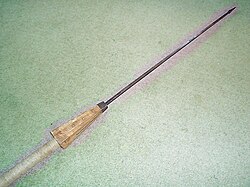
In the Late Empire, the Romans introduced the plumbata. This was a shorter, arrow-like javelin fletched with leather vanes for stability and weighted with lead to increase its range and accuracy, though it lacked the armor-piercing power of the earlier pilum.
Regional Tactics and Variations
Gaul and Iberia
Gallic cavalry utilized javelins in a manner similar to the "Parthian shot," turning in their saddles to throw backward while retreating. In Iberia, the Cantabri developed the Cantabrian circle, a tactic where horsemen rode in circles, continuously hurling javelins at slow-moving heavy infantry to disrupt their formations.
Numidia and Africa
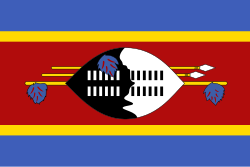
The Numidian cavalry of northwest Africa were renowned as expert javelin throwers and swift skirmishers, serving as critical mercenaries during the Second Punic War. In many African kingdoms, warfare often consisted of ritualized stand-off encounters involving javelin volleys. This legacy persists in the flag of Eswatini, which depicts a shield and two javelins symbolizing national protection.
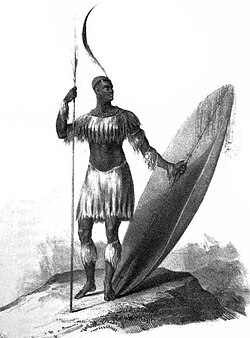
The Zulu Assegai
Zulu warriors utilized the assegai, a long throwing javelin. Under the leadership of Shaka Zulu, the military was reformed to prioritize the iklwa (a short stabbing spear) for close combat, while the assegai was retained for the initial missile assault to soften the enemy.
The Middle Ages
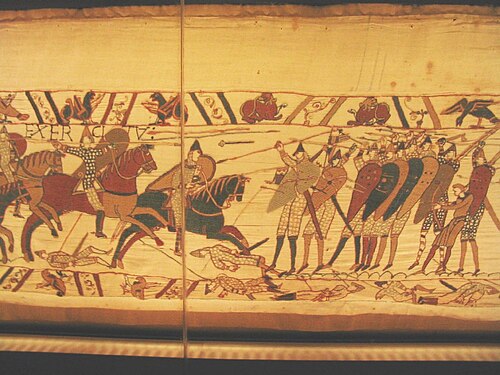
In Northern Europe, the Norse used the frakka for hunting and war, though they often preferred spears that could both throw and thrust. The Anglo-Saxons used the franca, including the angon—a barbed javelin designed to stick in shields or flesh, making it nearly impossible to remove and disrupting the enemy's shield wall.
In Iberia, the Almogavars used heavy javelins called azcona, while Arabic Jinetes (light horsemen) used javelins for rapid skirmishing during the Reconquista. In Wales, javelins were used to harass heavily armored English troops from the cover of mountains and woods.
Summary of Historical Javelins
| Weapon Name | Culture | Primary Characteristic | Main Use |
|---|---|---|---|
| Pilum | Roman Republic | Heavy iron shank | Shield penetration |
| Plumbata | Late Roman Empire | Lead-weighted, fletched | Long-range accuracy |
| Angon | Anglo-Saxon | Barbed head | Disrupting shield walls |
| Assegai | Zulu | Long throwing shaft | Initial missile assault |
| Verutum | Roman (Velites) | Short, soft iron head | Light skirmishing |
Mythology
The javelin holds a sacred place in Norse mythology. Odin, the chief god, wielded Gungnir, a spear created by the Sons of Ivaldi that never missed its mark. In another myth, the god Loki orchestrated the death of Baldr by tricking the blind god Hod into throwing a javelin made of mistletoe, the only substance capable of harming him. In Lusitanian mythology, Runesocesius is specifically identified as the "god of the javelin."
Frequently Asked Questions
What is the difference between a spear and a javelin?
While both are pole weapons, a spear is generally designed for thrusting or versatile use, whereas a javelin is specifically balanced and weighted for throwing over a distance.
How did the Roman pilum work?
The pilum was a heavy javelin designed to bend upon impact. This prevented the enemy from throwing it back and often pinned the javelin through a shield, forcing the opponent to discard their protection.
What was the Cantabrian circle?
The Cantabrian circle was a cavalry tactic used by Hispanic tribes where riders moved in a continuous loop, hurling javelins at infantry to harass and disrupt them while remaining difficult targets themselves.
What is a plumbata?
A plumbata was a late Roman javelin that resembled a thick arrow. It featured leather vanes for stability and a lead weight to increase its flight distance and accuracy.
How was the javelin used by the Zulu?
The Zulu used the long assegai javelin for the opening phase of a battle to attack from a distance before closing in for melee combat with the short stabbing spear known as the iklwa.