Japanese Invasion of Thailand: The Battles of December 1941
On December 8, 1941, the Imperial Japanese Army (IJA) launched a coordinated invasion of Thailand. The assault began several hours after the Thai government failed to respond to a Japanese ultimatum. While the Thai cabinet debated their response, Prime Minister Phibun was unreachable and remained unaware of the ultimatum until late morning, leaving the nation's defenses to react in real-time to multiple landing points across the coast and borders.
Key Facts
- Date of Invasion: December 8, 1941.
- Primary Japanese Forces: The 15th Army and the 25th Army.
- Thai Resistance: Comprised of the regular army, provincial police, and Yuwachon Thahan (youth soldier cadets).
- Outcome: A ceasefire was ordered by the Thai government on the afternoon of December 8, leading to Japanese occupation.
- Strategic Goal: Securing Thailand to facilitate further invasions of Malaya, Singapore, and Burma.
The 15th Army Objectives
Phra Tabong Province
At dawn, the Imperial Guards Division under Lieutenant-General Takuma Nishimura and the IJA 55th Division under Lieutenant-General Hiroshi Takeuchi crossed the border from Indo-China into Phra Tabong Province. Entering at Tambon Savay Donkeo, the Japanese forces encountered no resistance. They proceeded north-westward toward Aranyaprathet via a nearly completed railway link that eventually opened for traffic on April 11, 1942.
Chumphon
The 1st Infantry Battalion of the 143rd Infantry Regiment landed at Chumphon on the morning of December 8. Although the Japanese established a perimeter, they were pinned down by a determined defense. This resistance was led by the 38th Infantry Battalion, Provincial Police, and the 52nd Yuwachon Thahan Training Unit from Sriyaphai Secondary School. The fighting ended in the afternoon following a ceasefire order. Thai casualties included Captain Thawin Niyomsen, who was posthumously promoted to Lt. Col.
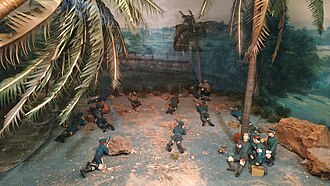
Nakhon Si Thammarat
Nakhon Si Thammarat served as the 6th Army Region headquarters. During the night of December 7, three Japanese troopships—the Zenyo, Miike, and Toho Maru—anchored off the coast, supported by the Shimushu. They landed 1,510 men and 50 trucks at the Tha Phae canal (also known as Pak Phoon Canal), adjacent to Camp Vajiravudh. Having been alerted to landings at Songkhla, Thai forces engaged the invaders until the midday ceasefire.
Prachuap Khiri Khan
At 03:00, the 2nd Infantry Battalion of the 143rd Infantry Regiment, led by Major Kisoyoshi Utsunomiya, landed and occupied the town after overcoming police resistance. A siege then began at the nearby airfield, defended by the Royal Thai Air Force's Fifth Wing and provincial police. The airfield held out until noon the following day. Thai estimates place Japanese losses at 217 dead and over 300 wounded, while the Japanese estimated 115 dead. Thai losses were 37 dead and 27 wounded.
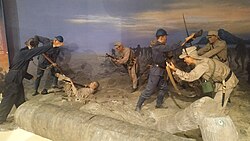
Samut Prakan and Bangkok
The 3rd Battalion of the 4th Guards Infantry Regiment landed at Samut Prakan with the objective of capturing Bangkok. After a tense standoff with a small police detachment, the Japanese agreed not to enter the capital until formal negotiations were finished. Meanwhile, Japanese aircraft bombed Bangkok, including a strike on the main post office that failed to detonate. Following the arrival of Prime Minister Phibun, the Thai government decided to relent to Japanese demands. The IJA subsequently occupied Chinatown (Sampeng) and established a command post in the Chamber of Commerce Building.
Don Muang and Surat Thani
The Japanese air force attacked Don Muang Royal Thai Air Force Base, destroying six Thai fighter planes. Simultaneously, a Japanese company landed at Ban Don and marched into Surat Thani. They faced opposition from civilian volunteers and the Royal Thai Police in a battle fought during a rainstorm, ending only when the Thais were ordered to lay down their arms. Thai losses included 17 or 18 dead.
The 25th Army Objectives
Pattani
Pattani was a critical objective due to its proximity to the Malayan border. Supported by eight destroyers, including the Shirakumo and Shinonome, the 42nd Infantry Regiment landed under Major Shigeharu Asaeda. Despite Asaeda's prior intelligence work in the region, the landing was hampered by a muddy sea bed. The invaders were opposed by the 42nd Infantry Battalion, Provincial Police, and the 66th Yuwachon Thahan unit until the midday ceasefire. Thai casualties included battalion commander Khun Inkhayutboriharn, 23 other ranks, 5 police, 4 youth soldiers, and 9 civilians.
Songkhla (Singora)
The port of Songkhla was a primary target for General Yamashita's 25th Army. Three regiments of the 5th Division, led by Colonel Tsuji under Lieutenant General Matsui Takuro, landed from 10 transports supported by the destroyers Asagiri, Amagiri, Sagiri, and Yūgiri. Thai forces from the 41st Infantry and 13th Artillery battalions at Khao Khor Hong were bypassed by the main Japanese advance. Further clashes occurred at Hat Yai, with Thai losses totaling 15 dead and between 30 and 55 wounded before the noon armistice.
Strategic Aftermath
Concurrent with the Thai landings, the 25th Army also landed at Kota Bharu in Malaya. Once Thailand was secured, the 143rd Regiment moved north to replace the Imperial Guards. The Imperial Guards then shifted south to assist the 25th Army in the invasion of Malaya and Singapore, while the 15th Army pivoted to attack Burma.
| Location | Japanese Unit | Thai Resistance | Outcome |
|---|---|---|---|
| Phra Tabong | Imperial Guards / 55th Div | None | Unopposed entry |
| Chumphon | 143rd Inf Reg (1st Bn) | 38th Inf Bn, Police, Yuwachon Thahan | Ceasefire ordered |
| Nakhon Si Thammarat | 143rd Inf Reg (3rd Bn) | Camp Vajiravudh forces | Ceasefire ordered |
| Prachuap Khiri Khan | 143rd Inf Reg (2nd Bn) | RTAF 5th Wing, Police | Airfield held until Dec 9 |
| Pattani | 5th Div (42nd Inf Reg) | 42nd Inf Bn, Police, Yuwachon Thahan | Ceasefire ordered |
| Songkhla | 5th Division | 41st Inf Bn, 13th Art Bn | Ceasefire ordered |
Frequently Asked Questions
Who were the Yuwachon Thahan?
The Yuwachon Thahan were youth soldier cadets, essentially student trainees from secondary schools, who fought alongside the regular Thai army and police during the Japanese invasion.
Why did the fighting stop so quickly?
Most engagements ended on the afternoon of December 8 or the following morning because the Thai government, led by Prime Minister Phibun, issued official ceasefire orders to all units.
What was the strategic importance of the Pattani landing?
Pattani was a key objective for the Japanese 25th Army because of its close proximity to the border of Malaya, which Japan intended to invade.
How did the Japanese enter Bangkok?
After a landing at Samut Prakan and an aerial bombing of the city, the Japanese entered Bangkok following formal negotiations and the Thai government's decision to relent to their demands.
What happened to the Imperial Guards after the invasion?
After the 143rd Regiment replaced them in the north, the Imperial Guards moved south to join the 25th Army for the campaigns in Malaya and Singapore.