Japanese war crimesUnit 731Nanjing MassacreBataan Death MarchImperial Japanese Army

Japanese War Crimes: A Historical Record of Atrocities and Reparations

Japanese War Crimes: A Historical Record of Atrocities and Reparations Between 1927 and 1945, the expansionist policies of the Empire of Japan led to a series of widespread atrocities acr...

Japanese War Crimes: A Historical Record of Atrocities and Reparations

Between 1927 and 1945, the expansionist policies of the Empire of Japan led to a series of widespread atrocities across East Asia, Southeast Asia, and the Pacific. Driven by militarism, imperialism, and ultranationalism, the Imperial Japanese Army and Navy engaged in systematic violence that resulted in an estimated 19 million to 30 million deaths. This period remains one of the most scrutinized eras of modern history, marked by mass killings, human experimentation, and profound human suffering.
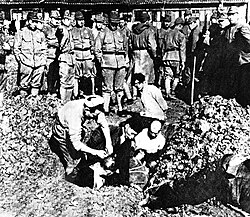
Japanese troops burying living Chinese civilians
: Japanese troops burying living Chinese civilians

Key Facts

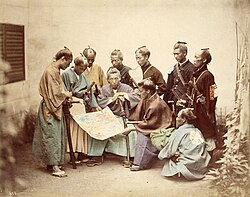
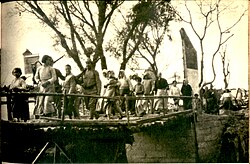
Samurai warriors of the Chosyu clan, during the Boshin War period of the 1860s
  • Estimated Deaths: Approximately 19,000,000 to 30,000,000 people.
  • Primary Perpetrators: The Imperial Japanese Army and Imperial Japanese Navy.
  • Major Atrocities: The Nanjing Massacre, Bataan Death March, and the activities of Unit 731.
  • Legal Recourse: Post-war accountability was sought through the Tokyo Trials and various military commissions.
  • Reparations: Significant compensation was later paid to countries including Burma, the Philippines, and Indonesia.

Mass Killings and Systematic Atrocities
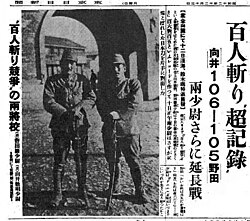
Two Japanese commanders, Toshiaki Mukai and Tsuyoshi Noda competing to see who could kill (with a sword) one hundred people first. The headline reads, "'Incredible Record' (in the Contest to Decapitate 100 People)—Mukai 106 – 105 Noda—Both 2nd Lieutenants Go Into Extra Innings".

The era was defined by large-scale massacres targeting both military personnel and civilians. One of the most notorious events was the Nanjing Massacre, where widespread killings and destruction occurred. Other documented massacres include the Alexandra Hospital massacre, the Laha massacre, and the Manila massacre during the Battle of Manila in 1945.
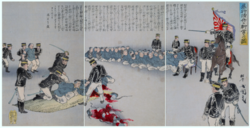
Japanese illustration depicting the beheading of Chinese captives during the Sino-Japanese War of 1894–1895
: Japanese illustration depicting the beheading of Chinese captives during the Sino-Japanese War of 1894–1895

In the Philippines, the Bataan Death March stands as a symbol of the brutal treatment of prisoners of war (POWs). Similarly, the Sandakan Death Marches and the Palawan massacre highlighted the extreme conditions faced by Allied captives. Violence was not limited to combat zones; it extended to the systematic use of forced labor, known as Romusha, and widespread instances of rape and looting.
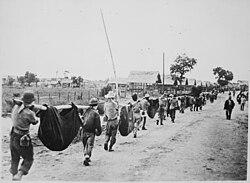
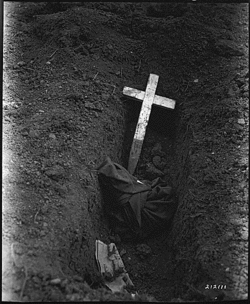
A burial detail of American and Filipino POWs killed during the Bataan Death March, 1942
: A burial detail of American and Filipino POWs killed during the Bataan Death March, 1942

Human Experimentation and Biological Warfare

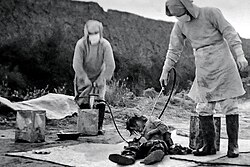
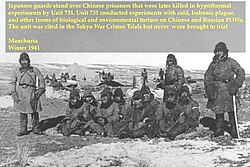
Perhaps among the most chilling aspects of this period was the work of Unit 731. This specialized unit conducted lethal human experimentation and developed biological warfare capabilities. Under the command of Shirō Ishii, prisoners were subjected to horrific tests, including hypothermia experiments and vivisection.
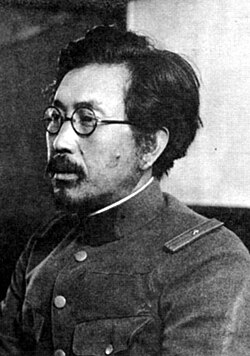
Shirō Ishii, commander of Unit 731
: Shirō Ishii, commander of Unit 731

A hypothermia experiment, using Chinese prisoners as subjects under surveillance by Japanese soldiers in 731
: A hypothermia experiment, using Chinese prisoners as subjects under surveillance by Japanese soldiers in 731

Manchukuo officials participate in a "plague prevention" operation, which is a bacteriological test directed by Japan's 'Unit 731', in November of 1940 at Nong'an County, northeast China's Jilin Province.
: Manchukuo officials participate in a "plague prevention" operation, which is a bacteriological test directed by Japan's 'Unit 731', in November of 1940 at Nong'an County, northeast China's Jilin Province.

Treatment of Prisoners and Allied Nationals
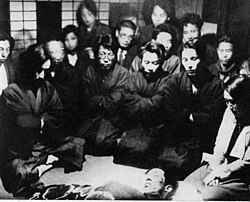
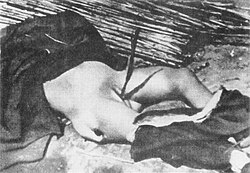
Takiji Kobayashi's corpse surrounded by his friends at the Tsukiji Police Station. It is believed that he was tortured to death during interrogation.

Allied prisoners of war and civilians faced extreme hardship. This included the execution of captured airmen and seamen, the use of Allied nationals as human shields, and instances of cannibalism. The treatment of POWs in various theaters, such as the Dutch East Indies and New Guinea, was characterized by severe physical abuse and neglect.
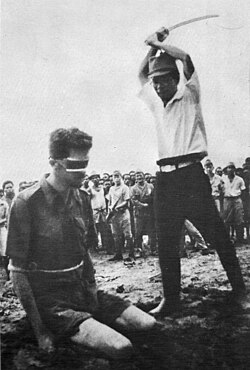
An Australian prisoner of war, Sergeant Leonard Siffleet, captured in New Guinea, about to be beheaded with a guntō by a Japanese officer, 1943.
: An Australian prisoner of war, Sergeant Leonard Siffleet, captured in New Guinea, about to be beheaded with a guntō by a Japanese officer, 1943.

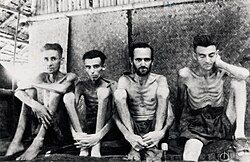
Australian and Dutch prisoners of war at Tarsau in Thailand, 1943
: Australian and Dutch prisoners of war at Tarsau in Thailand, 1943

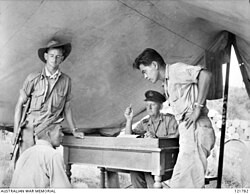
Sergeant Hosotani Naoji of the Kempeitai unit at Sandakan (North Borneo), is interrogated on 26 October 1945, by Squadron Leader F.G. Birchall of the Royal Australian Air Force, and Sergeant Mamo (a Nisei interpreter). Naoji confessed to shooting two Australian POWs and five ethnic Chinese civilians.
: Sergeant Hosotani Naoji of the Kempeitai unit at Sandakan (North Borneo), is interrogated on 26 October 1945, by Squadron Leader F.G. Birchall of the Royal Australian Air Force, and Sergeant Mamo (a Nisei interpreter). Naoji confessed to shooting two Australian POWs and five ethnic Chinese civilians.

Post-War Accountability and Reparations
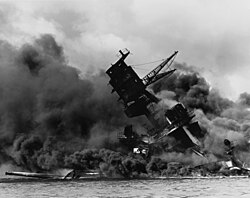
The USS Arizona burning during the Japanese attack on Pearl Harbor

Following the surrender of Japan, the Tokyo Trials were established to prosecute major war criminals. These proceedings, along with other military commissions, sought to establish legal responsibility for the atrocities committed. A notable precedent was the "Yamashita Standard," which addressed the responsibility of commanders for the actions of their subordinates.
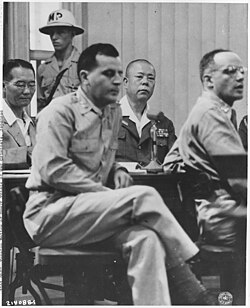
General Tomoyuki Yamashita (2nd right) on trial in 1945 by a U.S. military commission for the Manila massacre and other violations which were committed in Singapore. He was sentenced to death. The case set a precedent (the "Yamashita Standard") on the responsibility of commanders for war crimes.
: General Tomoyuki Yamashita (2nd right) on trial in 1945 by a U.S. military commission for the Manila massacre and other violations which were committed in Singapore. He was sentenced to death. The case set a precedent (the "Yamashita Standard") on the responsibility of commanders for war crimes.

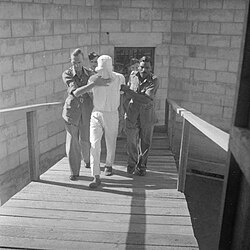
In Singapore, a hooded Lieutenant Nakamura is led to the scaffold after being convicted of beheading an Indian soldier on the Palau Islands, March 1946.
: In Singapore, a hooded Lieutenant Nakamura is led to the scaffold after being convicted of beheading an Indian soldier on the Palau Islands, March 1946.

In the decades following the war, compensation was negotiated through various treaties. The San Francisco Treaty and subsequent bilateral agreements facilitated payments to occupied nations. The following table summarizes the compensation provided to specific countries under various treaties.

Summary of Japanese Compensation to Occupied Countries
Country Amount in Yen Amount in US$ 2025 US Dollars (Est.) Treaty Date
Burma 72,000,000,000 200,000,000 $2.4 billion 5 November 1955
Philippines 198,000,000,000 550,000,000 $6.51 billion 9 May 1956
Indonesia 80,388,000,000 223,080,000 $2.49 billion 20 January 1958
South Vietnam 14,400,000,000 38,000,000 $420 million 13 May 1959

Frequently Asked Questions

Xuzhou, China, 1938. A mass grave filled with bodies of Chinese civilians, murdered by Japanese soldiers.[80]
Photo taken in Xuzhou, showing the body of a Chinese woman who was raped and killed by Japanese soldiers
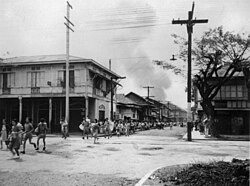
Citizens of Manila run for safety from suburbs burned by Japanese soldiers, 10 February 1945.
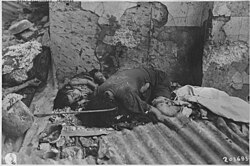
Photo of a Filipino woman and child killed by Japanese forces in Manila
U.S. Army personnel identified the charred remains of the Americans captured at Bataan and Corregidor and burned alive on Palawan, 20 March 1945.
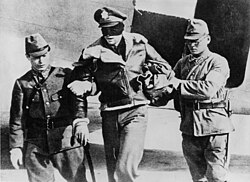
A blindfolded Doolittle Raider taken captive in 1942
Japanese soldiers escorting Chinese forced-labour farm workers, 1937
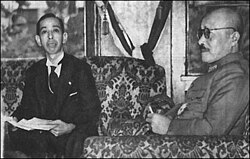
Hideki Tojo (right) with Nobusuke Kishi, the key architect of Manchukuo during 1935–39, known as the "Showa-era monster".

What was Unit 731?

Unit 731 was a covert biological and chemical warfare research and development unit of the Imperial Japanese Army that conducted lethal human experimentation on prisoners during the Second Sino-Japanese War and World War II.

What were the Tokyo Trials?

The Tokyo Trials, also known as the International Military Tribunal for the Far East, were a series of military tribunals held after World War II to prosecute leaders of the Empire of Japan for war crimes and crimes against humanity.

How much was the total value of Japanese overseas assets in 1945?

In 1945, the total value of Japanese overseas assets was approximately ¥379,499,000,000, which is estimated to be equivalent to $452 billion in 2025 US dollars.

What is the Yamashita Standard?

The Yamashita Standard is a legal precedent established during the trial of General Tomoyuki Yamashita, which holds that a military commander can be held responsible for war crimes committed by their troops if they failed to take necessary measures to prevent them.

Which countries received compensation from Japan?

Major compensation was provided to Burma, the Philippines, Indonesia, and South Vietnam through various treaties in the 1950s.

References

  1. "Interestingly, although the United States condemned these practices, notably during the Tokyo Trial, its armed forces used the same technique several times in the context of the war on terror. They then proceeded to deny that simulated drowning was torture, an opinion shared by at least The Wall Street Journal which, on 12 November 2005, commenting on the torture of alleged terrorists of Al-Qaeda, published an editorial denying that the technique had "any proximity to torture".[170] During the presidential elections in the United States in 2008, these interpretations were the subject of controversy, with candidates John McCain and Barack Obama[171] considering the practice as torture, as opposed to other Republican candidates.[172]
  2. Rigg, Bryan Mark (2024). Japan's Holocaust: History of Imperial Japan's Mass Murder and Rape During World War II. Knox Press. pp. 13–14, 23, 54, 190–191, 289. ISBN 9781637586884.
  3. Frank, Richard B. "Counting All The Dead".
  4. Carmichael, Cathie; Maguire, Richard (2015). The Routledge History of Genocide. Routledge. p. 105. ISBN 9780367867065.
  5. Rigg, Bryan Mark (2024). Japan's Holocaust: History of Imperial Japan's Mass Murder and Rape During World War II. Knox Press. pp. 190–191, 276, 312. ISBN 9781637586884.