James Clerk Maxwell: The Architect of Modern Electromagnetism
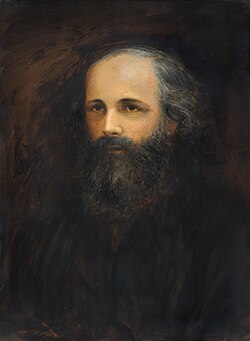
Few scientists have reshaped our understanding of the physical universe as profoundly as James Clerk Maxwell. A Scottish physicist and mathematician, Maxwell provided the theoretical foundation for nearly all modern electronics and communications. By unifying electricity, magnetism, and light into a single set of equations, he paved the way for the discovery of radio waves and the eventual development of Albert Einstein's theory of relativity.
Born in Edinburgh in 1831, Maxwell exhibited a precocious talent for mathematics and a relentless curiosity about the natural world. His career took him from the University of Edinburgh to Cambridge and later to King's College London, where he served as the first Cavendish Professor of Physics from 1871 until his untimely death in 1879.
Key Facts

- Unified Electromagnetism: Formulated the equations that describe how electric and magnetic fields interact.
- Nature of Light: Proved that light is an electromagnetic wave.
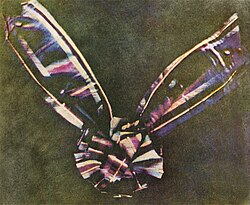
- Color Theory: Created the first durable color photograph in 1861.
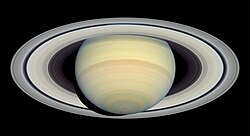
- Astrophysics: Mathematically demonstrated that Saturn's rings consist of small particles.
- Thermodynamics: Developed the Maxwell-Boltzmann distribution to describe gas particle speeds.
Academic Journey and Early Life
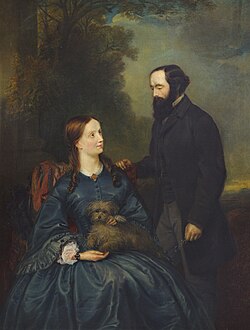
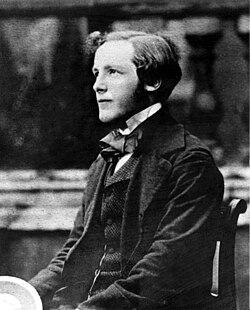
Maxwell's intellectual journey began in Scotland, where he was born on June 13, 1831. He pursued his higher education at the University of Edinburgh before moving to Peterhouse and Trinity College, Cambridge. During his time at Cambridge, he was mentored by William Hopkins and won prestigious awards, including the Smith's Prize in 1854 and the Adams Prize in 1857.
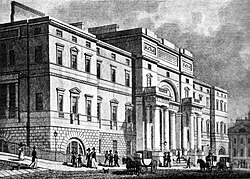
Following his studies, Maxwell held positions at Marischal College in Aberdeen and King's College London. His academic rigor and ability to synthesize complex data allowed him to tackle problems across diverse fields, from the structural rigidity of materials to the behavior of gases.
The Pillars of Maxwell's Scientific Legacy
Electromagnetism and the Unified Field
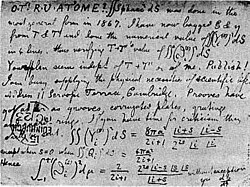
Maxwell's most enduring contribution is the formulation of Maxwell's equations. He introduced the concept of displacement current, which allowed him to show that changing electric fields produce magnetic fields, and vice versa. This discovery led to the groundbreaking conclusion that light is an electromagnetic wave, effectively unifying optics with electricity and magnetism.
![Commemoration of Maxwell's equations at King's College. Two identical IEEE Milestone Plaques are at Maxwell's birthplace in Edinburgh and the family home at Glenlair.[73]](/images/23/4b/234b4b419ce33724714a1d39b8f8d9cd0f6bc6279a54f37f1cfae238530fa138.jpg)
Color Vision and Photography
Beyond electromagnetism, Maxwell was a pioneer in the study of human perception. He investigated how the eye perceives color and developed the theory of three primary colors. In 1861, he demonstrated the first durable color photographic image, a milestone that laid the groundwork for all modern color imaging technology.
Kinetic Theory and Thermodynamics
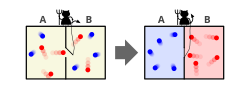
Maxwell revolutionized the study of heat and gases. He developed the Maxwell-Boltzmann distribution, which describes the speeds of molecules in a gas. He also proposed a famous thought experiment known as Maxwell's demon, which challenged the second law of thermodynamics by imagining a creature capable of decreasing entropy by sorting fast and slow molecules.
Astrophysics and Control Theory
Maxwell's curiosity extended to the heavens. He used mathematical analysis to prove that the rings of Saturn could not be a solid sheet or a liquid, but must be composed of numerous small particles. Additionally, his work on "governors" (mechanical devices used to regulate engine speed) made him a precursor to modern control theory and cybernetics.
Summary of Contributions
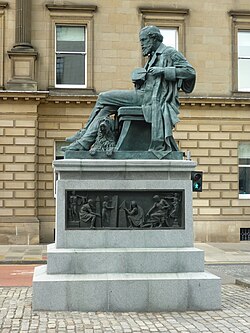
| Field | Key Contribution | Impact |
|---|---|---|
| Electromagnetism | Maxwell's Equations | Unified electricity, magnetism, and light |
| Optics | Three-Color Theory | First durable color photograph |
| Thermodynamics | Maxwell-Boltzmann Distribution | Foundation of statistical mechanics |
| Astronomy | Saturn's Rings Analysis | Proved rings are made of small particles |
| Engineering | Control Theory (Governors) | Early foundations of system identification |
Personal Life and Final Years
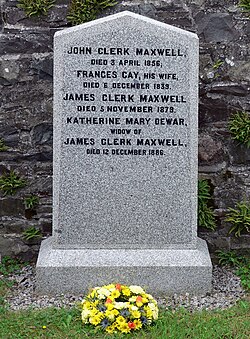
Maxwell married Katherine Dewar in 1858. Despite his immense professional success, he remained a man of modest habits and deep intellectual humility. He passed away on November 5, 1879, at the age of 48 in Cambridge, England. He is buried at Parton Kirk in Dumfries and Galloway.
Frequently Asked Questions
What are Maxwell's equations?
Maxwell's equations are a set of partial differential equations that describe how electric and magnetic fields are generated by charges, currents, and changes of each other. They are the foundation of classical electromagnetism.
How did Maxwell contribute to color photography?
Maxwell developed the theory that any color could be created by mixing three primary colors. He demonstrated this in 1861 by creating the first durable color photograph using red, green, and blue filters.
What is Maxwell's demon?
Maxwell's demon is a thought experiment designed to illustrate a possible violation of the second law of thermodynamics. It involves an imaginary being that sorts molecules by speed to create a temperature difference without performing work.
Why is Maxwell important to Albert Einstein?
Einstein acknowledged that Maxwell's work was the foundation for his own theory of relativity. Maxwell's discovery that the speed of light is a constant derived from electromagnetic properties was a critical stepping stone for Einstein.
What did Maxwell discover about Saturn?
Maxwell proved mathematically that Saturn's rings were not solid or liquid, but were instead composed of a vast number of small, independent particles orbiting the planet.