Jack Teagarden: The Innovative Soul of Jazz Trombone
Weldon Leo "Jack" Teagarden was a transformative figure in American music, blending technical mastery with a deep, soulful connection to the blues. As both a virtuoso trombonist and a compelling vocalist, Teagarden redefined the role of the trombone in jazz, moving away from traditional styles to create a fluid, trumpet-like phrasing that influenced generations of musicians.
From his early days in Texas to his high-profile collaborations with legends like Louis Armstrong, Teagarden's career spanned over four decades of musical evolution, encompassing the eras of Dixieland, Swing, and Big Band.
Key Facts
- Full Name: Weldon Leo Teagarden
- Active Years: 1920–1964
- Primary Instruments: Trombone and Vocals
- Notable Collaborations: Louis Armstrong's All-Stars, Paul Whiteman's Orchestra, and the Ben Pollack band.
- Key Contribution: Pioneered the use of blue notes and a smooth, horizontal melodic phrasing on the trombone.
- Honors: Inducted into the DownBeat Jazz Hall of Fame (1969) and the Big Band and Jazz Hall of Fame (1985).
Early Life and Musical Foundations
Born on August 20, 1905, in Vernon, Texas, Jack Teagarden grew up in a musically rich household. His father, Charles, played the cornet, and his mother, Helen, was a semi-professional pianist who provided accompaniment for silent films. This environment fostered a family of musicians; Jack's siblings—Charlie, Norma, and Clois—all pursued musical careers on the trumpet, piano, and drums, respectively.
Teagarden began his journey on the baritone horn before receiving his first trombone as a Christmas gift at age eight. His first professional experiences occurred in local theaters, assisting his mother with silent film scores. By age 11, he had already joined the Paul Goetze Band, marking the start of a lifelong professional pursuit.
Due to having relatively short arms, Teagarden avoided the traditional "tailgate" style—a method characterized by heavy use of glissandos (sliding between notes). Instead, he developed exceptional embouchure control, allowing him to achieve a phrasing and agility more common to trumpet players.
Professional Ascent and Major Collaborations
Teagarden's professional career began in earnest at age 16 in San Antonio with Cotton Bailey's dance and jazz band. He later joined Peck Kelley's ensemble, where his improvisational skills began to garner widespread attention. By 1928, he had moved to New York City to join the Ben Pollack band, a period during which he recorded over 300 tracks.
In 1929, Teagarden participated in one of the first integrated jazz recording sessions, organized by Eddie Condon, which produced the notable track "Knocking a Jug." His versatility led him to work with a roster of jazz royalty, including Benny Goodman, Bix Beiderbecke, Fats Waller, and Glenn Miller.
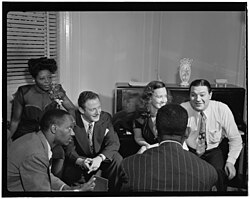
Seeking financial stability during the Great Depression, Teagarden signed an exclusive contract with the Paul Whiteman Orchestra from 1933 to 1938. However, his most iconic partnership began in 1946 when he joined Louis Armstrong's All-Stars. For five years, Teagarden's relaxed, blues-inflected style perfectly complemented Armstrong's energy, most notably on their recording of "Rockin' Chair."
Style, Technique, and Artistic Legacy
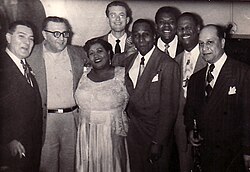
Largely self-taught, Teagarden was an innovator of the pre-bebop era. He integrated blue notes—notes sung or played at a slightly lower pitch than that of the major scale for emotional effect—into his playing, a reflection of his appreciation for Black gospel and blues music.
His technical approach combined smooth, horizontal melodic phrasing with vertical, arpeggiated lines. This balance of technical brilliance and emotional depth earned him high praise from peers and historians. Trombonist Pee Wee Russell once called him "the best trombone player in the world," while historian Gunther Schuller noted his "effortless sovereign technical mastery."
Teagarden's influence was so profound that other musicians adjusted their own styles to avoid direct comparison. Glenn Miller reportedly downplayed his own trombone skills after working with Teagarden, and Tommy Dorsey altered his approach to maintain a distinct identity.
Final Years and Passing
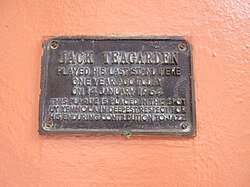
Jack Teagarden remained an active touring musician until the very end of his life. On January 15, 1964, he was found dead in his hotel room in New Orleans, just hours before a scheduled performance. He was 58 years old. His death was attributed to bronchial pneumonia.
| Period | Key Association/Band | Role/Contribution |
|---|---|---|
| 1920s | Cotton Bailey / Peck Kelley | Early professional development in San Antonio |
| 1928–1930s | Ben Pollack Band | Recorded 300+ tracks; early integrated sessions |
| 1933–1938 | Paul Whiteman Orchestra | Exclusive contract for financial security |
| 1946–1951 | Louis Armstrong's All-Stars | High-profile collaborations and vocal performances |
| 1951–1964 | Self-led bands | Continued touring and recording until death |
Frequently Asked Questions
What made Jack Teagarden's trombone style unique?
Teagarden avoided the traditional "tailgate" style of heavy glissandos. Instead, he used exceptional embouchure control to create trumpet-like phrasing, incorporating blue notes and a smooth, fluid melodic approach.
Who were some of Teagarden's most famous collaborators?
He is most famously associated with Louis Armstrong, but he also worked extensively with Benny Goodman, Fats Waller, Glenn Miller, and the Ben Pollack band.
Did Jack Teagarden sing as well as play?
Yes, Teagarden was a highly regarded jazz vocalist known for his soulful, blues-inflected voice, which complemented his instrumental playing.
How did Teagarden contribute to racial integration in jazz?
In 1929, he participated in one of the first integrated jazz recording sessions, organized by Eddie Condon, which resulted in the track "Knocking a Jug."
What caused Jack Teagarden's death?
Jack Teagarden died of bronchial pneumonia on January 15, 1964, in New Orleans at the age of 58.