Italo-Brazilians: The History and Legacy of Italian Immigration in Brazil
The presence of Italian heritage in Brazil is one of the most significant cultural pillars of the nation. From the bustling streets of São Paulo to the vineyards of the South, the Italo-Brazilian community has left an indelible mark on the country's demographics, economy, and social fabric. Today, while official census data on ancestry has been limited since 1940, estimates suggest that approximately 32 million Brazilians—about 15% of the total population—claim Italian ancestry.
This deep connection is not merely numerical; it is visible in the architecture of the cities, the flavors of the cuisine, and the very cadence of the Portuguese language spoken in various regions of Brazil.
![The Cavalcanti family arrived in Brazil in 1560. Today this is the largest family in Brazil by a common ancestor.[11][12]](/images/4f/7f/4f7f6cdde462592e9fe750367a31734cb0b72aeb743705f7ab4a87b84306f3f8.jpg)
Key Facts
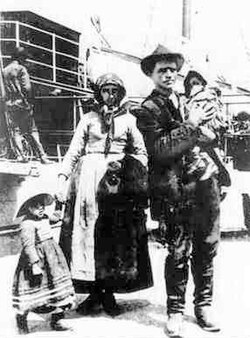
- Population: Approximately 32 million people of Italian descent (15% of Brazil's population).
- Peak Migration: The most intense wave occurred between 1880 and 1900, with nearly one million arrivals.
- Primary Hubs: The Southeast (especially São Paulo) and the Southern regions.
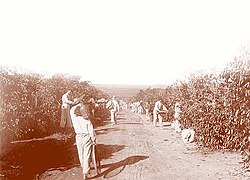
- Economic Impact: Italians played a pivotal role in the coffee industry and the early industrialization of São Paulo.
- Legal Turning Point: The 1902 Prinetti Decree significantly reduced subsidized immigration due to poor working conditions on farms.
The Waves of Immigration
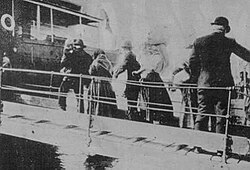
Early Political Exiles
Before the mass migrations, small groups of well-educated Italians arrived in Brazil fleeing political persecution. Following the failure of unification movements in 1848 and 1861 under the Imperial Austrian government, revolutionary figures sought refuge abroad. While few in number, these early migrants, such as Líbero Badaró, left a lasting intellectual impact.
The Great Migration (1880–1920)
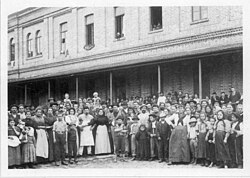
The true boom began after the Risorgimento (the unification of Italy). Between 1880 and 1900, almost one million Italians arrived in Brazil. This surge was driven by Italy's internal crises and Brazil's urgent need for labor on its expanding coffee plantations.
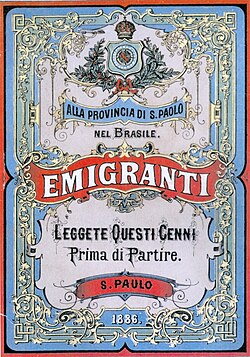
Most migrants entered through the Port of Santos, the primary gateway to the State of São Paulo. From there, they were distributed to coffee farms or settled in urban centers.
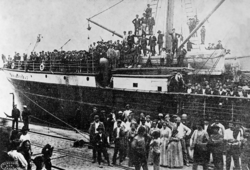
The Prinetti Decree and Decline
The experience on coffee plantations was often grueling. Reports of extreme poverty and destitution reached the Italian press, sparking outrage. In response, the Italian government issued the Prinetti Decree in 1902, which forbade subsidized immigration to Brazil. This led to a drastic drop in arrivals and prompted many already in Brazil to seek repatriation or remigrate to the United States, Argentina, or Uruguay.

Regional Settlement and Integration
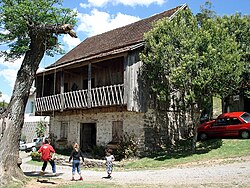
The Southeast: The Industrial Engine
São Paulo became the heart of the Italian community. By 1902, some cities like Ribeirão Preto saw over 50% of their population born in Italy. In the city of São Paulo, neighborhoods like Bixiga (Calabrian), Brás (Campanian and Apulian), and Bom Retiro (Venetian) became ethnic enclaves.
![Panoramic view of Ribeirão Preto. By 1902, 52% percent of the city's population was born in Italy.[35]](/images/a8/64/a8647ceea781356e39ab262aecb769e6c68f1500941232085f8a9a2598f19b07.jpg)
Italians transitioned from agricultural labor to urban entrepreneurship. By 1920, they owned a significant portion of Brazil's industries. In 1962, it was noted that 34.8% of the owners of the 204 largest industries in São Paulo were of Italian origin.
![In the new neighborhoods follow up to infinite Italians houses, with balustrades, mantels, decorations in stucco and colorful symbolic figurines. Lonis-Albert Gaffrée, a French priest in São Paulo (1911).[42] Photo of Mooca.](/images/5a/b4/5ab46ed3524d81b605665365f52d074d6c5151445d7f54c55bd98e8b454829c7.jpg)
The South: Vineyards and Villages
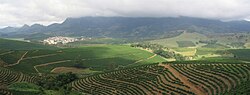
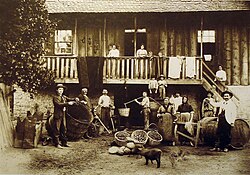
In Southern Brazil, particularly in Rio Grande do Sul, Italian immigrants established agricultural colonies. They introduced advanced low-scale farming techniques and founded cities like Caxias do Sul, primarily settled by farmers from the Veneto region.
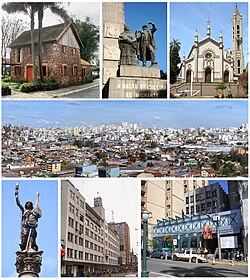
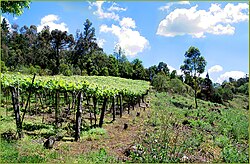
The South is most famous for the introduction of wine production, which remains a cornerstone of the regional economy and culture today.
Cultural and Social Contributions
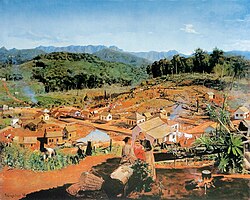
Language and Customs
The Italian influence is woven into daily Brazilian life. A prominent example is the use of "tchau" (from the Italian ciao) as a standard goodbye. While the Italian language was suppressed during World War II, the community had already assimilated significantly; by 1940, only 13.6% of Italian-born residents in São Paulo still spoke Italian at home.
Gastronomy and Innovation
Beyond the widespread love for pasta and pizza, Italian immigrants contributed specific innovations to Brazilian food. A notable example is Catupiry, a creamy cheese developed by Mario Silvestrini in 1911.
![Catupiry, a Brazilian cheese developed by the Italian immigrant Mario Silvestrini in 1911[75]](/images/54/23/54235b4024d581093a107bb2f70b065e4c2a6792159d9bbb807dbb433a316855.jpg)
Demographic Summary
The 1940 census provides a glimpse into the scale of this integration, showing that Italian immigrants had the highest number of children born in Brazil compared to any other immigrant group.
| Country of Birth (Father) | Number of Children | Country of Birth (Mother) | Number of Children |
|---|---|---|---|
| Italy | 1,260,931 | Italy | 1,069,862 |
| Portugal | 735,929 | Portugal | 524,940 |
| Spain | 340,479 | Spain | 436,305 |
| Germany | 159,809 | Japan | 171,790 |
Notable Italo-Brazilians

The legacy of this migration is evident in the high profile of descendants across various fields:
- Politics: Former President Jair Bolsonaro and jurist Sergio Moro.
- Business: Industrialist Count Francesco Matarazzo.
- Arts: Actors Rodrigo Santoro and Morena Baccarin, and singer Luisa Sonza.
- Sports: Footballers like Jorginho and Gabriel Martinelli.
Frequently Asked Questions
Why did so many Italians move to Brazil in the late 19th century?
They were driven by political instability and economic hardship following the Risorgimento in Italy, while Brazil offered opportunities for labor on coffee plantations and agricultural land in the South.
What was the Prinetti Decree?
Issued in 1902, the Prinetti Decree was a move by the Italian government to stop subsidized immigration to Brazil after reports of the extreme poverty and poor treatment faced by Italian workers on coffee farms.
Which regions of Italy provided the most immigrants?
The North, particularly the Veneto region, provided the largest number of immigrants (53.7% of the total), followed by the South (32%) and the Center (14.5%).
How did Italians influence Brazilian industry?
Many Italians moved from farming to urban business. By the early 20th century, they owned a significant percentage of industries in São Paulo, contributing heavily to the state's industrialization.
Is the Italian language still spoken in Brazil?
While not a primary language, Italian influence persists in regional dialects and specific vocabulary. Most descendants assimilated into Portuguese, especially after the prohibition of foreign languages during World War II.