The Complete Guide to ISSN: Identifying Periodicals in a Digital Age
In the vast landscape of global publishing, distinguishing one publication from another is essential for libraries, researchers, and retailers. Whether you are browsing a magazine rack or searching a digital database, a unique identifier is often working behind the scenes to ensure you find exactly what you are looking for. This is where the International Standard Serial Number (ISSN) comes into play.
An ISSN is a unique eight-digit code used to identify periodical publications, such as magazines, journals, and newspapers. By providing a standardized way to recognize serial literature, the ISSN system prevents confusion between different publications that might share the same title, facilitating efficient ordering, cataloging, and interlibrary loans.
Key Facts
- Purpose: Uniquely identifies periodical publications (serials).
- Format: An eight-digit code divided into two four-digit groups (NNNN-NNNC).
- Management: Coordinated by the ISSN International Centre in Paris.
- Media Specificity: Different ISSNs are assigned to the same content if published in different media (e.g., print vs. electronic).
- History: The system was first drafted as an ISO standard in 1971 and officially published in 1975.
What is an ISSN?
The History of the Standard
The ISSN system was established to bring order to the growing world of serial publications. It was first drafted as an International Organization for Standardization (ISO) standard in 1971 and published as ISO 3297 in 1975. Today, the standard is maintained by the ISO subcommittee TC 46/SC 9. The system is managed by a global network of National Centres, typically located within national libraries, and is coordinated by the ISSN International Centre (CIEPS), an intergovernmental organization based in Paris created through an agreement between UNESCO and the French government.
Understanding the ISSN Structure
An ISSN follows a specific syntax: NNNN-NNNC. In this format, "N" represents a decimal digit (0–9), and "C" represents the check digit. The check digit is a single character—either a number from 0 to 9 or the uppercase letter "X"—used to verify the mathematical integrity of the code. Because of this digit, the first seven numbers uniquely represent the ISSN.
For example, the journal Hearing Research uses the ISSN 0378-5955, where the final "5" serves as the check digit. To ensure accuracy, the check digit is calculated using a weighted sum algorithm where each of the first seven digits is multiplied by its position (counting from the right, from 8 down to 2). The sum is then divided by 11; the remainder determines the check digit. If the remainder is 1, the check digit is represented by an "X" (resembling the Roman numeral for ten).

Calculating the Check Digit
To confirm if an ISSN is valid, one can perform a verification calculation. By multiplying all eight digits by their position from the right and summing them (treating "X" as 10), the resulting sum modulo 11 must equal zero. Many online tools are available to automate this validation process.
Media Types and the Linking ISSN (ISSN-L)
One of the most important aspects of the ISSN system is that it is media-oriented. This means that if the same content is published in different formats, each format receives its own unique identifier. For instance, a magazine published in both paper and digital formats will have a print ISSN (p-ISSN) and an electronic ISSN (e-ISSN).
The Importance of ISSN-L
Because different media versions can have different codes, the system uses a Linking ISSN (ISSN-L) to connect them. The ISSN-L is a single identifier that links all media versions of the same continuing resource. Typically, the ISSN-L is the same as the ISSN assigned to the publication's first published medium. If print and electronic versions are launched simultaneously, the print ISSN is usually chosen as the basis for the ISSN-L. This mechanism is vital for search engines, library catalogs, and knowledge bases, as it allows users to find all versions of a title through a single reference.
Technical Implementations: Barcodes and URNs
Encoding in EAN-13 Barcodes
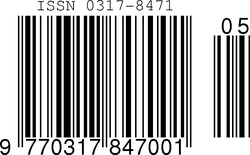
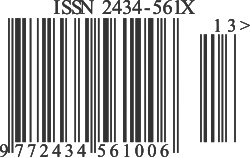
ISSNs can be integrated into EAN-13 barcodes, which are commonly used in retail. To do this, the system uses a "country code" of 977 (distinct from the 978 code used for ISBNs), followed by the first seven digits of the ISSN, two publisher-defined digits, and a final EAN check digit. Note that the EAN check digit is calculated differently than the ISSN check digit and may not match it.
Uniform Resource Names (URNs)
In digital environments, an ISSN can be expressed as a Uniform Resource Name (URN) by using the prefix "urn:ISSN:". For example, a journal could be identified as urn:ISSN:0953-4563. In these namespaces, the prefix is always capitalized, and if the ISSN contains an "X" check digit, it must also be written in uppercase.
ISSN vs. ISBN: What is the Difference?
While they may seem similar, ISSNs and ISBNs (International Standard Book Numbers) serve different purposes. An ISBN is assigned to individual books, whereas an ISSN is assigned to serial publications. Furthermore, an ISSN is an anonymous identifier; it contains no information regarding the publisher or their location. This is why a new ISSN must be assigned whenever a serial undergoes a major title change, whereas an ISBN is tied to a specific edition of a book.
Summary of ISSN Standards
| Term | Description |
|---|---|
| p-ISSN | The identifier for the print version of a serial. |
| e-ISSN | The identifier for the electronic/online version of a serial. |
| ISSN-L | A linking identifier that connects all media versions of the same content. |
| ISBN | An identifier used specifically for individual books. |
| DOI | A digital object identifier often used for specific articles within a serial. |
Frequently Asked Questions
What is the main difference between an ISSN and an ISBN?
An ISBN is used to identify individual books, while an ISSN is used to identify serial publications like magazines and journals. Additionally, an ISSN is anonymous and does not include publisher information.
Why does a single journal have multiple ISSNs?
Because the ISSN system is media-oriented, a different ISSN is assigned to each medium. A journal will have one ISSN for its print version (p-ISSN) and a different one for its electronic version (e-ISSN).
What is the purpose of the check digit in an ISSN?
The check digit is the final character of the eight-digit code. It is used to verify the accuracy of the preceding seven digits through a mathematical algorithm, helping to prevent errors in data entry and processing.
How does an ISSN-L help researchers?
The Linking ISSN (ISSN-L) acts as a bridge between different media versions of the same content. It allows search engines and library databases to group the print, electronic, and other versions of a journal together under one identifier.
Can I find a journal's ISSN online?
Yes. ISSNs are typically found in the publication information of print serials and on the websites of electronic serials. You can also search for them using tools like WorldCat by entering "issn:" before the code.