Understanding the ISBN: The Global Standard for Book Identification
Every time you purchase a book, search for a specific edition in a library, or list a title for sale online, you are interacting with a sophisticated identification system. The International Standard Book Number, commonly known as the ISBN, serves as a unique commercial identifier for publications. Far more than just a random string of numbers, the ISBN ensures that authors, publishers, and booksellers can pinpoint the exact version of a work across the global marketplace.
Key Facts
- Full Name: International Standard Book Number.
- Current Format: 13 digits (transitioned from 10 digits on January 1, 2007).
- Governing Standard: ISO 2108, developed by the International Organization for Standardization.
- Registration Authority: The International ISBN Agency.
- Primary Purpose: To uniquely identify each edition and variation of a publication.
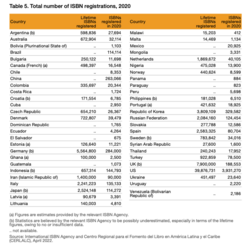
- Global Leader: The United States is the largest user, with over 39 million lifetime registrations as of 2020.
The Evolution of Book Numbering
The journey toward a global standard began in 1965 when the British bookseller WHSmith sought a standardized numbering system. This led to the creation of the Standard Book Number (SBN), a nine-digit code devised by Gordon Foster, a professor of statistics at Trinity College Dublin.
By 1967, the ISBN format was conceived in the United Kingdom by David Whitaker (often called the "Father of the ISBN") and in 1968 in the United States by Emery Koltay. The International Organization for Standardization (ISO) eventually formalized this into the 10-digit ISBN format, published in 1970 as ISO 2108. To maintain compatibility, any 9-digit SBN could be converted to a 10-digit ISBN simply by adding a zero to the front.
As the publishing industry grew, the need for a larger pool of numbers became apparent. On January 1, 2007, the system migrated to a 13-digit format. This change ensured compatibility with the EAN-13 (European Article Number), a global barcode standard used for most retail products.
How an ISBN is Structured
An ISBN is not a single number but a composite of several elements. While a 10-digit ISBN consists of four parts, the modern 13-digit ISBN consists of five distinct elements:
- GS1 Prefix: Currently, either 978 or 979.
- Registration Group: Identifies the country, geographical region, or language area (e.g., 0 or 1 for English-speaking countries).
- Registrant: Identifies the specific publisher.
- Publication: Identifies the specific edition of the work.
- Check Digit: A final digit used to mathematically verify the accuracy of the number.
It is important to note that a separate ISBN is required for every variation of a book. For example, the hardcover, paperback, ebook, and audiobook versions of the same title must each have their own unique identifier. While electronic versions are sometimes called "eISBNs," this is a colloquial term and not an official designation in the ISO documentation.

The Mathematics of the Check Digit
To prevent errors during data entry, ISBNs use a check digit—a form of redundancy check used for error detection. This is a single digit computed from the other numbers in the sequence using a weighted sum.
ISBN-10 Calculation
The 10-digit system uses a base-eleven calculation. Each of the first nine digits is multiplied by a weight descending from 10 to 2. The check digit is the number (0–10) that, when added to this sum, makes the total a multiple of 11. Because the result can be 10, the Roman numeral 'X' is used to represent 10 in the final position.
ISBN-13 Calculation
The 13-digit system is compatible with the EAN format and uses a modulo 10 algorithm. Digits are alternately multiplied by 1 and 3, and the products are summed. The check digit is the value that makes the final total a multiple of 10. Unlike the 10-digit version, the ISBN-13 check digit is always a number between 0 and 9 and never contains an 'X'.
Global Implementation and Usage
The International ISBN Agency coordinates the system worldwide, but registration is handled by national agencies. For instance, R.R. Bowker manages ISBNs in the United States, while Nielsen Book Services Ltd handles the UK and Republic of Ireland.
The scale of the system is vast. In 2020, the United States registered 3.9 million ISBNs, followed by South Korea, Germany, China, the UK, and Indonesia. Interestingly, since 2016, China's Administration of Press and Publication has also used ISBNs to identify mobile games.
ISBN Summary and Comparison
| Feature | SBN | ISBN-10 | ISBN-13 |
|---|---|---|---|
| Introduced | 1966 | 1970 | 2007 |
| Digit Count | 9 | 10 | 13 |
| Check Digit Base | Modulo 11 | Modulo 11 | Modulo 10 |
| Possible Check Digits | 0–9, X | 0–9, X | 0–9 |
| Barcode Compatibility | N/A | Via 978 Prefix | Native EAN-13 |
Frequently Asked Questions
Do I need a different ISBN for a paperback and a hardcover?
Yes. A separate ISBN must be assigned to each edition and variation of a publication, including different bindings (hardcover vs. paperback) and different formats (ebook vs. audiobook). Only simple reprintings of the exact same edition do not require a new ISBN.
How do I convert an ISBN-10 to an ISBN-13?
To convert a 10-digit ISBN to a 13-digit one, you prepend the prefix "978" to the original number and then recalculate the final check digit using the ISBN-13 modulo 10 algorithm.
What is the "Bookland" country code?
Bookland is a fictional country code used in the EAN-13 barcode system to allow books to be integrated into the same retail scanning systems as other commercial products. The prefixes 978 and 979 serve as the Bookland identifiers.
Can an ISBN be used for something other than a physical book?
Yes. ISBNs are used for ebooks and audiobooks. Additionally, since 2016, they have been used by the Chinese government to identify mobile games.
Why does some ISBN-10 numbers end with an 'X'?
The ISBN-10 system uses a modulo 11 calculation. If the required check digit to make the total a multiple of 11 is 10, the letter 'X' is used as a single-character placeholder for the number 10.