ISSN: The International Standard for Identifying Periodical Publications
In the vast world of academic and consumer publishing, distinguishing between similar titles is essential for accurate cataloging and retrieval. The International Standard Serial Number (ISSN) serves as a unique eight-digit identifier for periodical publications, such as magazines and journals. Unlike the ISBN, which identifies individual books, the ISSN is designed specifically for serial literature, ensuring that librarians, researchers, and distributors can precisely identify a specific publication regardless of its title variations.
Key Facts
- Purpose: Uniquely identifies periodical publications (serials).
- Format: An eight-digit code divided into two four-digit groups (NNNN-NNNC).
- Structure: The final digit is a check digit used for validation.
- Media Specificity: Different media types (print vs. electronic) require different ISSNs.
- Management: Coordinated by the ISSN International Centre in Paris.
- Standard: Governed by the ISO 3297 international standard.
The Structure and Calculation of an ISSN
An ISSN follows a strict syntax: NNNN-NNNC, where N represents a decimal digit and C represents the check digit. The check digit can be a number from 0 to 9 or the uppercase letter X (representing the value ten). This digit is not arbitrary; it is calculated using a weighted sum algorithm to prevent errors in identification.
How the Check Digit is Calculated
To determine the check digit, each of the first seven digits is multiplied by its position in the number, counting from the right (starting with 8 for the first digit and ending with 2 for the seventh). The products are summed, and the remainder of this sum divided by 11 (modulo 11) is calculated. If the remainder is 0, the check digit is 0. If the remainder is not 0, the check digit is 11 minus that remainder. If the result is 10, the check digit is recorded as X.

Media Types and the Linking ISSN (ISSN-L)
One of the most important aspects of the ISSN system is its media-oriented approach. Because a single publication may exist in multiple formats, the system assigns distinct codes to different media types:
- p-ISSN: The identifier for the print version of a serial.
- e-ISSN: The identifier for the electronic or online version.
To prevent confusion when a single piece of content is spread across multiple platforms, the Linking ISSN (ISSN-L) was introduced. As defined by ISO 3297:2007, the ISSN-L acts as a single identifier that links all media versions of the same serial together. Typically, the ISSN-L is based on the ISSN of the first published medium of the publication.
Encoding and Global Management
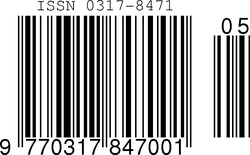
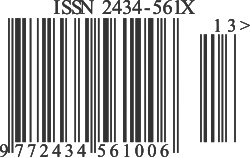
ISSNs are not just text strings; they can be encoded into EAN-13 barcodes. This is achieved by using a 977 "country code" followed by the first seven digits of the ISSN and two publisher-defined digits. This allows serials to be easily scanned in retail and library environments.
The assignment and maintenance of these codes are handled by a global network of ISSN National Centres, which are usually located within national libraries. This network is coordinated by the ISSN International Centre, an intergovernmental organization based in Paris that was established through an agreement between UNESCO and the French government.
Comparison of Serial Identifiers
| Identifier | Primary Use | Key Characteristic |
|---|---|---|
| ISSN | Serial publications | Media-oriented; unique to each format. |
| ISBN | Individual books | Identifies specific book titles/editions. |
| ISSN-L | Linking media versions | Connects p-ISSN and e-ISSN of the same content. |
| DOI | Digital objects/articles | Content-oriented; provides resolution mechanisms. |
Frequently Asked Questions
What is the difference between an ISSN and an ISBN?
An ISBN (International Standard Book Number) is used to identify individual books, whereas an ISSN is used to identify serial publications like magazines, journals, and newspapers.
Why does a magazine need two different ISSNs?
Under the current media-oriented system, a print version (p-ISSN) and an electronic version (e-ISSN) are treated as different media types and therefore require separate identifiers.
Can I search for a journal using its ISSN?
Yes. Many databases and services like WorldCat allow you to search by ISSN. In WorldCat, you can enter "issn:" followed by the code to find relevant library holdings.
What does the 'X' mean in an ISSN?
The 'X' is a check digit used when the mathematical calculation for the weighted sum results in a value of 10. It serves as a single-character placeholder for the number ten.
Is the ISSN the same as a DOI?
No. While an ISSN identifies a serial title, a Digital Object Identifier (DOI) is often used to identify specific articles within that serial. DOIs also provide a resolution mechanism to direct users to the content online, which the standard ISSN does not inherently do.