Islands: Geology, Evolution, and Human History
An island is a landmass, distinct from a continent, that is completely surrounded by water. From the volcanic peaks of the Pacific to the man-made structures of modern cities, islands vary wildly in their origin, ecology, and relationship with humanity. Today, approximately 10% of the global population resides on islands, drawn by unique cultures and natural beauty, though these regions face significant environmental challenges.
Depending on their geological history, islands are categorized into several primary types. Continental islands were once part of a mainland but were separated by plate tectonics. In contrast, oceanic islands have never been connected to a continent, often forming from volcanic activity or coral reef growth into atolls. Other varieties include barrier islands formed by shoreline sediment, river islands created by debris in freshwater systems, and artificial islands constructed through human land reclamation.
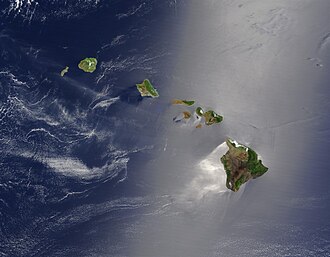
Key Facts
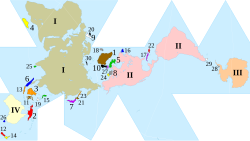
- Types: Islands are classified as continental, oceanic, river, or artificial.
- Biodiversity: Oceanic islands often feature high levels of endemism due to geographic isolation.
- Human Migration: Polynesians were among the most skilled ancient navigators, traveling thousands of kilometers to settle the Pacific.
- Environmental Risk: Nearly 50% of land species threatened with extinction live on islands.
- Climate Threat: Sea level rise and coral bleaching pose existential threats to low-lying island nations like Tuvalu and the Marshall Islands.
Geological Formation
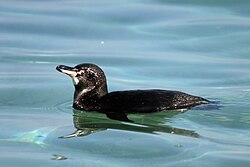
Oceanic and Continental Origins
The distinction between continental and oceanic islands is fundamental to their biology. Continental islands share a biological history with their parent mainland. Oceanic islands, however, emerge from the ocean floor. Many are created by hotspots—areas where magma from the mantle rises through the lithosphere to create volcanic chains.
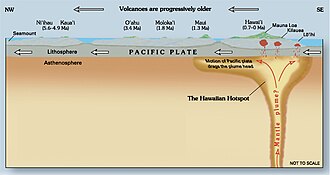
Artificial and Freshwater Islands
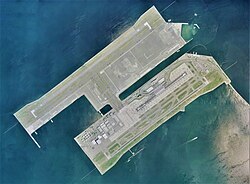
Not all islands are natural. Artificial islands are created by humans for development or strategic purposes, often using large-scale land reclamation. In freshwater environments, river islands form as sediment and debris accumulate in the current.
Life on Islands: Evolution and Dispersal
Oceanic Dispersal
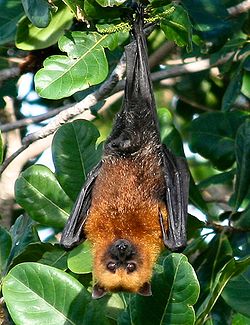
Because oceanic islands are isolated, life must arrive via oceanic dispersal. This occurs through flight (birds and bats), being carried by other animals, or "rafting events," where species float on debris. For example, in 1995, fifteen iguanas survived a 300 km journey to Anguilla by floating on uprooted trees after a storm. Plant species also travel great distances; Australia and New Zealand share 200 native plant species despite being separated by 1,500 km.
Endemism and Adaptive Radiation
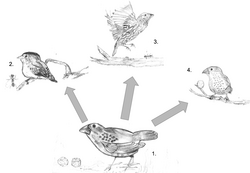
Isolation leads to endemism, where species evolve to be found nowhere else on Earth. This often results in adaptive radiation, where a single ancestral species evolves into multiple new species to fill different ecological niches. A classic example is Darwin's finches in the Galápagos, whose beaks evolved to handle various foods like nuts, fruits, and insects due to the absence of other bird species.
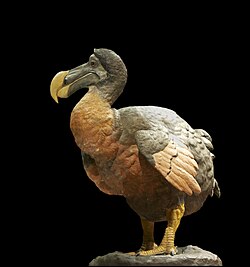
Islands also exhibit the "island rule," which can lead to unusual size changes in animals, such as island gigantism (seen in the extinct Dodo) or dwarfism.
Human Interaction and History
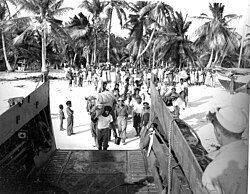
Colonization and Migration
Human settlement of islands began as early as the Paleolithic era (100,000 to 200,000 years ago). While some early settlers used land bridges, the Polynesians mastered long-distance oceanic travel. Between 1100 and 800 BC, they sailed from New Guinea and the Solomon Islands to Fiji and Samoa, eventually reaching Easter Island and New Zealand (the latter between 1250 and 1300).
![Chronological dispersal of the Austronesian peoples[35]](/images/f0/a4/f0a46f6541fc530b5caefe8fc9d2f3ae758a6b91334293b8f9513ecb346bd878.webp)
Culture and Diet
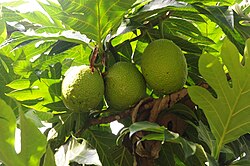
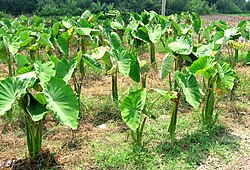
Island cultures developed unique agricultural practices based on available resources. Staple foods often included cultivated taro and breadfruit, the latter of which was used in Polynesia to create an edible paste.
Colonialism and Modernity
Starting in the 16th century, European states colonized much of Oceania. This era saw the introduction of Christian missionaries and the establishment of colonial administrations. For instance, Pohnpei was colonized by Spain in 1526 before passing through German, Japanese, and U.S. control.
Threats to Island Ecosystems
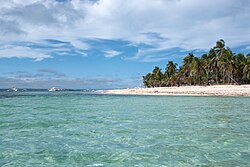
Islands are uniquely vulnerable to climate change. Rising sea levels threaten to submerge low-lying nations, leading to agreements like the one between Tuvalu and Australia to allow citizens to relocate. Additionally, more frequent and intense tropical cyclones cause devastating infrastructure loss, as seen during Hurricane Maria in 2017.
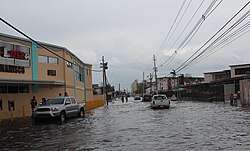
Environmental degradation also includes coral bleaching, which destroys marine ecosystems that many island economies rely upon. Furthermore, invasive species continue to threaten native biodiversity, contributing to the high rate of vertebrate extinction on islands.
| Island Type | Formation Method | Biological Characteristic | Example |
|---|---|---|---|
| Continental | Plate tectonics (split from mainland) | Shares flora/fauna with mainland | Honshu |
| Oceanic | Volcanic activity or coral growth | High endemism; oceanic dispersal | Hawaiian Islands |
| River | Sediment and debris accumulation | Freshwater ecosystem | Fluvial islands |
| Artificial | Human land reclamation | Man-made environment | Kansai International Airport |
Frequently Asked Questions
What is the difference between a continental and an oceanic island?
Continental islands were once part of a continent and were separated by geological processes, meaning they often share species with the mainland. Oceanic islands formed independently in the ocean, usually via volcanoes, and are populated only by species capable of crossing the sea.
How do animals reach remote oceanic islands?
Animals arrive through oceanic dispersal, which includes flying (birds, bats), being carried by other animals, or "rafting," where animals float on debris—such as uprooted trees—carried by sea currents or storms.
What is adaptive radiation?
Adaptive radiation is an evolutionary process where a single species evolves into several different species to adapt to various available ecological niches, a phenomenon frequently observed on isolated islands like the Galápagos.
Why are islands more prone to species extinction?
Islands have limited space and isolated populations, making them highly vulnerable to invasive species, habitat loss, and extreme weather events caused by climate change.
Which island nations are most threatened by sea level rise?
Low-lying island nations, such as Tuvalu and the Marshall Islands, face existential threats as rising seas may eventually submerge their landmasses entirely.