The Diverse World of Ipomoea: A Guide to Morning Glories and Beyond
The genus Ipomoea is one of the most diverse and widespread groups in the plant kingdom. As the largest genus within the Convolvulaceae family, it contains over 600 accepted species, ranging from the familiar morning glories found in backyard gardens to the essential sweet potato used globally as a food source. These plants are found throughout the tropical and subtropical regions of the world, showcasing an incredible variety of growth forms and biological functions.
Taxonomy and Etymology
The genus was formally described by the scientist Carl Linnaeus in 1753. Within the scientific classification of plants, Ipomoea belongs to the order Solanales and the tribe Ipomoeeae. The type species—the species used to define the characteristics of the entire genus—is Ipomoea pes-tigridis L.
The name "Ipomoea" itself carries a descriptive meaning. It is derived from the Ancient Greek words ips (meaning "woodworm") and homoios (meaning "resembling"). This etymology refers to the plant's characteristic twining habit, where the stems wrap around structures as they grow.
Physical Characteristics
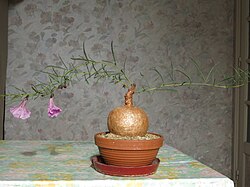
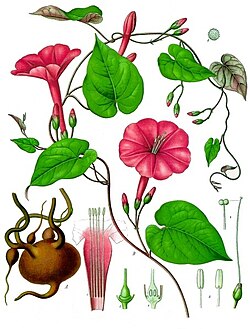
Ipomoea species exhibit a wide range of vegetative structures. They can appear as annual or perennial herbs, shrubs, or even small trees. Many species are lianas (woody climbing vines) that use their stems to trail along the ground or climb upward. These stems typically bear simple leaves, though compound leaves are occasionally found.
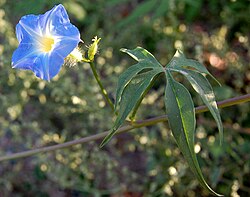
The reproductive features of the genus are equally diverse. Ipomoea plants produce flowers that can be solitary or arranged in cymose inflorescences (a type of flower cluster). These flowers are pentamerous, meaning they are composed of five parts, and can display a stunning array of colors, including blue, red, pink, purple, white, orange, and yellow.
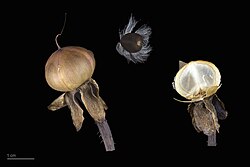
Beyond the vibrant blooms, the generative characteristics of the genus include the development of various fruits and seeds, which are essential for the plant's reproductive cycle and ecological interactions.
Ecology and Pollination
In their natural habitats, Ipomoea species play complex roles in their ecosystems. Interestingly, different species within the genus can interfere with one another's pollination processes. When pollen from one species competes with another during the reproductive process, it can impose a "fitness cost" on the plants involved.

Human Uses: From Food to Medicine
Throughout history, humans have utilized various Ipomoea species for culinary, industrial, and medicinal purposes.
Culinary and Nutritional Value
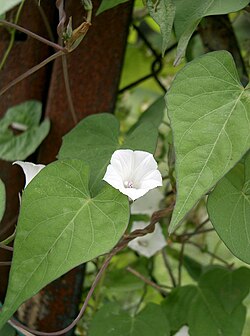
One of the most famous members of the genus is Ipomoea batatas, the sweet potato. Beyond the tuber, the leaves of the sweet potato are consumed as a vegetable. Research has indicated that these leaves may help slow the oxygenation of low-density lipoproteins (LDLs), offering health benefits similar to those found in green tea or grape polyphenols.
Medicinal and Industrial Applications
Many species are renowned in herbalism for their potent chemical properties. For instance, Ipomoea jalapa (Vera Cruz jalap) and I. simulans (Tampico jalap) are used to produce jalap, a cathartic preparation used to accelerate the passage of stool. In Ayurvedic tradition, I. mauritiana (giant potato) is a key ingredient in chyawanprash, an ancient tonic often called "the elixir of life."
In industrial history, the sap of the Moon vine (I. alba) was utilized in the vulcanization (the chemical process of hardening rubber) of latex from the Panama rubber tree. This relationship is often seen in nature, as the rubber tree provides an ideal structure for the Moon vine to twine upon.
Psychoactive Properties and Alkaloids
Certain species of Ipomoea are known for containing alkaloids—naturally occurring organic compounds that can have significant physiological effects. Some species, such as the Mexican morning glory (I. tricolor) and I. violacea, have been used as entheogens (psychoactive substances used in religious or spiritual contexts) by cultures like the Aztecs and Zapotecs.
These effects are often linked to ergoline alkaloids found in the seeds, which are hosted by heritable Periglandula fungi. One prominent alkaloid is ergine (also known as D-lysergic acid amide or LSA).
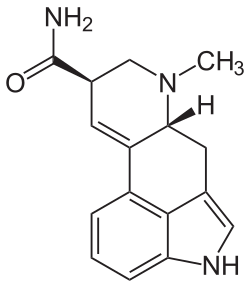
Other alkaloids identified in these seeds include isoergine, lysergol, and ergometrine (also known as ergonovine). While LSA is known to produce mild psychedelic effects accompanied by sedation, it can also cause adverse effects such as nausea and vasoconstriction (the narrowing of blood vessels).

Key Facts
- Genus Diversity: Contains over 600 species, making it the largest in the Convolvulaceae family.
- Common Names: Includes morning glory, sweet potato, bindweed, and moonflower.
- Growth Habit: Primarily twining plants, including herbs, shrubs, and lianas.
- Chemical Content: Some species contain ergoline alkaloids like LSA and ergometrine.
- Economic Importance: Includes major food crops like the sweet potato and historical uses in rubber processing.
Summary of Notable Ipomoea Species and Uses
| Species | Common Name/Context | Primary Use or Characteristic |
|---|---|---|
| I. batatas | Sweet potato | Edible leaves with potential LDL health benefits |
| I. alba | Moon vine | Sap used for rubber vulcanization |
| I. jalapa | Vera Cruz jalap | Used to produce a cathartic preparation |
| I. mauritiana | Giant potato | Ingredient in the Ayurvedic tonic chyawanprash |
| I. tricolor | Mexican morning glory | Used as an entheogen in ritual contexts |
Frequently Asked Questions
What does the name "Ipomoea" mean?
The name is derived from Ancient Greek, meaning "woodworm-resembling," which describes the plant's tendency to twine around objects.
What are the most common names for this genus?
The most widespread name is "morning glory," though they are also known as sweet potato, bindweed, moonflower, and water spinach.
How are Ipomoea species used in industry?
Historically, the sap of the Moon vine (I. alba) was used in the vulcanization process to help turn latex into rubber.
What are the psychoactive properties of some species?
Certain species contain ergoline alkaloids, such as LSA (ergine), which can produce mild psychedelic effects and sedation, though they may also cause nausea.
Are there health benefits to eating sweet potato leaves?
Yes, the leaves of I. batatas have been shown to slow the oxygenation of LDLs, a process similar to the health benefits found in green tea.