Ipomoea: The Diverse World of Morning Glories and Sweet Potatoes
The genus Ipomoea represents one of the most expansive and varied groups in the plant kingdom. As the largest genus within the Convolvulaceae family, it encompasses over 600 accepted species. From the familiar sweet potato to the vibrant, climbing morning glories that adorn garden fences, these plants play significant roles in ecology, human nutrition, and traditional medicine.
The name Ipomoea finds its roots in Ancient Greek, combining ips (meaning 'woodworm') and homoios (meaning 'resembling'), a reference to the genus's characteristic twining growth habit. Found throughout tropical and subtropical regions globally, the genus includes a wide array of life forms, including annual and perennial herbs, lianas (woody climbing vines), shrubs, and even small trees.
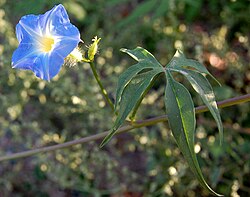
Key Facts
- Scientific Classification: Family Convolvulaceae, Tribe Ipomoeeae.
- Species Count: More than 600 accepted species.
- Type Species: Ipomoea pes-tigridis.
- Common Names: Morning glory, sweet potato, bindweed, moonflower, and water spinach.
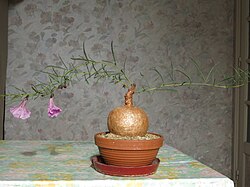
- Growth Habit: Primarily twining climbing plants, but includes shrubs and trees.
Botanical Characteristics and Taxonomy
Described by Carl Linnaeus in 1753, the genus is defined by its diverse vegetative and generative traits. Most species feature twining or trailing stems that bear simple leaves, though compound leaves are occasionally present. These plants can grow as prostrate (trailing along the ground) or erect herbs.
Flowers and Inflorescence
The reproductive structures of Ipomoea are often striking. They produce flowers that range from small to large, appearing in solitary or cymose (branched) inflorescences. These pentamerous (five-parted) flowers display a vivid spectrum of colors, including blue, red, pink, purple, white, orange, and yellow.
Taxonomic Diversity
While "morning glory" is the most widespread common name, it is not exclusive to this genus. Furthermore, species formerly classified under the genus Calonyction are frequently referred to as moonflowers. The genus is highly diverse, with species adapted to various environments, from sandy coastal regions to dense tropical forests.

Ecological and Human Uses
Ipomoea species interact deeply with their environments and human cultures. In some ecosystems, different species of Ipomoea compete for pollination, which can impose a fitness cost on their reproductive success.
Cultural and Culinary Significance
The uses of these plants span millennia. In Kerala, Ipomoea sepiaria is recognized as one of the Dashapushpam (Ten sacred flowers). In Mesoamerica, the sap of the Moon vine (I. alba) was historically used in the vulcanization of latex from the Panama rubber tree.
Nutritionally, the leaves of Ipomoea batatas (sweet potato) are consumed as a vegetable. Research has indicated that these leaves may help slow the oxygenation of LDL (low-density lipoprotein), a benefit similar to that found in green tea.
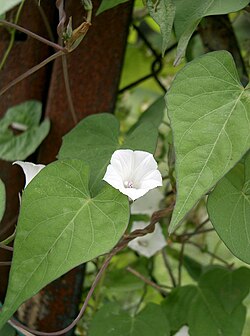
Medicinal and Psychoactive Properties
Many species are valued for their alkaloids—naturally occurring organic compounds. For instance, I. jalapa and I. simulans are used to produce jalap, a traditional cathartic. In Ayurvedic medicine, I. mauritiana is an ingredient in chyawanprash, an ancient tonic.
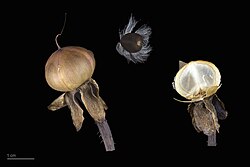
Certain species, such as I. tricolor and I. purpurea, contain ergoline alkaloids. These compounds, including ergine (LSA) and ergometrine, are often found in seeds that host Periglandula fungi. While these have been used as entheogens (substances used in religious or shamanistic contexts) by cultures like the Aztecs, they can also cause adverse effects such as nausea and vasoconstriction (the narrowing of blood vessels).



Summary of Ipomoea Species and Traits
| Common Name / Species | Primary Use/Trait | Key Feature |
|---|---|---|
| Sweet Potato (I. batatas) | Food/Vegetable | Edible leaves and tubers |
| Morning Glory | Ornamental | Vibrant, twining flowers |
| Jalap (I. jalapa) | Medicinal | Used as a cathartic |
| Moonflower | Ornamental/Ritual | Night-blooming characteristics |
Frequently Asked Questions
What are the most common names for Ipomoea?
The most widespread name is morning glory, but they are also known as sweet potato, bindweed, moonflower, and water spinach.
What makes Ipomoea plants unique in their growth?
Most species exhibit a twining habit, meaning they use their stems to climb or wrap around other structures, though some can be prostrate or even tree-like.
Are all Ipomoea species edible?
No. While Ipomoea batatas (sweet potato) is a major food source, other species contain potent alkaloids that can be toxic or psychoactive.
What are ergoline alkaloids?
These are chemical compounds found in the seeds of certain Ipomoea species. They include substances like LSA (ergine) and ergometrine, which have both medical and psychoactive properties.
Why is the genus called Ipomoea?
The name is derived from Ancient Greek terms meaning "resembling woodworm," which refers to the way the plants twine.