Involuntary Human Shields: A History of Forced Civilian Protection in Warfare
The practice of using human shields—forcing non-combatants to position themselves between opposing military forces to deter attacks—is a grim tactic with roots stretching back to antiquity. While documented as far back as Ancient Greece, the systematic use of civilians as living barriers has evolved through the centuries, often coinciding with the development of modern weaponry and international law.
At its core, the use of human shields is a strategy designed to exploit the moral or legal constraints of an enemy, betting that the opponent will refrain from attacking a legitimate military target to avoid killing innocent civilians.
Key Facts
- Legal Status: Article 23 of the 1907 Hague Convention (IV) forbids compelling hostile nationals to participate in war operations against their own country.
- Historical Scope: The practice has been documented in major global conflicts, including World War I, World War II, the Gulf War, and various 21st-century insurgencies.
- Diverse Actors: Both state militaries and non-state actors (such as ISIS, the Taliban, and Boko Haram) have been accused of using this tactic.
- Modern Context: Contemporary disputes often center on whether placing military assets in urban areas constitutes "human shielding."
The Evolution of Human Shielding in the 20th Century
World War I and Early Mandates
During the early 20th century, international legal frameworks began to explicitly condemn the practice. A 1915 report clarified that if it is impermissible to force a person to fire on their own citizens, it is equally forbidden to force them to serve as a "living screen" to protect the enemy.
In 1936, during the Arab revolt in Palestine, Brigadier J. F. Evetts forced the mayor of Nablus, Suleiman Abdul Razzaq Tuqan, to sit exposed on a garrison roof under fire as a "high-value human shield." In protest, Tuqan returned his Order of the British Empire commendation.
World War II and Total War
World War II saw a massive escalation in the use of civilians as shields. In May 1940, during the Vinkt Massacre in Belgium, the German Wehrmacht used 140 civilians as shields to cross a bridge under fire, resulting in at least 86 deaths.
In Poland, Wehrmacht and SS forces used Polish civilians as shields during the Warsaw Uprising, including the Wola massacre of August 7, 1944, where women were forced onto armored vehicles. In Asia, the Imperial Japanese Navy berthed the flagship Izumo in front of the Shanghai International Settlement in 1937. This led to "Black Saturday," where Chinese bombers, hampered by low clouds, accidentally struck the settlement, killing at least 950 people.
Furthermore, Japan integrated military installations and factories into urban centers to protect them from Allied air raids. This strategy forced the U.S. Army Air Forces (USAAF) to shift from precision bombing to carpet bombing in 1945, eventually leading to the atomic bombings of Hiroshima and Nagasaki.
Cold War and Late 20th Century Conflicts
The latter half of the century saw the tactic persist in regional conflicts. France utilized civilians as hostages and shields during the Algerian War in the 1960s. In the 1970s, during the Siege of Tel al-Zaatar in the Lebanese Civil War, Christian militias alleged that Palestinians were using Lebanese families as shields.
The Era of Saddam Hussein
Saddam Hussein systematically employed human shields in Iraq, a practice noted by the CIA as early as 1988. This peaked during the 1990 invasion of Kuwait, where the Iraqi government detained hundreds of Western citizens and Iraqi civilians, placing them near military and industrial targets to deter coalition strikes.
The Bosnian War
In April 1994, Bosnian Serb forces captured UN personnel and used them as human shields at sites expected to be targeted by NATO air strikes in retaliation for the shelling of Goražde.
21st Century Developments and Controversies
Non-State Actors and Insurgencies
In the 21st century, various militant groups have integrated human shielding into their tactics:
- The Taliban: Accused of using women and children as shields against coalition forces between 2006 and 2008.
- Lord's Resistance Army: Reported by Human Rights Watch in 2004 to use children as shields and laborers.
- Boko Haram: Abducted hundreds of women and schoolgirls to serve as shields in 2015 and 2016.
- ISIS: Documented rounding up thousands of villagers in Iraq and Syria (notably in Mosul in 2017) to block advancing forces.
State-Level Accusations and Airspace
Modern conflicts have expanded the definition of human shields to include civilian infrastructure and airspace. In January 2020, following the shoot-down of Ukraine International Airlines Flight 752, accusations surfaced that Iran used civilian airliners to deter retaliatory strikes.
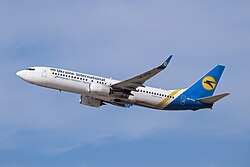
Similarly, in May 2025, India and Pakistan traded accusations regarding the use of civilian airliners as shields during a drone attack standoff, with Pakistan temporarily closing airspace to mitigate risks.
The Israeli-Palestinian Conflict
The use of human shields is a central and highly contested point in the Israeli-Palestinian conflict. The Israeli Supreme Court banned the IDF's use of the practice in 2005, yet organizations like Amnesty International and B'tselem report continued use, including the use of Palestinians to explore tunnel networks in Gaza.
Conversely, Israel frequently alleges that Hamas uses civilians as shields by operating from within hospitals and residential areas. While the EU and US have condemned these alleged actions, some legal scholars and Amnesty International argue that storing munitions in civilian areas or directing civilians to stay home does not legally constitute "human shielding."
Summary of Notable Human Shield Incidents
| Conflict/Era | Actor Accused | Target/Victim Group | Context/Outcome |
|---|---|---|---|
| WWII (Belgium) | German Wehrmacht | Belgian Civilians | Vinkt Massacre; 86+ killed |
| Gulf War (1990) | Saddam Hussein | Westerners & Iraqis | Deterrence of coalition strikes |
| Bosnian War (1994) | Bosnian Serb Forces | UN Personnel | Retaliation against NATO strikes |
| Afghanistan (2006-08) | Taliban | Women & Children | Protection against coalition forces |
| Iraq/Syria (2016-17) | ISIS | Villagers | Blocking advancing military forces |
| Ukraine (2022) | Russian Forces | Ukrainian Civilians | Held in schools (e.g., Yahidne) |
Frequently Asked Questions
Is the use of human shields legal under international law?
No. The practice is generally forbidden. The 1907 Hague Convention and subsequent international humanitarian laws prohibit compelling civilians or hostile nationals to protect military targets.
What is the difference between "human shielding" and "urban warfare"?
Human shielding typically involves the forced use of civilians to protect a target. Urban warfare involves fighting in populated areas; however, debate exists over whether placing military assets in cities constitutes a form of passive human shielding.
Have civilians ever volunteered to be human shields?
Yes. During the 2003 Invasion of Iraq, between 200 and 500 people traveled to Iraq voluntarily to act as human shields in hopes of preventing the bombing of specific locations.
How do international bodies verify claims of human shielding?
Organizations like the UN and Amnesty International investigate civilian casualty sites, interview survivors, and analyze military patterns to determine if civilians were intentionally used as shields or if casualties resulted from indiscriminate attacks.