Declaration of War: Legal Frameworks and Historical Evolution
A declaration of war is a formal act through which one sovereign state announces existing or impending war activity against another. This process is a performative speech act—often the public signing of a legal document—carried out by an authorized government party to officially establish a state of war between two or more nations.
While the concept seems straightforward, the legality of who is competent to declare war varies significantly across different nations and forms of government. In many states, this power resides with the head of state or sovereign. In other instances, governments may utilize measures short of a full declaration, such as covert operations or a letter of marque (a government license authorizing a private person to attack and capture enemy vessels), to authorize war-like acts by mercenaries or privateers.
Key Facts
- The Hague Convention (III) of 1907 established the official international protocol for the opening of hostilities.
- Since 1945, the United Nations Charter has prohibited the threat or use of force, making formal declarations largely obsolete in international relations.
- The UN Security Council can authorize collective action to maintain peace under Chapter VII of the Charter.
- Article 51 of the UN Charter preserves the inherent right of individual or collective self-defence if an armed attack occurs.
- Historically, many wars were waged without formal declarations; between 1700 and 1870, only 10 out of 117 European/US conflicts involved a formal declaration.
The Evolution of War Declarations
Pre-World War I Perspectives
The utility of formal declarations has long been debated. Some viewed them as sentimental remnants of chivalry, while others saw them as imprudent warnings that gave enemies time to prepare. In 1737, Cornelius van Bynkershoek noted that proud nations used open attacks to make victory more "honourable and glorious." Conversely, by 1880, William Edward Hall dismissed such declarations as "empty formalities" and "quixotism."
The Shift Toward Global Peace
Following the devastation of the First World War, the international community sought ways to prevent future carnage. The League of Nations (formed in 1919) and the General Treaty for the Renunciation of War (1928) represented early attempts to outlaw war. However, these efforts failed to prevent the Second World War, leading to the establishment of the United Nations in a renewed effort to curb international aggression.
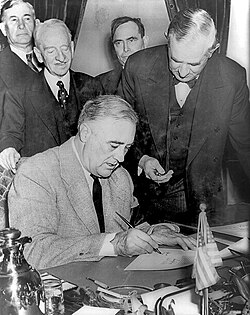
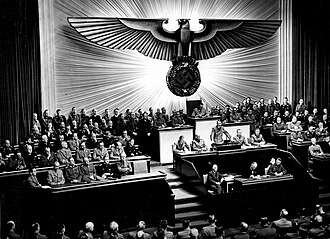
Declarations of War Since 1945
In the modern era, formal declarations of war have become rare, appearing primarily in conflicts within East Africa and Western Asia. In some cases, smaller states have unilaterally declared war on major powers, such as Russia or the United States, following hostile invasions or occupations.
| Conflict | Date | Declaring Party | Opponent | End Date |
|---|---|---|---|---|
| Arab–Israeli War | 15 May 1948 | Egypt | Israel | 26 March 1979 |
| India–Pakistan War | 6 Sept 1965 | India | Pakistan | 23 Sept 1965 |
| Iran–Iraq War | 22 Sept 1980 | Iraq | Iran | 20 July 1988 |
| Russo-Georgian War | 9 Aug 2008 | Georgia | Russia | 16 Aug 2008 |
| Second Nagorno-Karabakh War | 27 Sept 2020 | Azerbaijan | Armenia | 10 Nov 2020 |
| Gaza War | 7 Oct 2023 | Israel | Hamas | Still at war |
The Role of the United Nations
The United Nations has evolved from a peace-keeping body to a combatant in specific instances. Following the North Korean invasion of South Korea on 25 June 1950, the UN Security Council passed a 9–0 resolution calling member nations to aid South Korea. While a "UN force" was formed, US President Harry S. Truman famously described these hostilities as a "police action" rather than a "war."
Additionally, the UN Security Council issues resolutions that authorize the use of "force" or "all necessary means" to maintain international security, such as Resolution 678, which authorized the 1991 Gulf War following Iraq's invasion of Kuwait.
National Legal Requirements
The authority to declare war is codified differently across the globe. Some nations vest this power in a single executive, while others require legislative approval.
- United States: The Constitution grants the power to declare war to Congress, though the President often directs military action.
- United Kingdom: The power is held by the Monarch.
- Germany: The Parliament (Bundestag) holds the authority under Article 115a of the Basic Law.
- Russia: The President holds the authority under Articles 71 and 86 of the Constitution.
- India: The President declares war, though Parliament is typically involved.
Frequently Asked Questions
Are formal declarations of war still used today?
They are largely obsolete in international relations due to the UN Charter's prohibition on the use of force. However, they still occur occasionally in specific regional conflicts or within the domestic laws of the involved nations.
What is the difference between a declaration of war and a "police action"?
A declaration of war is a formal legal act establishing a state of war. A "police action," as termed by President Truman during the Korean War, is a military intervention intended to maintain order or security without the formal legal status of a declared war.
Can a country fight a war without declaring it?
Yes. Historically and currently, many conflicts are "undeclared." International law now focuses more on the legality of the use of force (such as self-defence under Article 51 of the UN Charter) than on the formal act of declaration.
Who has the authority to declare war in the United States?
According to Article 1, Section 8 of the US Constitution, the power to formally declare war is vested in Congress.
What does the UN Charter say about the use of force?
The UN Charter generally prohibits the threat or use of force in international conflicts. Exceptions include collective action authorized by the UN Security Council to maintain peace and the inherent right of states to individual or collective self-defence if an armed attack occurs.