Interstate 287: The Essential Bypass of New Jersey and New York
Interstate 287 (I-287) serves as a critical auxiliary Interstate Highway, acting as a partial beltway around New York City. Spanning 98.72 miles (158.87 km), this horseshoe-shaped route connects northern New Jersey with the Rockland and Westchester counties of New York. It provides a vital alternative for traffic seeking to avoid the dense urban core of New York City, stretching from the New Jersey Turnpike in Edison to the New England Thruway in Rye.
The route is signed north–south while traversing New Jersey and east–west upon entering New York. Maintenance is split between two agencies: the New Jersey Department of Transportation (NJDOT) and the New York State Thruway Authority (NYSTA).
Key Facts
- Total Length: 98.72 miles (158.87 km).
- Primary Function: Partial beltway around New York City.
- Major Crossing: The Tappan Zee Bridge over the Hudson River.
- Termini: Starts at I-95 in Edison, NJ; ends at I-95 in Rye, NY.
- Restrictions: Explosives are strictly prohibited on the Tappan Zee Bridge.
- Status: Entire route is part of the National Highway System (NHS).
Route Overview and Geography
The New Jersey Segment
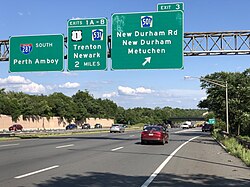
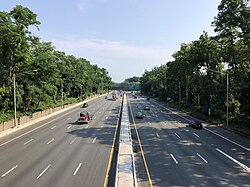
In New Jersey, I-287 begins at a major interchange with the New Jersey Turnpike (I-95) in Edison. In Middlesex County, the road is designated as the Lt. Col. (Ret) Richard F. Lauer, US Army Highway. It starts as an eight-lane freeway, narrowing to six lanes as it passes over the Amtrak Northeast Corridor.
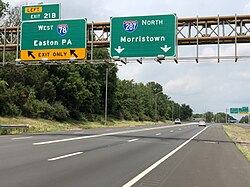
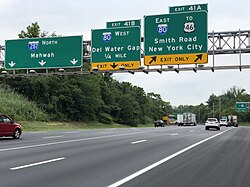
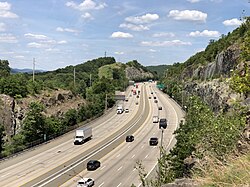
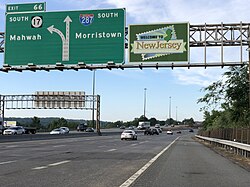
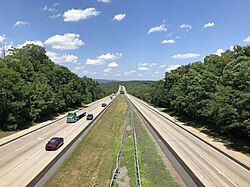
As the highway progresses through Somerset and Morris counties, it takes a northeasterly course, paralleled by US Route 202. In the northern reaches of New Jersey, the terrain becomes more mountainous. The route passes through Passaic and Bergen counties, crossing the Ramapo River and passing the Campgaw Mountain Reservation before forming a concurrency with Route 17 in Mahwah.
The New York Segment
Upon entering New York at Suffern, I-287 merges with the New York State Thruway (I-87). This section carries travelers through Rockland County and across the Hudson River via the Tappan Zee Bridge into Westchester County.
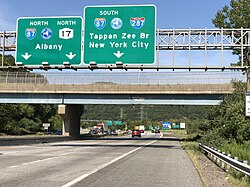
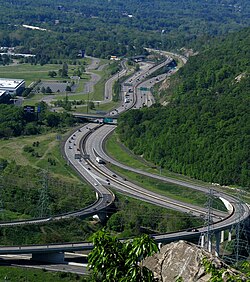
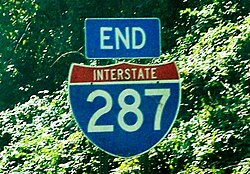
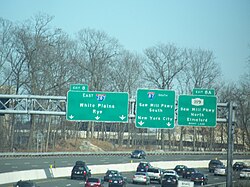
Near Tarrytown, I-287 splits from I-87 to become the Cross Westchester Expressway. This six-to-eight lane freeway continues east through Elmsford and Harrison, eventually terminating at the New England Thruway (I-95) in Rye.
Infrastructure and History
Development and Evolution
The concept of a New York City bypass emerged in the 1950s. The New York State Thruway portion, including the original Hudson River crossing, opened in 1955. The Cross Westchester Expressway underwent several designation changes—initially I-187 and then I-487—before officially becoming part of I-287 in 1961.
In New Jersey, the route was originally planned as FAI Corridor 104. Construction occurred in stages from the 1960s through 1973, with the final sections completed by 1994.
The Tappan Zee Bridge Replacement
A defining feature of I-287 is the crossing of the Hudson River. The aging Tappan Zee Bridge was replaced by a modern span between 2017 and 2018. The new bridge is one of the longest cable-stayed spans in the United States, featuring advanced design and increased capacity.
Future Proposals
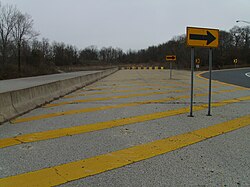
Long-term planning once included a proposed tunnel across the Long Island Sound. This tunnel would have linked the eastern terminus in Rye to NY 25 and NY 135 in Syosset, effectively extending the bypass further east.
Route Summary Table
| Feature | Details |
|---|---|
| Southern Terminus | I-95 / NJ Turnpike (Edison, NJ) |
| Eastern Terminus | I-95 / US 1 (Rye, NY) |
| Total Distance | 98.72 miles |
| Maintenance | NJDOT (NJ) and NYSTA (NY) |
| Key Counties | Middlesex, Somerset, Morris, Passaic, Bergen (NJ); Rockland, Westchester (NY) |
Frequently Asked Questions
What is the primary purpose of Interstate 287?
I-287 serves as a partial beltway around New York City, allowing motorists to travel between northern New Jersey and Westchester County, New York, without entering the city's congested center.
Which bridge does I-287 use to cross the Hudson River?
I-287 crosses the Hudson River via the Tappan Zee Bridge, which was recently replaced with a new cable-stayed span completed in 2018.
Are there any vehicle restrictions on I-287?
Yes, the transport of explosives is strictly prohibited on the Tappan Zee Bridge section of the highway.
Who maintains the different sections of the highway?
The New Jersey Department of Transportation (NJDOT) maintains the route within New Jersey, while the New York State Thruway Authority (NYSTA) maintains the route within New York.
Where does I-287 end?
The highway reaches its eastern terminus at the intersection of I-95 and US 1 in Rye, New York.