International IDEA: Strengthening Global Democratic Institutions
In an era where the stability of governance is paramount, the International Institute for Democracy and Electoral Assistance (International IDEA) serves as a critical pillar for the global community. As an intergovernmental organization, International IDEA is dedicated to supporting and strengthening democratic institutions and processes worldwide, ensuring that democracies are not only established but are sustainable, effective, and legitimate.
Headquartered in Stockholm, Sweden, the organization operates on a global scale, maintaining regional offices across Africa and West Asia, Asia and the Pacific, Europe, North America, and Latin America and the Caribbean. Its work bridges the gap between theoretical research and practical application, providing policy-makers and practitioners with the tools necessary to foster accountable governance.
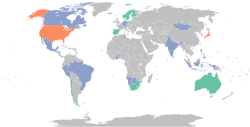
Key Facts
- Founded: February 28, 1995, by 14 founding states.
- Purpose: To advance, promote, and protect sustainable democracy worldwide.
- Status: Official United Nations Observer.
- Leadership: Led by Secretary-General Kevin Casas-Zamora (since August 2019).
- Membership: 35 Member States as of 2024.
- Headquarters: Stockholm, Sweden.
The History and Evolution of International IDEA
The origins of International IDEA can be traced back to the early 1990s, a period of significant global political upheaval. The world witnessed a diverse array of democratic transitions: from the release of Nelson Mandela in South Africa in 1990 to the gradual shift toward democracy in Chile, Brazil, Uruguay, and Argentina following military dictatorships. Simultaneously, the 1989 crackdown in Tiananmen Square highlighted the fragility of democratic aspirations.
Recognizing a widespread need for expert guidance on implementing democratic norms, Sweden and 13 other nations took the initiative to form the institute. The Founding Conference took place on February 27–28, 1995. The 14 founding states included Australia, Barbados, Belgium, Chile, Costa Rica, Denmark, Finland, India, the Netherlands, Norway, Portugal, South Africa, Spain, and Sweden.
Initially, the organization focused on four primary activities: research, the creation of information services and databanks, the promotion of guidelines, and the provision of capacity-building and advisory services. Early successes included the publication of influential handbooks on Electoral System Design, Women in Parliament, and Democracy and Deep-rooted Conflict.
Core Mission and Strategic Objectives
International IDEA operates with a clear mission: to protect and promote sustainable democracy in alignment with human rights commitments. This is achieved through a combination of policy-relevant knowledge, advocacy, and the facilitation of high-level dialogues.
To fulfill this mission, the organization focuses on several key tasks:
- Helping countries build the capacity to develop robust democratic institutions.
- Creating a collaborative forum for academics, practitioners, and policy-makers.
- Developing practical tools based on synthesized research and field experience.
- Improving the transparency, efficiency, and accountability of election management.
- Empowering local citizens to monitor and promote democracy within their own communities.
Primary Areas of Activity
Electoral Processes
Since its inception, the heart of International IDEA's work has been the improvement of electoral processes. The institute provides non-prescriptive analysis and policy recommendations to help Electoral Management Bodies (EMBs)—the official agencies responsible for organizing elections—and other judicial or legislative bodies establish credible, locally owned electoral systems.
Constitution-Building
The organization assists national actors in drafting and implementing constitutions that can manage conflict and consolidate democracy. This involves providing technical assistance and creating virtual and physical spaces for practitioners to share lessons learned from comparative global contexts.
Political Participation and Representation
International IDEA supports political parties by focusing on four critical pillars: improving party and candidate finance laws, helping parties develop coherent policy platforms, fostering interparty dialogue to reach consensus, and aligning approaches to party assistance.
Democracy Assessment
Launched in 2016, the Global State of Democracy (GSoD) initiative analyzes worldwide trends impacting democratic health. The GSoD provides evidence-based data and reports—such as the 2023 report which described the state of democracy as "complex, fluid and unequal"—to inform public debate and policy interventions.
Data Tools and Global Impact
Beyond policy and advocacy, International IDEA maintains several critical databases and tools used by the international community. These include the Voter Turnout Database, the IntegriTAS Threat Assessment System, and the Electoral Risk Management tool.
Notably, data from the Political Finance Database is utilized by the Basel Institute on Governance in the Basel AML Index, which assesses risks related to money laundering and terrorist financing by using political disclosure as a proxy for transparency.
| Category | Details |
|---|---|
| Type | Intergovernmental Organization |
| Headquarters | Stockholm, Sweden |
| Current Secretary-General | Kevin Casas-Zamora |
| UN Status | Official Observer |
| Key Reports | Global State of Democracy (GSoD) |
Membership and Governance
As of 2024, International IDEA comprises 35 Member States, spanning diverse regions including Benin, Botswana, Canada, Estonia, France, Germany, Indonesia, Mexico, Mongolia, and Tunisia, among others. While Japan maintains official observer status, the United States held observer status until its departure in January 2026.
The organization is governed by a council of member states. In December 2025, Chief Election Commissioner (CEC) Gyanesh Kumar assumed the chairship of this council for 2026.
Frequently Asked Questions
What is the primary goal of International IDEA?
The primary goal is to support and strengthen democratic institutions and processes globally to ensure that democracies are sustainable, effective, and legitimate.
Who leads International IDEA?
The organization is led by Secretary-General Kevin Casas-Zamora, who assumed the role in August 2019. He succeeded Yves Leterme and Vidar Helgesen.
What is the Global State of Democracy (GSoD) initiative?
The GSoD is an initiative launched in 2016 that provides evidence-based analysis, data, and reports on the current trends and challenges affecting democracy worldwide.
How does International IDEA support electoral processes?
It provides non-prescriptive analysis, policy recommendations, and comparative knowledge to help electoral management bodies and legislative entities design and consolidate credible electoral systems.
Is International IDEA affiliated with the United Nations?
Yes, International IDEA has been granted official United Nations Observer status and maintains a permanent representative to the UN in New York City.