International Court of Justice: The Principal Judicial Organ of the United Nations
The International Court of Justice (ICJ), often referred to as the World Court, serves as the primary judicial body of the United Nations. Established on June 26, 1945, and beginning its operations in April 1946, the ICJ is tasked with settling legal disputes submitted by states and providing advisory opinions on legal questions referred to it by authorized UN organs and specialized agencies.
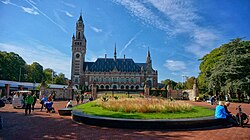
Based in The Hague, Netherlands, the Court operates from the historic Peace Palace, symbolizing the global commitment to the peaceful resolution of conflicts through the application of international law.
Key Facts
- Established: June 26, 1945.
- Location: The Hague, Netherlands (Peace Palace).
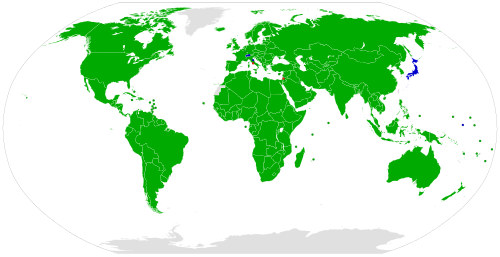
- Jurisdiction: Worldwide, with 193 state parties.
- Composition: 15 judges elected for 9-year terms.
- Authority: Authorized by the UN Charter and the ICJ Statute.
- Current Leadership: President Yuji Iwasawa (since March 3, 2025) and Vice President Julia Sebutinde (since February 6, 2024).
Historical Foundations
The Permanent Court of International Justice (PCIJ)
The ICJ is the successor to the Permanent Court of International Justice (PCIJ), which was created by the League of Nations in 1920. The PCIJ introduced several critical innovations to international jurisprudence, including a permanent registry for government liaison and proceedings that were largely open to the public. It was the first body of its kind to be accessible to all states and to feature judges representative of diverse global legal systems.
The Transition to the ICJ
When the ICJ was established, it was designed to build upon the legacy of the PCIJ. The founding principles mandated that the new court's statute be based on that of the PCIJ, retain advisory jurisdiction, and ensure that the acceptance of its jurisdiction remained voluntary. Crucially, the Court was designed to handle judicial matters rather than political disputes.
Court Composition and Governance
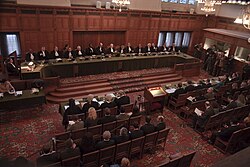
The Court consists of 15 judges, each serving a nine-year term. To ensure impartiality and global representation, judges are elected to represent the main forms of civilization and the principal legal systems of the world.
| Name | Nationality | Position | Term End |
|---|---|---|---|
| Yuji Iwasawa | Japan | President | 2030 |
| Julia Sebutinde | Uganda | Vice-president | 2030 |
| Peter Tomka | Slovakia | Member | 2030 |
| Ronny Abraham | France | Member | 2027 |
| Xue Hanqin | China | Member | 2030 |
The Court may also utilize ad hoc judges—individuals appointed for a specific case when a party to the dispute does not have a judge of its nationality on the bench—to ensure fairness and representation during proceedings.
Jurisdiction and Legal Procedures
Contentious Cases
The ICJ handles contentious cases, which are legal disputes between states. Because the Court operates on the principle of state sovereignty, its jurisdiction is founded upon the consent of the parties involved. This consent can be granted through special agreements, treaties containing compromissory clauses, or declarations accepting the Court's compulsory jurisdiction.
Advisory Opinions
Beyond settling disputes, the ICJ provides advisory opinions. These are non-binding legal interpretations requested by the UN General Assembly, the Security Council, or other authorized UN agencies. These opinions help clarify international law and guide the actions of the United Nations.
Procedural Framework
The Court has the authority to establish its own rules, which are detailed in the Rules of Court of the International Court of Justice 1978. The process typically involves preliminary objections, applications to intervene by third parties, and finally, a judgment that includes specific remedies.
Frequently Asked Questions
Who can bring a case before the International Court of Justice?
Only states (countries) may be parties to contentious cases before the ICJ. Individuals, corporations, and non-governmental organizations cannot bring cases to this court.
Is the ICJ's jurisdiction mandatory for all UN members?
While all UN member states are automatically parties to the ICJ Statute, the Court's jurisdiction in contentious cases is voluntary and requires the consent of the states involved in the dispute.
What is the difference between a judgment and an advisory opinion?
A judgment is a binding decision rendered in a contentious case between two or more states. An advisory opinion is a non-binding legal clarification provided to UN organs or specialized agencies.
How long do ICJ judges serve?
Judges are elected to serve a term of nine years.
Where is the ICJ located?
The Court is seated at the Peace Palace in The Hague, Netherlands.