International Convention on the Elimination of All Forms of Racial Discrimination
The International Convention on the Elimination of All Forms of Racial Discrimination (ICERD) is a cornerstone of international human rights law. Adopted by the United Nations General Assembly on December 21, 1965, and entering into force on January 4, 1969, the treaty establishes a global legal framework to eradicate racial prejudice and promote equality among all people, regardless of race, color, descent, or national or ethnic origin.
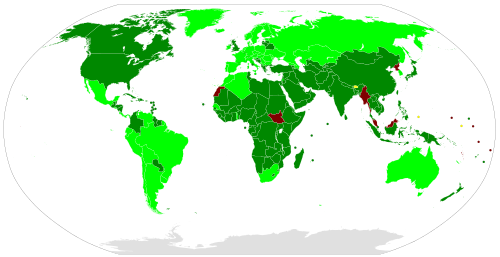
Based in New York and deposited with the UN Secretary-General, the convention is available in five official languages: Chinese, English, French, Russian, and Spanish. It has achieved near-universal acceptance, with 182 parties and 88 signatories as of July 2020.
Key Facts
- Effective Date: January 4, 1969.
- Global Reach: 182 countries are parties to the convention.
- Core Purpose: To eliminate racial discrimination and condemn apartheid.
- Monitoring Body: The Committee on the Elimination of Racial Discrimination (CERD).
- Enforcement: Includes mechanisms for both individual and inter-state complaints.
The Genesis of the Convention
The road to ICERD began in December 1960, when the UN General Assembly responded to rising incidents of antisemitism worldwide. The Assembly adopted a resolution condemning racial, religious, and national hatred as violations of the UN Charter and the Universal Declaration of Human Rights.
Following this, the Economic and Social Council drafted resolutions urging governments to educate the public against intolerance and repeal discriminatory laws. By November 20, 1963, the General Assembly adopted the Declaration on the Elimination of All Forms of Racial Discrimination, prioritizing the creation of a binding Convention. After a drafting process completed in mid-1964, the final text was adopted in December 1965.
Core Provisions and Obligations
The Convention provides a comprehensive set of mandates for member states to ensure racial equality. At its heart is Article 1, which defines racial discrimination as any distinction, exclusion, restriction, or preference based on race, color, descent, or national or ethnic origin that nullifies the enjoyment of human rights.
Prevention and Promotion
To prevent discrimination, parties are obligated to:
- Ensure public institutions do not practice racial discrimination.
- Refrain from sponsoring, defending, or supporting discriminatory practices.
- Review and amend or revoke policies that perpetuate racial inequality.
- Encourage movements that eliminate racial barriers and discourage division.
Prohibitions and Condemnations
The treaty explicitly condemns apartheid (a system of institutionalized racial segregation) and prohibits the incitement of racial discrimination. It further mandates the promotion of tolerance and understanding between all races.
Dispute Resolution and Enforcement
The Convention is not merely a statement of intent; it includes mechanisms to hold states accountable.
Inter-State Complaints
Under Articles 11 through 13, a party may complain to the Committee on the Elimination of Racial Discrimination (CERD) if it believes another party is failing to implement the treaty. If the dispute is not resolved, an ad hoc Conciliation Commission may be established. This mechanism was first invoked in 2018, notably by Qatar against Saudi Arabia and the UAE, and by Palestine against Israel.
Individual Complaints
Since 1982, an individual complaints mechanism has allowed persons to bring cases directly to the committee, provided the state-party has recognized the committee's competence. As of 2010, 58 states had recognized this competence, with 54 cases processed.
Reservations and Jurisprudence
Under Article 22, states may enter reservations to the treaty. Common areas of reservation include hate speech laws, immigration policies, and obligations that conflict with existing national constitutions. For example, Monaco and Switzerland reserved the right to apply their own legal principles regarding foreign labor markets, while the United Kingdom maintained that certain Commonwealth Immigrants Acts did not constitute racial discrimination.
Legal Outcomes
The CERD's individual complaints mechanism has created a limited body of jurisprudence. By September 2011, of the 48 registered complaints, 11 resulted in a finding that a party had violated the convention, while 16 led to a finding of no violation, and 17 were deemed inadmissible.
Impact and Implementation Challenges
The impact of ICERD is viewed through two lenses: acceptance and implementation. While it has near-universal acceptance, reporting compliance has been a persistent issue. As of 2008, many parties failed to report for five to ten years; some, like Sierra Leone, Liberia, and Saint Lucia, had significant gaps or total failures in reporting.
Despite these failures, the reporting system is praised for stimulating states to enact or amend anti-racist legislation. Recent activity includes the 2019 review of the Palestinian Authority, where experts raised concerns regarding antisemitism in textbooks and discrimination against Roma and LGBT communities. Similarly, the Committee expressed concern over discriminatory legislation and segregation in Israel, asserting jurisdiction over Palestine's 2018 inter-state communication.
| Feature | Details |
|---|---|
| Adoption Date | December 21, 1965 |
| Effective Date | January 4, 1969 |
| Total Parties | 182 |
| Monitoring Body | Committee on the Elimination of Racial Discrimination (CERD) |
| Key Prohibitions | Racial discrimination, Apartheid, Incitement of hatred |
| Complaint Types | Inter-state and Individual |
Frequently Asked Questions
What is the definition of racial discrimination under ICERD?
Article 1 defines it as any distinction, exclusion, restriction, or preference based on race, color, descent, or national or ethnic origin that prevents a person or group from enjoying their human rights and fundamental freedoms.
How does the inter-state complaint mechanism work?
A state party can file a complaint with the CERD Committee if it believes another party is not fulfilling its treaty obligations. If the parties cannot resolve the issue, the Committee may form a Conciliation Commission to investigate and make recommendations.
Can individuals file complaints under the Convention?
Yes, but only if the state involved has specifically recognized the competence of the CERD Committee to hear individual complaints under the mechanism that became operational in 1982.
What are 'reservations' in the context of ICERD?
Reservations are formal declarations made by a state when signing or ratifying the treaty, allowing them to opt out of or modify the application of specific articles, such as those regarding immigration or hate speech, to align with their national laws.
Has the Convention been effective in its implementation?
While it has achieved near-universal acceptance and encouraged many nations to pass anti-racist laws, it has struggled with consistent reporting from member states, which some critics view as a significant failure.