Inflation: Causes, Effects, and Economic Measurement
In the world of economics, inflation is defined as a sustained increase in the average price of goods and services. While the term originally referred to the expansion of the money supply—known as monetary inflation—it is now most commonly used to describe the resulting universal shift in prices. When inflation occurs, each unit of currency buys fewer goods and services, leading to a direct reduction in the purchasing power of money.
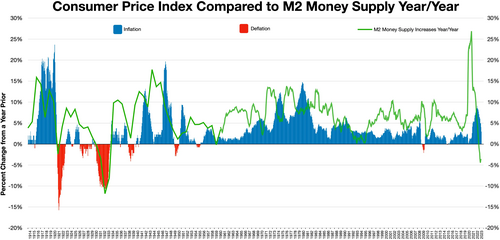
The opposite of this phenomenon is deflation, which is a general decrease in the price level of goods and services. To track these movements, economists use the inflation rate, which is the annualized percentage change in a general price index.
Key Facts
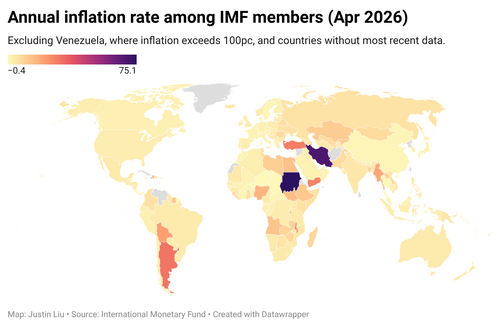
- Measurement: Inflation is typically measured using a price index, most commonly the Consumer Price Index (CPI).
- Purchasing Power: As inflation rises, the value of a single unit of currency decreases.
- Primary Drivers: Key causes include growth in the money supply, demand shocks, and supply shocks.
- Opposite State: Deflation occurs when the general price level of goods and services falls.
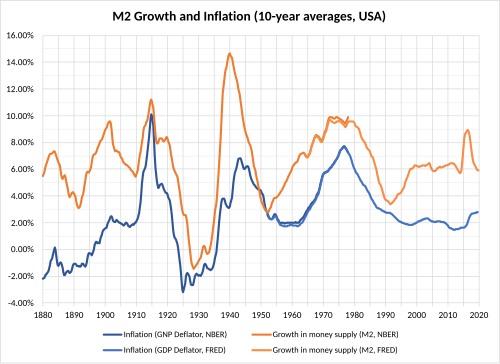
- Economic Consensus: Many professional economists agree that inflation is primarily caused by excessive growth in the money supply.
How Inflation is Measured
![UK and US monthly inflation rates from January 1989[1][2]](/images/16/a5/16a5b6603e00547e227432cac49985875b65217eae4bc879c501451027460d01.webp)
Economists rely on various indices to quantify price changes. The most prevalent is the Consumer Price Index (CPI), which tracks the weighted average of prices of a basket of consumer goods and services.
For example, if the U.S. CPI was 202.416 in January 2007 and rose to 211.080 by January 2008, the annual inflation rate is calculated as the percentage change between these two figures.
![Consumer price index by country in % (2024, relative to 2010)[73] 100 to 110 110 to 120 120 to 130 130 to 140 140 to 150 150 to 200 200 to 300 300 to 1000 above 1000 no data](/images/2c/17/2c173ca6dad21e6da43b6497f596ddbee3755fdb560a5ca32d80f21a92e44d44.webp)
Other Common Indicators
- Producer Price Index (PPI): Measures price changes from the perspective of the seller; it often serves as a leading indicator for consumer prices.
- Personal Consumption Expenditures (PCE): Another comprehensive measure of inflation used by central banks.
- Core Inflation: A measure that excludes volatile items, such as food and energy, to reveal long-term trends.
![PPI is a leading indicator, CPI and PCE lag[50] Core PPI Core PCE](/images/ab/00/ab0083825dec754c7fa18e3b26382290d63c113a720c5161fd8890629cfa0a1f.png)
The Causes of Inflation
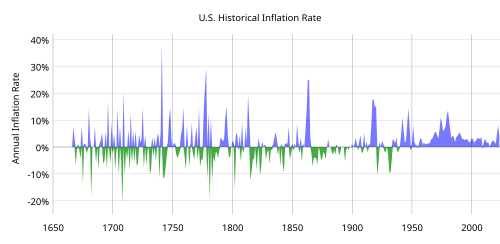
Inflation is rarely the result of a single factor. Instead, it typically stems from a combination of the following drivers:
- Money Supply: An increase in the total amount of money in an economy can lead to inflation if it is not offset by a corresponding increase in demand for money.
- Demand Shocks: Fluctuations in the real demand for goods and services, often triggered by changes in fiscal or monetary policy.
- Supply Shocks: Sudden changes in the availability of essential supplies, such as energy crises, which drive prices upward.
- Interest Rates: Significant decreases in interest rates set by central banks can stimulate spending and contribute to price increases.
- Inflation Expectations: When businesses and consumers expect prices to rise, they may adjust their behavior (e.g., raising prices or demanding higher wages), creating a self-fulfilling prophecy.
The Economic Impact of Inflation
Moderate inflation is a complex tool that affects economies in both positive and negative ways.
Negative Effects
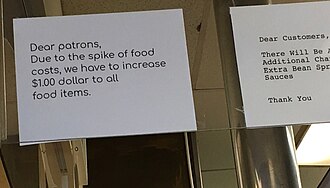
- Erosion of Purchasing Power: As prices rise, the real value of money falls, which can lead to social unrest or revolts if basic needs become unaffordable.
- Investment Uncertainty: Unpredictable inflation can discourage long-term savings and business investment.
- Hoarding: If consumers fear rapid future price increases, they may begin hoarding goods, leading to artificial shortages.
- Labor Market Friction: Workers may switch jobs unnecessarily as real wages fall, making the labor market appear tighter than it actually is.

Positive Effects
- Reducing Unemployment: Inflation can help adjust nominal wage rigidity, allowing the labor market to reach equilibrium more efficiently.
- Monetary Flexibility: It provides central banks with more room to maneuver in their monetary policy.
- Encouraging Investment: By reducing the incentive to hoard cash, moderate inflation encourages loans and active investment.
- Avoiding Deflation: It prevents the economic stagnation and inefficiencies typically associated with falling price levels.
Summary of Inflation Dynamics
| Feature | Inflation | Deflation |
|---|---|---|
| Price Level | Increasing | Decreasing |
| Purchasing Power | Decreasing | Increasing |
| Money Supply | Typically expanding | Typically contracting |
| Consumer Behavior | Potential hoarding | Delayed spending |
Control and Management
Throughout history, governments and central banks have used various methods to control inflation. These include inflation targeting, where a central bank sets a specific annual inflation goal, and historical systems like the gold standard, which linked currency value to a physical commodity to limit the expansion of the money supply.
Frequently Asked Questions
What is the difference between headline and core inflation?
Headline inflation refers to the total inflation figure, including all items in the price index. Core inflation removes volatile categories, such as food and energy, to provide a clearer picture of the underlying long-term inflation trend.
How does a supply shock cause inflation?
A supply shock occurs when the availability of a key resource (like oil or grain) suddenly drops. This scarcity drives up the price of that resource, which then increases the cost of producing and transporting other goods, leading to a general rise in prices.
Why is deflation considered dangerous?
Deflation can lead to a vicious cycle where consumers delay purchases in anticipation of even lower prices. This reduces business revenue, leading to wage cuts or unemployment, which further decreases demand and pushes prices even lower.
What is hyperinflation?
Hyperinflation is an extreme and rapid increase in prices, often exceeding 50% per month. It typically occurs when a government prints excessive amounts of money to fund spending, leading to a total collapse in the currency's value.
How does the money supply affect inflation?
According to many economists, when the quantity of money grows faster than the production of goods and services, there is "too much money chasing too few goods," which naturally bids up the prices of those goods.