Indian Peafowl: The Majesty of Pavo cristatus
The Indian peafowl (Pavo cristatus) is one of the most recognizable birds in the world, celebrated for its vibrant colors and the spectacular display of the male's train. Native to the Indian subcontinent, these birds are members of the Phasianidae family and are widely admired for their striking appearance and unique behaviors.
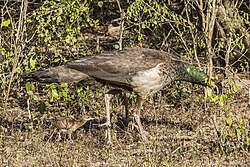
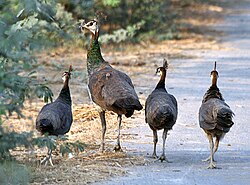
These birds exhibit a profound degree of sexual dimorphism, a biological phenomenon where the males and females of a species possess distinct physical characteristics beyond their reproductive organs. While the male, known as the peacock, is famous for his iridescent plumage, the female, or peahen, is more modestly colored to provide camouflage during nesting.
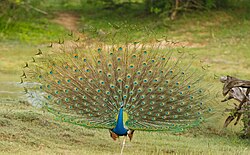
Key Facts
- Scientific Name: Pavo cristatus
- Conservation Status: Least Concern (IUCN 3.1)
- Native Range: India and Sri Lanka
- Maximum Length: Up to 230 cm (including the male's train)
- Average Weight: 4.1 to 5.2 kg for males
- Clutch Size: 3 to 8 eggs per nest
Physical Characteristics
The Peacock (Male)
The male Indian peafowl is significantly larger than the female, with an average bill-to-tail length of 100–120 cm. However, when including the fully grown train, they can reach lengths of 200–230 cm. The peacock is characterized by a metallic blue crown and a fan-shaped crest consisting of blue-greenish webbing on bare black shafts.
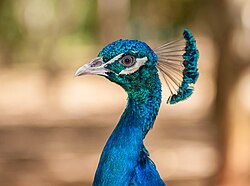
Its neck is a brilliant blue with scaly bronze-green feathers, while the wings feature chestnut-colored primary feathers. The most iconic feature is the train, composed of elongated upper tail coverts adorned with distinct, iridescent eye-spots.
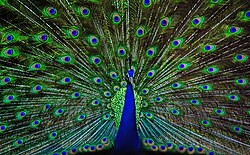
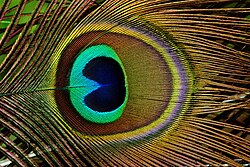
The Peahen (Female)
In contrast, the peahen is smaller and lacks the extravagant train of the male. Her plumage is primarily brown and muted, which is essential for survival as it allows her to blend into the environment while incubating eggs.
Genetics and Distribution
The Indian peafowl is native to India and Sri Lanka, though feral colonies have been introduced globally. Genomic sequencing has revealed that the species possesses 15,970 protein-coding sequences and has a lower percentage of repetitive DNA (8.62%) compared to chickens (9.45%). Research suggests the population underwent two significant bottlenecks—roughly four million and 450,000 years ago—which severely reduced their effective population size at those times.

Breeding and Life Cycle
Peafowl are versatile nesters, utilizing shallow scrapes on the ground lined with debris, though they have also been known to nest in building crevices or abandoned vulture nests. The female is solely responsible for the incubation and rearing of the young.
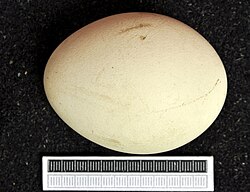
A typical clutch consists of three to eight oval eggs, measuring approximately 6.2–7.6 cm in length. These eggs have thick, polished shells and range in color from pale white to reddish-brown. The incubation period lasts between 28 and 30 days.
Summary of Species Specifications
| Feature | Male (Peacock) | Female (Peahen) |
|---|---|---|
| Average Weight | 4.1–5.2 kg | Lighter than male |
| Total Length | Up to 230 cm | Significantly shorter |
| Plumage | Iridescent blue, chestnut, and green | Muted brown/grey |
| Key Feature | Elongated train with eye-spots | Camouflaged feathers |
| Parental Role | No role in hatching/rearing | Incubates and raises chicks |
Cultural Significance
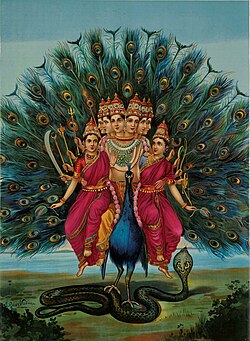
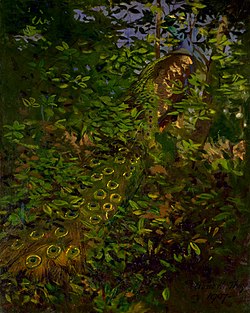
The Indian peafowl has a deep presence in art and mythology. It has been depicted in classical paintings, such as those by Raja Ravi Varma, and is often associated with divine figures like Kartikeya.
Frequently Asked Questions
What is the difference between a peacock and a peafowl?
"Peafowl" is the general term for the species. A "peacock" refers specifically to the male, while a "peahen" refers to the female.
How long does it take for peafowl eggs to hatch?
The eggs are incubated by the female for approximately 28 to 30 days.
Are Indian peafowl an endangered species?
No, they are classified as "Least Concern" on the IUCN Red List, with conservative estimates suggesting a population of over 100,000 as of 2002.
Do male peacocks help raise their young?
Generally, males take no part in hatching or rearing the young, although there have been rare, isolated reports of males incubating eggs.
Where are Indian peafowl naturally found?
They are native to India and Sri Lanka, though they have established feral populations in various other parts of the world.