Indian National Army Trials: The Red Fort Court-Martials and the Path to Independence
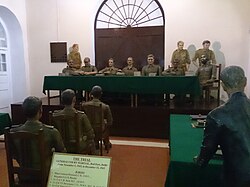
Between November 1945 and May 1946, the British Raj conducted a series of high-profile court-martials known as the Indian National Army (INA) trials, or the Red Fort trials. These proceedings targeted officers of the INA on charges of treason, torture, and murder committed during the Second World War. What began as a legal effort to maintain military discipline evolved into a catalyst for national unity, fueling the final stages of the Indian independence movement.
The trials were not merely legal battles but became a focal point for an anticolonial critique of international law. As the British sought to punish those who had defected to the INA, they inadvertently ignited a firestorm of public sympathy and military unrest that threatened the very foundations of British rule in India.
Key Facts
- Timeline: The primary public trials took place from November 1945 to May 1946.
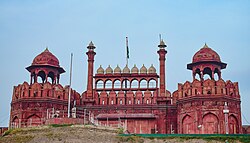
- Location: The most significant trials were held at the historic Red Fort in Delhi.
- Primary Defendants: Colonel Prem Sahgal, Colonel Gurbaksh Singh Dhillon, and Major-General Shah Nawaz Khan.
- Legal Support: The Indian National Congress formed the INA Defence Committee to provide legal aid.
- Outcome: Public outcry and military mutinies forced the commutation of sentences for the lead defendants.
The Origins of the Indian National Army
The INA emerged from the complex geopolitical landscape of Southeast Asia during World War II. Before the war, Japan served as a refuge for Indian nationalists who advocated for militant nationalism. Japanese intelligence missions, such as those led by Major I Fujiwara, worked to establish contacts with the Indian Independence League in Thailand and Malaya.
Following the Fall of Singapore, nearly 55,000 Indian prisoners of war (POWs) fell into Japanese hands. The harsh conditions of the POW camps led many to desert and join the First INA under Mohan Singh Deb in 1942. However, distrust between Mohan Singh and the League's leadership, including Rash Behari Bose, led to the unit's dissolution in December 1942.
The arrival of Subhas Chandra Bose in June 1943 revitalized the movement. He reorganized the unit as the army of the Azad Hind (Free India) government, proclaimed in October 1943. This government received recognition from Axis-allied nations, including Germany and Fascist Italy, and declared war on Britain and the United States. The INA fought alongside Japanese forces in the Imphal and Kohima regions before retreating and eventually ceasing to exist as a cohesive force by May 1945.
The Red Fort Trials
After the war, the British government brought captured INA soldiers to trial. While early, private courts-martial occurred in 1943 and 1944, the post-war trials were designed to be selective and public. The British chose the Red Fort as the venue to emphasize the gravity of the charges.
The First Joint Trial
The first and most famous trial involved three officers: Colonel Prem Sahgal, Colonel Gurbaksh Singh Dhillon, and Major-General Shah Nawaz Khan. These men had previously served in the British Indian Army before being captured and joining the INA. They were the only defendants charged with "waging war against the King-Emperor," as the Indian Army Act of 1911 lacked a specific charge for treason.
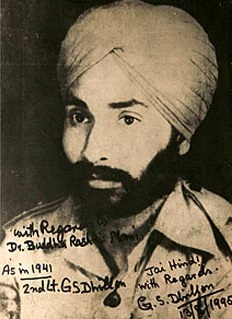
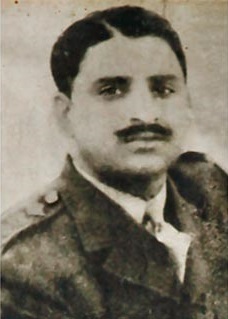
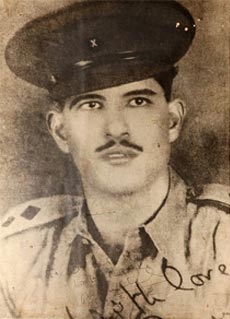
The selection of these three men was symbolically potent; they represented three different faiths—Hindu, Sikh, and Muslim—yet stood united in their defense. They were represented by a massive legal team led by Sir Tej Bahadur Sapru and Lt. Col. Horilal Varma.
Subsequent Trials and Legal Shifts
Following the first trial, other officers such as Captain Abdul Rashid and Captain Shinghara Singh Mann were tried. Captain Singh Mann, a recipient of the Sardar-e-Jung and Vir-e-Hind medals for valor, was held in Multan prison until 1946. Due to the overwhelming public backlash following the first trial, the British dropped the treason charges for later defendants, though many were still cashiered from the army.
The INA Defence Committee
The Indian National Congress recognized the trials as a pivotal political opportunity. They established the INA Defence Committee to coordinate legal defense and arrange relief for captive troops. This committee included prominent figures such as Jawaharlal Nehru, Bhulabhai Desai, Asaf Ali, and Tej Bahadur Sapru.
The committee's work transformed the courtroom into a political stage, framing the INA soldiers not as traitors, but as patriots fighting for liberation. This strategy successfully garnered widespread public sympathy across religious and political divides.
Consequences and the Collapse of Raj Authority
The trials triggered a wave of unrest that extended far beyond the civilian population. The most alarming development for the British was the wavering loyalty within their own ranks. The Congress and the Muslim League aligned in rare unity, flying their flags together in protest.
This tension culminated in the Royal Indian Navy mutiny, which spread from Karachi to Calcutta. Additionally, army mutinies broke out in Madras, Pune, and Jabalpur. The sheer scale of the unrest forced Field Marshal Claude Auchinleck, the Commander-in-Chief of the Indian Army, to commute the life sentences of Sahgal, Dhillon, and Khan.
| Feature | Details |
|---|---|
| Primary Charges | Waging war against the King-Emperor, murder, and abetment to murder |
| Key Defendants | Prem Sahgal, Gurbaksh Singh Dhillon, Shah Nawaz Khan |
| Defence Leadership | INA Defence Committee (led by Nehru, Sapru, and others) |
| Major Outcome | Commutation of sentences due to public and military pressure |
| Political Impact | Unified Indian nationalists; triggered Royal Indian Navy mutinies |
Frequently Asked Questions
Why were the INA trials held at the Red Fort?
The British chose the Red Fort because of its immense political and symbolic significance, intending to make a public example of the defendants and assert the authority of the Crown.
Who were the three main defendants in the first trial?
The first trial featured Colonel Prem Sahgal (Hindu), Colonel Gurbaksh Singh Dhillon (Sikh), and Major-General Shah Nawaz Khan (Muslim), representing a cross-section of Indian society.
What was the role of the INA Defence Committee?
Formed by the Indian National Congress, the committee provided legal counsel for the accused officers, coordinated information on captives, and turned the trials into a national movement for independence.
How did the trials affect the British Indian Army?
The trials caused widespread unrest and mutinies within the British Indian Army and the Royal Indian Navy, signaling to the British that they could no longer rely on Indian troops to maintain colonial rule.
What happened to the INA memorial in Singapore?
Lord Louis Mountbatten ordered the demolition of the memorial in 1945, allegedly to prevent the spread of socialist ideals. However, the site was marked as a historical site in 1995, and a cenotaph now stands there.