Indian Independence Act 1947: The Legislation That Partitioned British India
The Indian Independence Act 1947 was a pivotal piece of legislation passed by the Parliament of the United Kingdom that fundamentally reshaped the geography and politics of South Asia. This Act provided the legal framework for the end of British rule in India and the creation of two separate, independent dominion states: India and Pakistan.
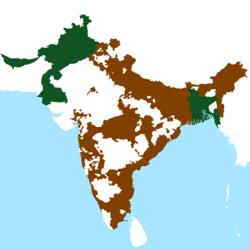
The process culminated on August 15, 1947, when British India was partitioned. This division created the modern-day state of India and the state of Pakistan, which at the time included both West Pakistan and East Pakistan (now Bangladesh).
Key Facts
- Royal Assent: Granted on July 18, 1947.
- Commencement Date: August 15, 1947.
- Primary Outcome: Partition of British India into the Dominions of India and Pakistan.
- Key Architect: Lord Mountbatten, the last Viceroy and Governor-General of India.
- Legal Status: Repealed by the Constitution of India (1950) and the Constitution of Pakistan (1956).
The Road to Independence
Attlee's Announcement
The path to the Act began on February 20, 1947, when British Prime Minister Clement Attlee announced that the United Kingdom would grant full self-government to British India no later than June 3, 1948. He also noted that the future of the Princely States—semi-autonomous regions under British suzerainty—would be decided after the final transfer of power date was set.
The Mountbatten Plan
Following negotiations between the British government, the Indian National Congress, the Muslim League, and the Sikh community, Lord Mountbatten proposed the 3 June Plan (or Mountbatten Plan). This plan established the core principles of the partition, including the granting of dominion status, sovereignty for both new countries, and the right for each to draft its own constitution.
Core Provisions of the Act
The Act contained several critical mandates to ensure the legal transition of power:
- Creation of Dominions: The formal division of British India into the Dominion of India and the Dominion of Pakistan effective August 15, 1947.
- Provincial Partition: The provinces of Bengal and Punjab were divided between the two new nations.
- Governance: The office of Governor-General was established in each dominion as the representative of the British Crown.
- Legislative Power: Full legislative authority was granted to the respective Constituent Assemblies of India and Pakistan.
- End of Suzerainty: British suzerainty (the right of a sovereign state to control another) over the princely states ended, allowing them to join either dominion.
- Imperial Titles: The British monarch was prohibited from using the title "Emperor of India."
Territorial and Administrative Details
The Division of Provinces
The Act specified the provisional territories for the new states. Pakistan was to include East Bengal, West Punjab, Sindh, and the Chief Commissioner's Province of Baluchistan. The North-West Frontier Province's fate was decided via referendum.
In Bengal and Punjab, the existing provinces ceased to exist and were replaced by new entities: East and West Bengal, and East and West Punjab. Boundary commissions were appointed by the Governor-General to determine the exact borders.
Administrative Transition
Until new constitutions were written, both dominions were governed by the Government of India Act 1935. The Governor-General held significant temporary powers, including the ability to amend the 1935 Act until March 31, 1948, and the responsibility for dividing joint assets, liabilities, and the armed forces.
| Feature | Details |
|---|---|
| Effective Date | August 15, 1947 |
| New States | Dominion of India and Dominion of Pakistan |
| Key Figures | Clement Attlee, Lord Mountbatten, Jawaharlal Nehru, Muhammad Ali Jinnah |
| Governing Law (Interim) | Government of India Act 1935 |
| Princely States | 562 states given the choice to accede to India or Pakistan |
The Integration of Princely States
The transition was complicated by the 562 princely states. Lord Mountbatten advised these states to join either India or Pakistan based on geographical contiguity and the wishes of their people.
Integration into India
Under the leadership of Prime Minister Jawaharlal Nehru and Home Minister Vallabhbhai Patel, over 550 states joined India. However, three states presented challenges:
- Jammu and Kashmir: Despite a Muslim majority, Maharaja Hari Singh eventually acceded to India following a tribal invasion from Pakistan.
- Junagadh: Initially acceded to Pakistan, but after a popular revolt and a referendum in February 1948, it joined India.
- Hyderabad: The Nizam sought independence, but after the Indian government launched Operation Polo in September 1948, the state was integrated into India.
Integration into Pakistan
Muhammad Ali Jinnah, as Governor-General, and Liaquat Ali Khan, as Prime Minister, oversaw the accession of several Muslim-majority states, including Bahawalpur, Chitral, and the Khanate of Kalat (which acceded in March 1948).
Aftermath and Legacy
The partition triggered massive displacement and violence as millions of Hindus, Sikhs, and Muslims migrated across the new borders to reach their respective countries, often leaving all possessions behind.
Legally, the Act was eventually repealed by the new constitutions of India (1950) and Pakistan (1956) to establish full republican independence. While largely repealed in the new nations, the Act remains part of the UK's legislative history, though many of its sections were removed by the Statute Law (Repeals) Act 1976.
Frequently Asked Questions
When did the Indian Independence Act 1947 take effect?
The Act received Royal Assent on July 18, 1947, and officially came into force on August 15, 1947.
What happened to the Princely States after the Act?
British suzerainty over the 562 princely states lapsed, and they were given the option to join either the Dominion of India or the Dominion of Pakistan based on geography and the people's wishes.
Who were the first leaders of the new dominions?
In India, Lord Mountbatten served as the first Governor-General, with Jawaharlal Nehru as Prime Minister. In Pakistan, Muhammad Ali Jinnah became Governor-General and Liaquat Ali Khan became Prime Minister.
How was the territory of Punjab and Bengal handled?
Both provinces were partitioned between India and Pakistan. New provinces (East/West Punjab and East/West Bengal) were created, with boundaries determined by a boundary commission.
Is the Indian Independence Act 1947 still in force?
It was repealed by the constitutions of India in 1950 and Pakistan in 1956. However, it has not been fully repealed in the United Kingdom, although several sections were removed by the Statute Law (Repeals) Act 1976.