15th (Imperial Service) Cavalry Brigade
The 15th (Imperial Service) Cavalry Brigade was a distinguished military formation of British India, composed of troops from the Princely States. Active from October 1914 to January 1920, this brigade played a pivotal role in the Middle Eastern theatre of World War I, transitioning from defensive patrols at the Suez Canal to decisive offensive operations in Palestine and Syria.
Initially gathered at Deolali under Brigadier-General William A. Watson, the brigade consisted of approximately 1,700 men. Unlike standard British Indian Army units, these were Imperial Service Troops, meaning they were provided by the semi-autonomous Princely States, though they operated under British command and were supported by British Indian Army Special Service Officers (SSOs) acting as advisors.
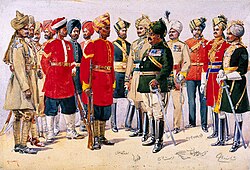
Key Facts
- Active Period: October 1914 – January 1920.
- Total Strength: Approximately 1,700 men.
- Primary Theatre: Egypt, Sinai, Palestine, and Syria.
- Core Units: Hyderabad Lancers, Mysore Lancers, Patiala Lancers, and later the Jodhpur Lancers.
- Major Victories: Significant contributions to the capture of Gaza and Haifa.
Brigade Organization and Composition
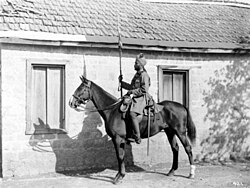
The brigade was structured to be a self-sufficient mobile force. Its fighting strength was primarily derived from three cavalry regiments, each consisting of five squadrons. The initial composition included the 1st Hyderabad Lancers, the Mysore Lancers (which integrated troops from Bhavnagar and Kashmir), and the Patiala Lancers.
To support these combat units, the brigade included the 124th Indian Cavalry Field Ambulance and the Kathiawar Imperial Service Signal Troop. In June 1918, the brigade further modernized its firepower by amalgamating the machine-gun sections of its regiments into the 15th Imperial Service Brigade Machine-Gun Squadron.
Evolution of Command and Personnel
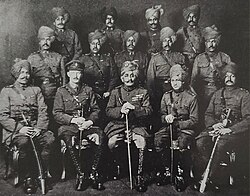
While the brigade was led by British officers, the integration of British personnel grew over time. In 1914, British officers served mainly as advisors. By mid-1918, this had increased to a full complement of twelve British officers per regiment to enhance tactical coordination within the larger British army structure.
Service History: From the Suez to Syria
Defending the Suez Canal (1914–1916)
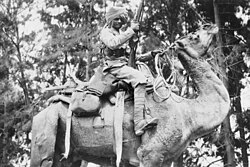
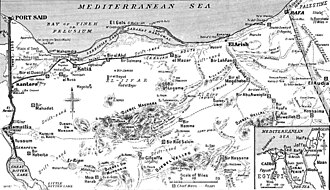
The brigade arrived in Egypt in October 1914 to defend the Suez Canal, a critical strategic waterway. For the first few years, the soldiers focused on patrolling the Sinai Desert and the canal's west bank. Their first combat engagement occurred in January 1915 at Bir El Dueidar. Throughout early 1915, they successfully repelled Turkish attempts to cross the canal and conducted raids to destroy Turkish water sources in the Sinai.
The Third Battle of Gaza and Palestine (1917)
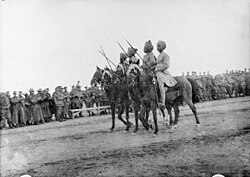
In November 1917, the brigade participated in the Third Battle of Gaza. During the pursuit of retreating Turkish forces, the Mysore Lancers and Hyderabad Lancers engaged in fierce fighting at Beit Hanun and Beit Lahi. Despite heavy artillery fire, the brigade successfully linked up with the Australian Mounted Division, contributing to the collapse of the Turkish line in the region.
The Final Push: Haifa and Homs (1918)
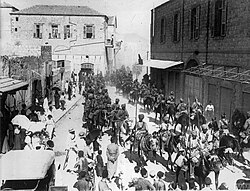
By 1918, the unit was redesignated as the 15th (Imperial Service) Cavalry Brigade under the 5th Cavalry Division. In July, the Jodhpur Lancers and Mysore Lancers conducted successful charges at the Abu Tellul bridgehead. One of the brigade's most celebrated achievements was the advance on Haifa in September 1918, where they overcame Turkish artillery positions on Mount Carmel.
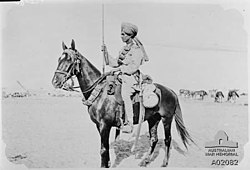
Following the capture of Haifa, the brigade continued its advance through Lake Tiberias and El Kuneitra, eventually reaching the outskirts of Damascus and Kiswe before the Armistice of Mudros ended hostilities.
Casualties and Honors
The brigade faced significant losses during its campaigns. The Mysore Lancers recorded 23 killed in action, while the Hyderabad Lancers lost 12. The Jodhpur Lancers, during their time with the brigade, suffered 17 killed in action. The Patiala Lancers recorded seven deaths during their attachment from 1914 to 1916.
Their bravery was recognized with numerous decorations, including six Distinguished Service Orders, fourteen Military Crosses, and sixty-six mentions in despatches.
Summary of Brigade Structure
| Unit Type | Unit Name | Period of Service |
|---|---|---|
| Cavalry Regiment | 1st Hyderabad Lancers | 1914–1918 |
| Cavalry Regiment | Mysore Lancers | 1914–1918 |
| Cavalry Regiment | Patiala Lancers | 1914–1916 |
| Cavalry Regiment | Jodhpur Lancers | 1918–1920 |
| Support | 124th Indian Cavalry Field Ambulance | 1914–1918 |
| Support | 15th Kathiawar Signal Troop | 1914–1918 |
| Firepower | 15th Imperial Service Machine Gun Squadron | 1918–1920 |
Memorials
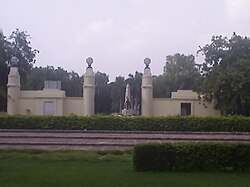
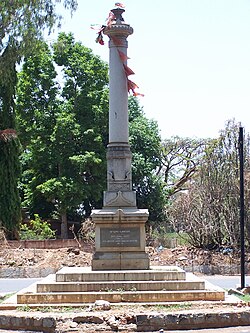
The legacy of the brigade is preserved at the Teen Murti Haifa Chowk in New Delhi, where a memorial stands to honor their service. Additionally, the Mysore Lancers are commemorated with a memorial in Bangalore.
Frequently Asked Questions
What were the Imperial Service Troops?
The Imperial Service Troops were military units provided by the Princely States of India to the British Crown, distinct from the regular British Indian Army.
Which major battles did the 15th Cavalry Brigade fight in?
The brigade was involved in the Raid on the Suez Canal, the Third Battle of Gaza, the battles at Abu Tellul, and the capture of Haifa.
When did the Jodhpur Lancers join the brigade?
The Jodhpur Lancers joined the brigade in May 1918 after previously serving on the Western Front in France.
Who were the notable commanders of the brigade?
The brigade was led by Brigadier-General William A. Watson, Brigadier-General M. H. Henderson, and Brigadier-General Cyril Rodney Harbord.
How was the brigade disbanded?
Following the Armistice of Mudros, the brigade served as part of the occupation forces in Palestine before being broken up during demobilization by January 1920.