Imperial Russian Army: History, Organization, and Evolution
The Imperial Russian Army served as the primary land force of the Russian Empire from its formal establishment in 1721 until its dissolution in 1917. Guided by the motto "For Faith, Tsar, and Fatherland," this massive military institution evolved from a collection of feudal levies into one of the largest standing armies in European history. Its trajectory reflects the broader modernization of Russia, moving from Western-style reforms under Peter the Great to the industrial-scale mobilization of the First World War.
Key Facts
- Founded: November 2, 1721.
- Disbanded: September 14, 1917.
- Peak Peacetime Strength: Approximately 1.3 million personnel (1913).
- WWI Mobilization: Increased to 4.5 million, with over 15 million total serving between 1914 and 1917.
- Service Terms: Compulsory conscription lasting between 2 and 6 years for men aged 21 to 43.
- Core Branches: Regular troops, Cossack troops, Muslim troops, and the State militia.
Foundations and Early Modernization
While Russian military forces existed prior to the 18th century, Peter the Great fundamentally transformed the army to compete with Western powers. Starting in 1700, he replaced the traditional Streltsy (hereditary musketeer corps) with new Western-style regiments. This modernization was codified through a 1699 recruitment decree, the 1716 military regulations, and the 1718 creation of the College of War for administrative oversight.
Before these reforms, the army relied on "Regiments of the New Order," which included regulars, dragoons, and reiters. These units were often led by foreign officers and manned by a mix of landless boyars, volunteers, and Cossacks. By 1681, these new-type regiments already comprised more than half of the Russian forces, setting the stage for a professional standing army.
The Napoleonic Era and 19th Century Expansion
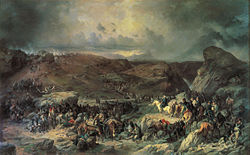
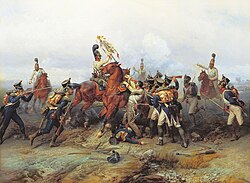
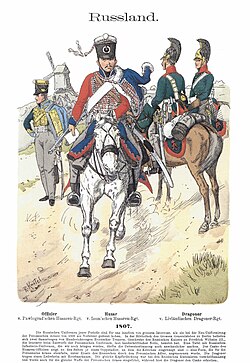
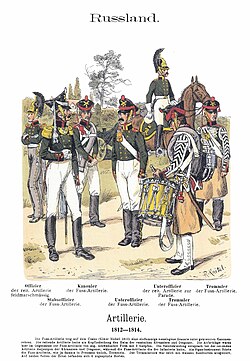
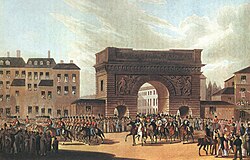
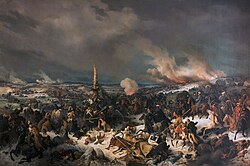
The Imperial Russian Army played a pivotal role in the Napoleonic Wars, most notably during the French invasion of Russia. The army's resilience and strategic depth were critical in defeating Napoleon's Grande Armée. Following these conflicts, the active army was maintained at just over 1 million men, though this surged to 1.7 million during the Crimean War.
During this era, the army expanded its influence across Europe and Asia, engaging in the Finnish War (1808–1809), which resulted in the creation of the Grand Duchy of Finland, as well as various conflicts in Central Asia and the Caucasus. The period also saw the rise of legendary commanders such as Mikhail Kutuzov and Alexander Suvorov.
Organization and Administration
The administration of the army was centered around the General Staff, which evolved into a prestigious institution after the Crimean War and the Russo-Turkish War (1877–78). By 1865, the General Staff focused on operations, while the Main Staff of the War Ministry handled intelligence, mobilization, and training.
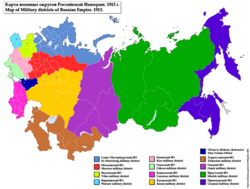
For recruitment and mobilization, the Empire was divided into 12 military districts. Each district was led by a governor with both civil and military authority. Recruitment was further subdivided into 208 recruiting districts, each corresponding to a specific line infantry regiment, although in practice, only about 30% of a regiment's recruits typically came from their assigned district.

Personnel and Social Structure
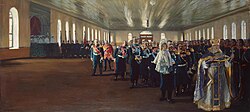
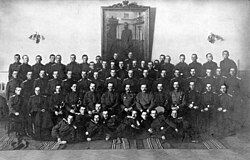
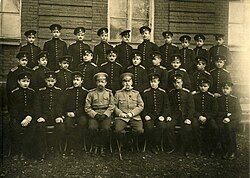
The army was a complex social hierarchy. Enlisted men were primarily conscripts, while officers were commissioned from the Page Corps, cadet corps, or military schools (formerly known as junker schools). The most elite officers were those who graduated from the Nikolaev General Staff Academy, forming an intellectual elite that rivaled the prestige of the Imperial Guard.
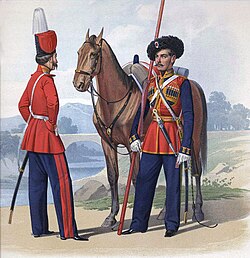
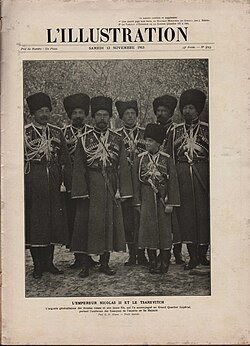
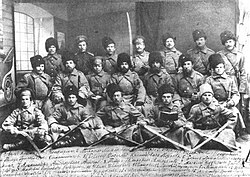
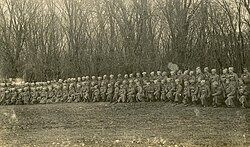
The army also integrated diverse ethnic and religious groups, including Cossacks—irregular cavalry known for their distinct uniforms and fierce loyalty—as well as Muslim, Jewish, and Latvian soldiers.
World War I and the Path to Collapse
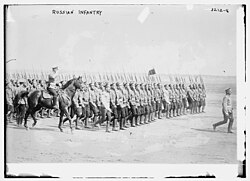
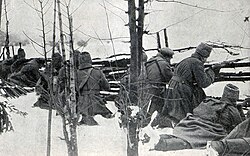
On the eve of World War I in 1914, Russia possessed the largest peacetime standing army in Europe. Upon mobilization, the force grew to 4.5 million men, equipped with nearly 7,900 guns. The army was organized into several fronts, including the Western, Northwestern, and Romanian Fronts.
Despite early successes, such as the Brusilov Offensive, the army suffered devastating losses at the Battle of Tannenberg. The strain of total war, combined with internal political instability, led to a breakdown in morale. Following the abdication of Emperor Nicholas II in March 1917, the army swore loyalty to the Russian Provisional Government.
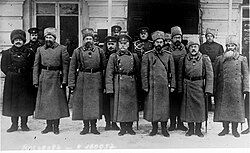
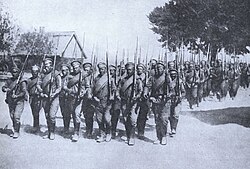
However, the revolutionary fervor of 1917 proved insurmountable. The Imperial Russian Army collapsed and dissolved, with many of its remnants eventually being absorbed into the newly formed Red Army of the Soviet state.
Summary of Imperial Russian Army Specifications
| Category | Details |
|---|---|
| Peacetime Strength (1913) | ~1,300,000 (811k Infantry, 133k Cavalry, 209k Artillery) |
| WWI Mobilization | 4,500,000 troops |
| Conscription Age | 21–43 years |
| Administrative Units | 12 Military Districts |
| Budget (1902) | 325.6 million rubles |
| Supreme Command | Emperor of Russia / Stavka (1914–17) |
Frequently Asked Questions
Who was the supreme commander of the Imperial Russian Army?
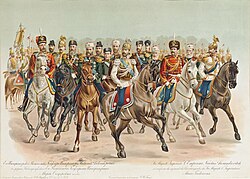
The Emperor of Russia served as the Commander-in-Chief. During World War I (1914–1917), the Stavka (Supreme Headquarters) was established, with Grand Duke Nicholas serving as the first Supreme Commander and Nikolai Dukhonin as the last.
What were the Cossacks in the Imperial Russian Army?
Cossacks were specialized irregular cavalry troops known for their distinct cultural identity, uniforms (such as the cherkesska), and roles in both frontier guarding and offensive cavalry charges.
How did the army recruit its soldiers?
The army used a system of compulsory conscription for men between the ages of 21 and 43. Service typically lasted between 2 and 6 years, with recruits drawn from 208 specific recruiting districts across the empire.
What happened to the army after the 1917 Revolution?
Following the February Revolution, the army initially supported the Provisional Government. However, it eventually collapsed due to internal unrest and the October Revolution. By December 1917, the Bolsheviks took control, and the remnants of the Imperial Army were integrated into the Red Army.
What was the role of the General Staff?
The General Staff was the intellectual hub of the army, responsible for the study of war, operational planning, and strategic coordination. Its officers were considered an elite branch of the military, often rivaling the Imperial Guard in status.