Understanding Ieung: The Versatile Consonant of Hangul
In the Korean writing system, known as Hangul, few characters are as visually distinct or functionally unique as ieung (ㅇ). While it may look like a simple circle, this consonant plays a vital role in the structure of Korean syllables, acting as both a silent placeholder and a distinct nasal sound depending on its position.
It is important to note that while the character ㅇ resembles certain Latin, Greek, or Cyrillic letters, it is a unique component of the Korean alphabet with its own specific phonetic rules and historical evolution.
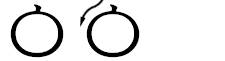
Key Facts
- Name: Ieung (이응)
- Primary Function: Acts as a silent placeholder in the initial position and a [ŋ] sound in the final position.
- Shape Origin: The circular design represents the shape of the human throat.
- Historical Evolution: It resulted from the merger of two different letters: ieung and yennieung (ㆁ).
- Unicode Codepoints: U+3147, U+110B, and U+11BC.
Phonetic Usage and Sound Values
The sound of ieung changes based on where it is placed within a syllable. Understanding these shifts is essential for reading and pronouncing Hangul correctly.
The Initial Position: A Silent Placeholder
When ieung is used at the beginning of a syllable, it is typically silent. In this context, it serves as a consonant placeholder, allowing a vowel to occupy the initial position of the syllable block. However, in certain instances, it may take on a glottal stop [ʔ] sound.
The Final Position: The Nasal Sound
When ieung appears as the final consonant (the jongseong) of a syllable, its sound changes significantly. In this position, it is pronounced as a velar nasal [ŋ], similar to the "ng" sound in the English word "sing."
Historical Evolution and Design
Ieung was officially introduced in 1446 as part of the Hunminjeongeum. Its design is deeply rooted in phonetics; the perfect circle was intended to mimic the shape of the human throat during sound production. In traditional Chinese phonological systems, it was classified as a laryngeal sound.
The Merger of Ieung and Yennieung
The modern ieung is actually the result of a historical merger. Originally, there were two separate characters:
- Ieung (ㅇ): Primarily used as a null placeholder.
- Yennieung (ㆁ): A character that carried the [ŋ] sound in both initial and final positions.
Around the 17th century, these two letters merged. The modern ieung absorbed the roles of both, becoming the silent placeholder for initials and the [ŋ] sound for finals.
Naming Traditions
The name "ieung" was not present in the original 1446 documents. Early records, such as the 1527 text Hunmong chahoe, suggest the letter may have originally been named simply "i" (이). The name ieung was originally applied to yennieung, but after the merger, the name was transferred to the modern ㅇ character.
Technical Specifications
For developers and linguists, ieung is represented by several different Unicode encodings depending on its specific role in a syllable.
| Unicode Name | Unicode Hex | Decimal | UTF-8 (Hex) |
|---|---|---|---|
| HANGUL LETTER IEUNG | U+3147 | 12615 | E3 85 87 |
| HANGUL CHOSEONG IEUNG (Initial) | U+110B | 4363 | E1 84 8B |
| HANGUL JONGSEONG IEUNG (Final) | U+11BC | 4540 | E1 86 BC |
Frequently Asked Questions
Is ieung the same as the number zero?
No. While they look similar, ieung is a Korean consonant used in the Hangul writing system, whereas 0 is a numeric digit.
Why is ieung silent at the start of a word?
In Hangul, every syllable must begin with a consonant. When a syllable begins with a vowel sound, ieung is used as a structural placeholder to satisfy this requirement without adding a sound.
How do I pronounce ieung at the end of a syllable?
At the end of a syllable, it is pronounced as [ŋ], which is the "ng" sound found in English words like "song" or "ring."
What is the difference between ieung and yennieung?
Historically, yennieung (ㆁ) carried a nasal sound in both initial and final positions, while ieung (ㅇ) was mostly a silent placeholder. They merged into the single modern character we use today around the 17th century.
What does the shape of ieung represent?
The circular shape was designed to represent the physical shape of the human throat during the production of the sound.