Idlib: A History of Trade, Empire, and Conflict
Located in northwestern Syria, Idlib is a city whose story is woven into the fabric of the Mediterranean's greatest empires. From the ancient conquests of Armenia and Rome to its prosperity as an Ottoman trade hub and its recent role in modern geopolitical strife, Idlib has evolved from a quiet provincial outpost into a focal point of international attention.
Classical Antiquity and Early Influence
The early history of Idlib is marked by the shifting borders of ancient superpowers. The region was first conquered by Tigranes the Great, the Armenian king, and integrated into the Armenian Empire. This era was relatively short-lived, as the Roman general Pompey the Great conquered the area around 64 BCE.
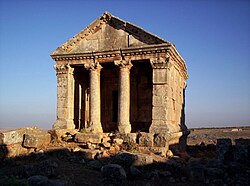
Under Roman rule, Idlib remained a modest settlement within the province of Roman Syria. It later transitioned to the Eastern Roman province of Syria Secunda. While the city itself did not hold immense political significance during this time, the surrounding region was culturally rich. Today, the most prominent remnants of this era are found in the city's museum and the Dead Cities—a collection of significant Byzantine-era archaeological sites located north of the city.
The Ottoman Era: Prosperity and Industry
The trajectory of Idlib changed significantly under Ottoman rule, which began in 1516. Initially a small timar (a land grant or fief), the village of Idlib was formally founded by Fadil Ahmed Pasha, the son of Grand Vizier Köprülü Mehmed Pasha. As the governor of Damascus Eyalet, Fadil Ahmed Pasha laid the groundwork for the settlement's growth.
Over time, Idlib transformed into a bustling town characterized by its markets, bathhouses, and caravanserais (roadside inns for travelers and traders), such as Khan al-Ruz and Khan Abi Ali. The city became a powerhouse of agricultural industry, specifically focusing on olive production. This led to the rise of a prosperous soap industry, with products exported to major hubs like Aleppo, Antioch, Hama, and as far as the Ottoman capital of Istanbul.
Beyond soap, Idlib was a primary producer of cotton fabrics. The 19th-century traveler Josias Leslie Porter noted that the city's olive groves were larger than those found in Gaza, Beirut, or Damascus. By the mid-19th century, the population was estimated at 8,000 people, including a community of 500 Christians. German orientalist Albert Socin later described the town as "flourishing" toward the end of the century.
Modern Conflict and the Syrian Civil War
In the 21st century, Idlib became a central theater of the Syrian uprising that began in 2011. The city saw early protests and fighting, eventually becoming a target for rebel campaigns. While rebels temporarily captured the city and governorate, government forces retook control in April 2012 following a month of intense fighting and the attempted implementation of the Kofi Annan ceasefire.
The tide shifted again in March 2015 during the Second Battle of Idlib. The Army of Conquest—a rebel alliance led by Ahrar al-Sham and the al-Nusra Front—captured the city and besieged the Shi'a-majority towns of Kafriya and Al-Fu'ah. By April 2015, Idlib was proposed as the interim seat for the Syrian Interim Government.
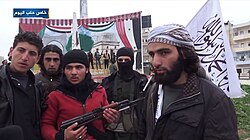
Control of the city consolidated further on July 23, 2017, when Tahrir al-Sham (the successor to the al-Nusra Front) expelled Ahrar al-Sham. This brought the entire city under the administration of the Syrian Salvation Government.
In an attempt to mitigate the violence, Russian President Vladimir Putin and Turkish President Tayyip Erdoğan announced an agreement on September 17, 2018, to create a demilitarized buffer zone. This zone was designed to separate government forces from rebel factions, with Russian and Turkish troops patrolling the area to ensure the removal of heavy weaponry and the withdrawal of radical groups.
Key Facts
- Ancient Conquests: Once part of the Armenian Empire under Tigranes the Great and later the Roman Empire under Pompey the Great.
- Economic Legacy: Historically famous for its massive olive groves and a soap industry that exported goods to Istanbul.
- Archaeological Value: Home to the "Dead Cities," a series of important Byzantine sites.
- Demographics: In the mid-19th century, the town had roughly 8,000 residents, including a Christian minority.
- Modern Governance: Currently influenced by the Syrian Salvation Government following the takeover by Tahrir al-Sham in 2017.
| Era | Primary Influence/Ruler | Key Characteristic |
|---|---|---|
| Classical Antiquity | Armenian & Roman Empires | Provincial status; Byzantine archaeological sites. |
| Ottoman Era | Ottoman Empire | Economic boom via olive soap and cotton fabrics. |
| Early Civil War | Contested (Rebels vs. Government) | Frequent shifts in control (2011–2015). |
| Post-2015 | Rebel Alliances / Tahrir al-Sham | Establishment of the Syrian Salvation Government. |
Frequently Asked Questions
What are the Dead Cities?
The Dead Cities are a collection of significant archaeological sites from the Byzantine era located to the north of Idlib city.
How did Idlib become prosperous during the Ottoman period?
Idlib leveraged its vast olive groves to create a thriving olive-based soap industry and became a major producer of cotton fabrics, exporting goods across the empire.
Who founded the village of Idlib?
The village was founded by Fadil Ahmed Pasha, the son of Grand Vizier Köprülü Mehmed Pasha, who served as the governor of Damascus Eyalet.
What was the purpose of the 2018 buffer zone agreement?
The agreement between Russia and Turkey aimed to establish a demilitarized zone to separate Syrian government forces from rebel factions and remove heavy weaponry from the area.
Which group currently controls Idlib city?
Following the expulsion of Ahrar al-Sham in 2017, Tahrir al-Sham took control of the city, bringing it under the Syrian Salvation Government.