Surqaniya: A Glimpse into the Dead Cities of Syria
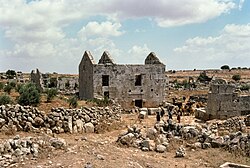
Nestled in the Jebel Sem’an region of northwestern Syria, Surqaniya is a village that serves as a silent witness to the architectural and spiritual history of the Levant. As part of the renowned "Dead Cities"—a collection of abandoned settlements from the Byzantine era—Surqaniya was designated a UNESCO World Heritage Site in 2011. Its ruins offer a unique window into the rural life and religious devotion of late antiquity.
Located within the Aleppo Governorate, the village sits just south of an ancient road. Historically, the settlement was sustained by a local spring that fed a stream flowing south through the valley, providing the essential water source needed for a thriving community.
Key Facts
- UNESCO Status: Named a World Heritage Site in 2011 as part of the Dead Cities.
- Location: Jebel Sem’an region, Aleppo Governorate, northwestern Syria.
- Primary Structures: Includes a 4th-century church, a 6th-century chapel, and a residential cluster.
- Notable Feature: An ancient inn measuring 12 x 7 meters with Christian iconography.
Archaeological Remains of Surqaniya
The surviving structures of Surqaniya provide a diverse look at the village's social and religious layout, ranging from domestic dwellings to specialized commercial and sacred spaces.
The Ancient Inn
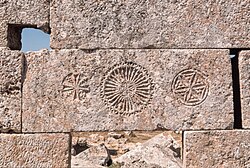
Just west of the main settlement lies a villa whose upper walls remain standing. Measuring 12 by 7 meters, scholars identify this building as an inn. The structure is rich in detail; the south façade features entrances adorned with Christian symbols, and the east side retains a balcony floor.
Inside, the ground floor is divided into equal sections and lit by five small windows. The interior walls are further decorated with crosses and votive columns—small decorative pillars often used for religious offerings.
The 4th-Century Church
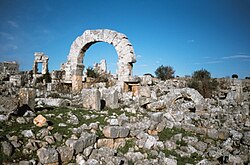
Located near the center of the residential cluster is a single-nave church dating back to the 4th century. A nave is the central part of a church building, intended to accommodate the congregation. This particular church is poorly preserved, with only the apse walls and the triumphal arch doorway of the sanctuary still standing.
Evidence suggests the church evolved over time; by the 5th century, a second apse was added to flank the main nave, which was likely used for baptismal rites.
The 6th-Century Chapel
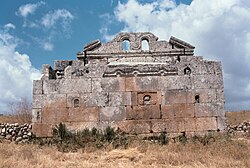
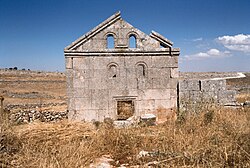
On the southern outskirts of the village, approximately 100 meters south of the modern road, stands a smaller but remarkably well-preserved chapel from the 6th century. Like the earlier church, it features a single nave, though its sanctuary at the east end extends southward beyond the main body of the building.
Notably, the roof over the sanctuary remains intact. The chapel's south chamber is taller than the surrounding ruins and is believed to have once been topped with a pyramidal wooden roof.
Summary of Architectural Features
| Structure | Estimated Period | Key Characteristics | Condition |
|---|---|---|---|
| Inn (Villa) | Unknown | 12x7m, Christian symbols, balcony floor | Upper walls standing |
| Central Church | 4th-5th Century CE | Single nave, baptismal apse added later | Poorly preserved |
| Southern Chapel | 6th Century CE | Single nave, extended sanctuary | Well-preserved |
Frequently Asked Questions
What are the "Dead Cities"?
The Dead Cities are a group of abandoned ancient settlements in northwestern Syria, characterized by their limestone architecture and Byzantine-era ruins, now recognized as a UNESCO World Heritage Site.
What is the significance of the inn in Surqaniya?
The inn is significant for its size (12 x 7 meters) and its religious decorations, including crosses and votive columns, which indicate the Christian influence on the village's commercial and social life.
How does the 6th-century chapel differ from the 4th-century church?
The 6th-century chapel is much better preserved, including its sanctuary roof, and features a sanctuary that extends southward beyond the nave, whereas the 4th-century church is mostly in ruins.
Where exactly is Surqaniya located?
Surqaniya is located in the Jebel Sem’an region of the Aleppo Governorate in northwestern Syria, situated just south of an ancient road.