IATA: The Global Authority Shaping International Aviation
The International Air Transport Association (IATA) serves as the primary trade association for the world's airlines. Founded in 1945, IATA acts as a central pillar for the aviation industry, formulating the policies and technical standards that allow aircraft to operate seamlessly across international borders. Representing over 367 airlines from more than 120 countries and regions as of 2025, the association facilitates a vast majority of global air traffic.
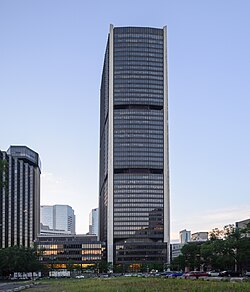
Headquartered in the Tour de la Bourse in Montreal, Canada, IATA ensures that the complex machinery of global flight—from safety protocols to ticketing systems—remains synchronized. While its modern focus is on safety and sustainability, the organization's history is marked by a complex evolution from a price-setting body to a technical coordinator.
Key Facts
- Founded: April 19, 1945, in Havana, Cuba.
- Membership: 367 airlines (2025) across 120+ countries.
- Market Reach: Represents approximately 85% of total world air traffic.
- Headquarters: Montreal, Canada, with an executive office in Geneva, Switzerland.
- Current Leadership: Directed by Director General Willie Walsh.
The Evolution of IATA: From Cartel to Coordinator
IATA was established as the successor to the International Air Traffic Association (founded in 1919). In its early years, the organization focused heavily on technical input for the International Civil Aviation Organization (ICAO) and the 1944 Chicago Convention, the treaty that still governs international air transport today.
The Era of Price Fixing
From the late 1940s through the 1970s, IATA operated largely as a cartel. It organized tariff conferences to fix prices for international travel, aiming to ensure reasonable profits for airlines and avoid destructive price competition. This regime was so strict that IATA even regulated the quality of passenger service; for instance, a 1958 ruling prohibited serving economy passengers sandwiches with "luxurious" ingredients to prevent airlines from competing on service quality.
This period of market control faced significant criticism. Legal scholars and publications like The Economist compared the association to medieval guilds. By the late 1970s, the system became unattractive to some carriers, leading major airlines such as Pan Am and Singapore Airlines to leave the association. Additionally, the rise of charter carriers—which set prices based on supply and demand—challenged IATA's dominance.
Legal Challenges and Modernization
The association's control over pricing eventually collapsed under legal pressure. In the early 1970s, a US Department of Justice investigation uncovered half a billion dollars in illegal transatlantic fare rebates. The shift toward deregulation culminated in 2006 when the US Department of Justice withdrew the antitrust immunity previously granted to IATA tariff conferences.
Modern Strategic Focus Areas
Today, IATA has pivoted away from price control toward three primary pillars: safety, business simplification, and environmental sustainability.
Aviation Safety and Tracking
The cornerstone of IATA's safety initiative is the IATA Operational Safety Audit (IOSA), a standardized evaluation used by airlines and mandated by several states. The association leverages the Global Safety Information Center to share data and reduce accident rates. Following the disappearance of Malaysia Airlines Flight 370 in 2014, IATA established a special panel to develop real-time aircraft tracking measures.
Simplifying the Business via NDC
To modernize the industry, IATA launched the New Distribution Capability (NDC) in 2012. This program replaces the aging EDIFACT messaging standard (the basis for Global Distribution Systems) with an XML standard. This allows airlines to offer the same personalized choices and content to travel agents that they offer directly on their own websites.
Environmental Commitments
IATA members have committed to a sequential strategy to combat climate change:
- 2009–2020: An average annual fuel efficiency improvement of 1.5%.
- 2020: Achieving carbon-neutral growth (capping net carbon emissions).
- 2050: A 50% reduction in net aviation carbon emissions compared to 2005 levels.
IATA Organizational Overview
| Category | Details |
|---|---|
| Global Presence | Head Office (Montreal), Executive Office (Geneva), and 57 offices in 52 locales. |
| Regional Hubs | Beijing, Singapore, Amman, Madrid, and Miami. |
| Key Safety Tool | IATA Operational Safety Audit (IOSA). |
| Tech Standard | New Distribution Capability (NDC) using XML. |
| Traffic Share | ~85% of world air traffic. |
Frequently Asked Questions
What is the primary purpose of IATA?
IATA is an international trade association that supports airline activity by formulating industry policies, setting technical standards, and promoting safety and sustainability across global aviation.
How does IATA ensure flight safety?
IATA utilizes the IATA Operational Safety Audit (IOSA), a globally recognized evaluation system, and manages the Global Safety Information Center to facilitate data sharing among members.
What is the New Distribution Capability (NDC)?
NDC is a technology standard launched in 2012 that replaces old EDIFACT messaging with XML, allowing airlines to distribute their content and offers more flexibly through travel agents and other channels.
What are IATA's goals for the environment?
IATA aims for carbon-neutral growth from 2020 and a 50% reduction in net aviation carbon emissions by 2050 relative to 2005 levels, alongside continuous improvements in fuel efficiency.
Was IATA ever involved in price fixing?
Yes. From the late 1940s until the late 20th century, IATA operated as a cartel, holding tariff conferences to set uniform prices for international air travel to ensure airline profitability.