Hungarian Language: History, Structure, and Global Distribution
The Hungarian language, known natively as magyar nyelv, is a unique and fascinating linguistic entity. Unlike most of its neighbors in Central Europe, Hungarian does not belong to the Indo-European family. Instead, it is a member of the Uralic language family, specifically the Ugric branch. With approximately 12 to 13 million speakers worldwide, it serves as a vital cultural bridge in the Carpathian Basin and beyond.
From its ancient roots to its modern status as an official language of the European Union, Hungarian is characterized by its complex grammar, distinctive vowel harmony, and a rich history of literary development.
Key Facts
- Language Family: Uralic (Ugric branch).
- Native Speakers: Approximately 12 million (2021–2023).
- Official Status: Official in Hungary, the EU, Serbia (Vojvodina), and Slovenia (Prekmurje).
- Writing System: Latin-based Hungarian alphabet.
- Regulating Body: Hungarian Research Centre for Linguistics.
Geographic Distribution and Official Status
While the heart of the language is in Hungary, significant Hungarian-speaking populations exist in several neighboring countries. It is recognized as a minority language in Romania, Croatia, Slovakia, Austria, the Czech Republic, and Ukraine.
| Country | Approximate Speakers | Notes |
|---|---|---|
| Hungary | 9,896,333 | 2011 Census |
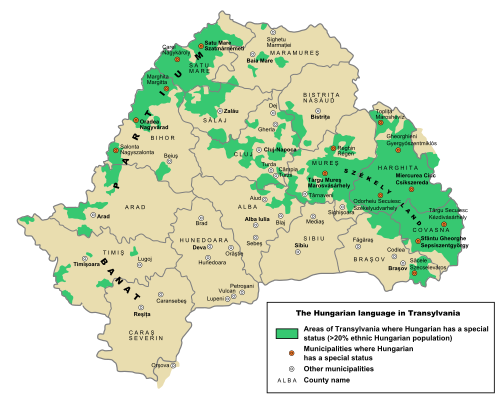
| Romania | 1,038,806 | Mainly Transylvania (2021) |
| Slovakia | 422,065 | 2021 Census |
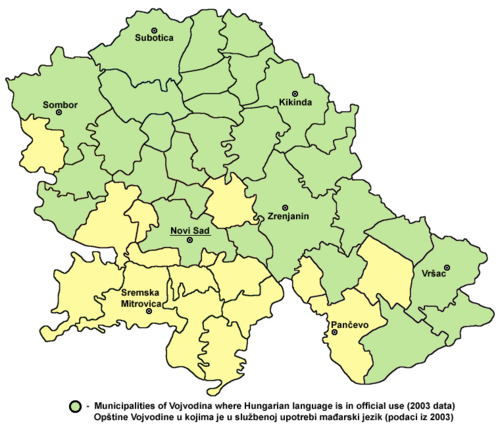
| Serbia | 241,164 | Mainly Vojvodina (2011) |
| Germany | 217,000 | 2023 Estimate |
| Ukraine | 149,400 | Mainly Zakarpattia (2001) |
In regions like Transylvania (Romania) and Vojvodina (Serbia), Hungarian maintains a strong presence, often holding co-official status in areas where at least 20% of the population is Hungarian.
History and Evolution
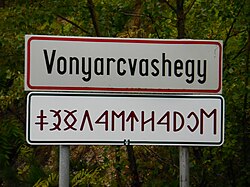
The history of Hungarian is marked by a transition from ancient scripts to the Latin alphabet. Before the formation of the state under Saint Stephen, a runic writing system was utilized.
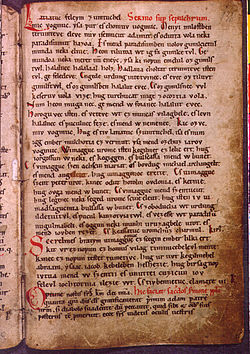
One of the oldest surviving written fragments dates back to 1055, found in the founding declaration of the Benedictine Abbey of Tihany. This text includes the phrase "feheruuaru rea meneh hodu utu rea", which in modern Hungarian translates to "to the military road going to Fehérvár."

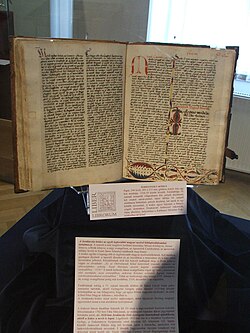
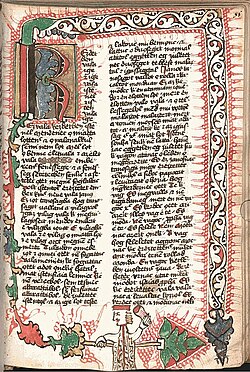
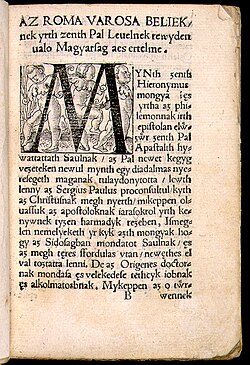
The language evolved through the medieval period, as seen in the 1466 copy of the Hussite Bible, eventually leading to the first book written completely in Hungarian in 1533.
The Influence of Other Languages
Although Uralic in origin, Hungarian vocabulary has been shaped by centuries of contact with other cultures. The estimated influences on its vocabulary include:
- Finno-Ugric: 30% (Uncertain)
- Slavic: 21%
- German: 20%
- Turkic: 11%
- Latin and Greek: 9.5%
- Romance: 6%
Linguistic Characteristics
Phonology and Vowels
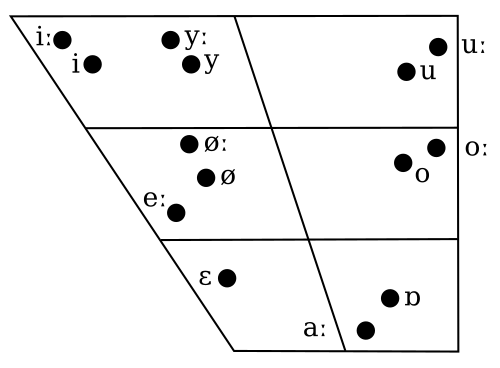
Hungarian is renowned for its vowel harmony, a system where vowels within a word must belong to the same class (front or back). This affects not only the root words but also the suffixes attached to them.
Grammar and Word Formation
Hungarian is an agglutinative language, meaning it builds complex words by adding multiple suffixes to a root. This allows for the creation of extremely long words. For example, the word megszentségteleníthetetlenségeskedéseitekért translates to "for your [plural] repeated pretending to be indesecratable."
The language also employs a flexible word order to indicate emphasis. For instance, changing the position of the subject in the sentence "John sees the apple" can shift the focus to whether it is specifically John who sees it, or whether he actually does see the apple.
Vocabulary and Kinship
Hungarian possesses a highly specific system for kinship. Unlike English, it distinguishes between older and younger siblings (e.g., báty for elder brother and öcs for younger brother). It also features unique prefixes for ancestors and descendants, extending far beyond grandparents to great-great-great-great-grandparents.
Writing and Modern Usage
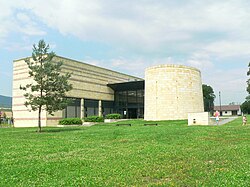
Modern Hungarian uses the Latin alphabet with several modified characters to represent its unique sounds. The language is preserved and celebrated in institutions such as the Museum of the Hungarian Language in Széphalom.
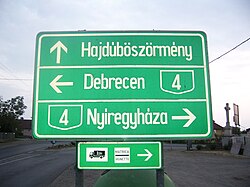
In daily life, Hungarian is visible on road signs and official documents across the Carpathian Basin, maintaining its distinct identity despite the surrounding linguistic landscape.
Frequently Asked Questions
What language family does Hungarian belong to?
Hungarian belongs to the Uralic language family, specifically the Ugric branch. This makes it unrelated to the Indo-European languages spoken by most of its neighbors.
Why are Hungarian words sometimes so long?
Hungarian is an agglutinative language, meaning it attaches various suffixes to a root word to express grammatical relationships, possession, and nuance, which can result in very long, complex words.
How does vowel harmony work in Hungarian?
Vowel harmony is a phonological rule where the vowels in a word must be consistent (either all front vowels or all back vowels). This ensures a melodic flow and determines which version of a suffix is used.
Is Hungarian spoken outside of Hungary?
Yes, there are significant Hungarian-speaking populations in Romania (Transylvania), Slovakia, Serbia (Vojvodina), and Ukraine, as well as diaspora communities in the United States, Canada, and Germany.
What is the difference between a 'báty' and an 'öcs'?
In Hungarian kinship terms, a báty is an older brother, while an öcs is a younger brother.