Estonian Language: History, Structure, and Cultural Evolution
Estonian (eesti keel) is a distinctive Uralic language and the official language of Estonia. As one of only four non-Indo-European official languages of the European Union, it serves as a vital pillar of Estonian national identity. Spoken natively by approximately 1.2 million people—including 922,000 within Estonia and 160,000 globally—the language is written using the Latin alphabet and is regulated by the Institute of the Estonian Language.
Key Facts
- Language Family: Uralic > Finnic > Southern Finnic.
- Official Status: Official language of Estonia and the European Union.
- Native Speakers: Approximately 1.2 million (2022).
- Writing System: Latin alphabet (including special characters like õ, ä, ö, ü).
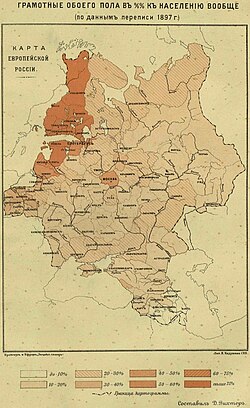
- Literacy: Historically high; 96.1% of native speakers aged 10+ were literate by 1897.
- Book Ownership: Among the highest in the world, averaging 218 books per household (2018).
Classification and Linguistic Origins
Estonian belongs to the Finnic branch of the Uralic language family. Linguists suggest that the ancestors of the two primary historical varieties—North and South Estonian—arrived in the region in at least two separate migration waves over two millennia ago. Because these groups spoke significantly different vernaculars, some scholars classify South Estonian as a separate Finnic language rather than a dialect of Estonian.
Modern standard Estonian emerged during the 18th and 19th centuries, evolving primarily from the dialects of northern Estonia.
Historical Development and Literature
The earliest written traces of Estonian date back to the 13th century, appearing as place names and sentence fragments in the Originates Livoniae within the Livonian Chronicle of Henry. Early literature was heavily influenced by the Protestant Reformation; the first bilingual German-Estonian translation of the Lutheran catechism was printed in 1535.
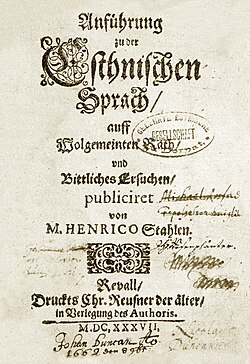
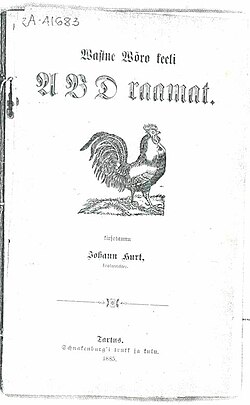
The 17th century saw the publication of an Estonian grammar book for priests in 1637. Translation efforts continued with the New Testament being translated into the Võro variety of South Estonian in 1686, and into Northern Estonian in 1715. Eventually, these varieties were united under a Northern Estonian basis by Anton thor Helle.
The 19th century marked a turning point during the Estophile Enlightenment Period (1750–1840). This era saw the rise of native literature, spearheaded by Kristjan Jaak Peterson (1810–1820). As the first student to acknowledge his Estonian origin at the University of Dorpat, Peterson is regarded as the founder of modern Estonian poetry. His birthday, March 14, is now celebrated as Mother Tongue Day.
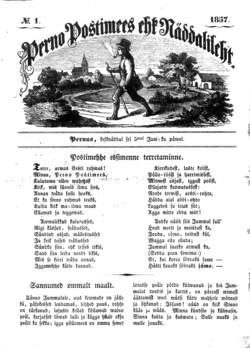
The growth of written Estonian was explosive. Between 1525 and 1917, 14,503 titles were published, a number that jumped to 23,868 titles between 1918 and 1940.
Political Status and Official Use
Estonian became the official language of the Republic of Estonia upon its independence in 1918. However, following the Soviet occupation in 1944, the language shared official status with Russian. During the 1970s, pressure for bilingualism increased, though Soviet authorities often discouraged Russian-speakers from learning Estonian.
With the restoration of independence in 1991, Estonian returned as the sole official language. In 2004, it became an official language of the European Union. Today, over 50% of first- and second-generation immigrants in Estonia have adopted the language, and the proportion of native speakers in the country has returned to over 70%.
Dialects and Regional Variations
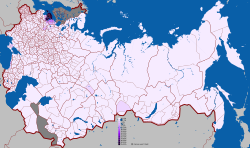
Estonian is divided into two primary groups: Northern and Southern dialects. The Northern group is associated with Tallinn and includes the distinct Northeastern coastal Estonian (kirderanniku) dialect. The Southern group is associated with Tartu and comprises the Tartu, Mulgi, Võro, and Seto varieties.
![North Estonian dialects at the beginning of the 20th century[17][18]](/images/b7/0c/b70c5f3042aba55912548ee33a27fa6f572ae5a987731146198ff06a060f0a38.png)
![South Estonian dialects at the beginning of the 20th century[17][18]](/images/91/8c/918c1ca20ad6a6a20cc820ee162055f338ae77941d22bd3fadf15064d7fe4aaf.png)
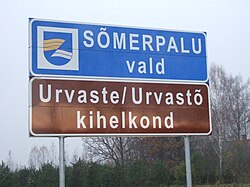
Võro and Seto are sometimes viewed as separate languages. While they are linguistically similar, they are distinguished largely by their respective cultures and Christian confessions. A notable phonetic difference exists in the Saaremaa dialect, which lacks the 'õ' vowel—a fact commemorated by a humorous monument marking the "border" between the vowels 'õ' and 'ö'.
Linguistic Structure and Vocabulary
Writing System and Phonology
Modern orthography was established in the late 19th century by Eduard Ahrens, based on Finnish models. The language features 9 vowels and 36 diphthongs. A defining characteristic is the unrounded back vowel /ɤ/ (written as õ). The alphabet uses Latin characters, though letters like Q, X, and Y are primarily reserved for foreign names and citations.
Grammar and Lexicon
Typologically, Estonian is a transitional form between an agglutinating language (where words are formed by adding distinct suffixes) and a fusional language (where a single suffix may represent multiple grammatical categories). The standard word order is Subject-Verb-Object (SVO).
The vocabulary has been heavily influenced by Germanic languages, with approximately 22–25% of words originating from Low Saxon (Middle Low German) and High German. This explains why some Estonian words resemble English terms (e.g., pagas for baggage).
Lexical Enrichment
Estonian has a history of ex nihilo lexical enrichment—the creation of new words "out of nothing." Reformers like Johannes Aavik (1880–1973) coined thousands of words to expand the language's expressive power. While some were purely invented, others were morpho-phonemic adaptations of foreign terms from French, Latin, or Finnish.
Language Summary Table
| Category | Details |
|---|---|
| Family | Uralic (Finnic) |
| Native Speakers | ~1.2 Million |
| Official Status | Estonia, European Union |
| Primary Dialects | North Estonian, South Estonian |
| Writing System | Latin Alphabet |
| Key Influence | Germanic languages (Low and High German) |
Frequently Asked Questions
Is Estonian related to Finnish?
Yes, both Estonian and Finnish belong to the Finnic branch of the Uralic language family, making them closely related linguistically.
What is the "õ" vowel?
The 'õ' is an unrounded back vowel (/ɤ/) that is a characteristic feature of the Estonian language, though it is absent in some dialects like that of Saaremaa.
How did German influence the Estonian language?
Due to historical German rule, Estonian borrowed nearly one-third of its vocabulary from Germanic languages, specifically Middle Low German and Standard German.
Who is Kristjan Jaak Peterson?
He was a patriotic poet (1810–1820) regarded as the founder of modern Estonian poetry and a herald of national literature; his birthday is celebrated as Mother Tongue Day.
What does "ex nihilo" mean in the context of Estonian?
It refers to the practice of creating entirely new words from scratch to enrich the vocabulary, a method championed by language reformers like Johannes Aavik.