Human Rights: Evolution, Frameworks, and Global Implementation
Human rights are universally recognized moral principles and norms that establish essential standards for human behavior. These rights are considered inherent and inalienable, meaning they belong to every individual simply by virtue of being human, regardless of nationality, gender, ethnicity, or any other status. Protected by both national and international laws, these rights encompass a broad spectrum of civil, political, economic, social, and cultural protections, including the right to life, freedom of speech, the right to education, and protection against enslavement.
While the conceptual roots of human rights predate the modern era, the contemporary framework gained global prominence following the atrocities of the Holocaust during World War II. This period of reflection led to a systemic effort to codify human dignity into law, ensuring that such violations would not be repeated.
Key Facts
- Inherent Nature: Human rights belong to all people regardless of legal status or location.
- The UDHR: Adopted by the UN General Assembly in 1948, the Universal Declaration of Human Rights serves as the global standard for freedom and justice.
- Broad Scope: Rights cover diverse areas, from basic survival (food, water, health) to political freedoms (speech, assembly).
- Legal Instruments: Implementation occurs through international treaties, regional courts, and national constitutions.
- Global Debate: A primary tension exists between universalism (rights apply to all) and cultural relativism (rights vary by cultural context).
The Historical Evolution of Rights
The journey toward modern human rights began with early documents that limited the absolute power of sovereigns. The Magna Carta, or "Great Charter," stands as one of the first documents where a sovereign committed to respecting specific legal rights of the people.
![Magna Carta or "Great Charter" was one of the world's first documents containing commitments by a sovereign to his people to respect certain legal rights.[dubious – discuss]](/images/82/12/821205c541ffd1ddab37f47e9a421ebd96c78fd06f2644765811d074ebee17ff.jpg)
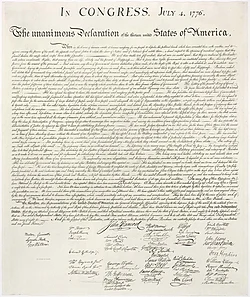
As the Enlightenment progressed, the concept of natural rights—rights that exist independently of government laws—became central to political thought. This influenced the United States Declaration of Independence in 1776 and the French Declaration of the Rights of Man and of the Citizen in 1789, both of which asserted that certain liberties are fundamental to the human experience.

The Post-WWII Era and the UDHR
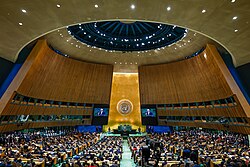
The aftermath of World War II catalyzed the creation of the United Nations and the subsequent adoption of the Universal Declaration of Human Rights (UDHR) in 1948. This landmark document provided a comprehensive framework that encouraged nations to protect human dignity on a global scale.
!["It is not a treaty... [In the future, it] may well become the international Magna Carta."[20] Eleanor Roosevelt with the Universal Declaration of Human Rights in 1949.](/images/d4/55/d455d99347bed57e6a1fd3bac307a2e9ecf9df247671e5abeaaa6a2abf011a01.jpg)
International Legal Frameworks and Treaties
To move beyond a simple declaration, the international community developed binding treaties to punish violations and protect vulnerable populations. These legal instruments translate moral norms into enforceable law.
| Treaty/Statute | Year Adopted | Primary Focus |
|---|---|---|
| Convention on the Prevention and Punishment of the Crime of Genocide | 1948 | Preventing and punishing genocide |
| UN Convention Against Torture (CAT) | 1984 | Prohibiting torture and cruel treatment |
| Convention on the Rights of the Child (CRC) | 1989 | Protecting the rights of minors |
| Rome Statute of the International Criminal Court | 2002 (Entry) | Prosecuting war crimes and crimes against humanity |
The International Criminal Court (ICC) serves as a permanent tribunal to prosecute individuals for the most serious crimes of international concern.
Paradigms of Implementation
Protecting human rights requires a variety of strategies, ranging from diplomatic pressure to legal action. These paradigms include:
- Legal Instruments: Using international courts and national laws to hold violators accountable.
- Economic Actions: Implementing sanctions or trade restrictions to pressure regimes.
- Informational Strategies: Raising global awareness to shame violators and mobilize public opinion.
- Military Force: In extreme cases, intervention to stop mass atrocities.
Regional Human Rights Regimes
Because global enforcement can be challenging, regional systems have emerged to provide more localized protection:
- Africa: The African Union promotes and interprets the African Charter on Human and Peoples' Rights.
- Americas: The American Convention on Human Rights and the Charter of the Organization of American States focus on democracy and the rights of Indigenous Peoples.
- Europe: The European Court of Human Rights in Strasbourg provides a robust legal mechanism for individuals to sue states for rights violations.


Philosophical Debates and Challenges
Despite global consensus on the importance of rights, significant philosophical disagreements persist. One of the most prominent is the conflict between universalism and cultural relativism. Universalists argue that human rights are the same for everyone, everywhere. Conversely, cultural relativists argue that rights must be interpreted through the lens of a society's specific cultural or communal identity.
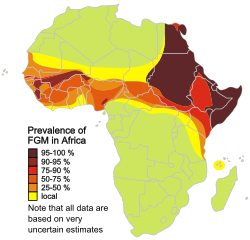
This debate often surfaces regarding traditional practices. For example, the prevalence of Female Genital Cutting (FGC) in certain regions highlights the tension between international human rights standards and local cultural traditions.
Another critical challenge is the balance between universal jurisdiction (the ability of any state to prosecute certain heinous crimes) and state sovereignty (the right of a nation to govern itself without external interference). This tension is often visible in cases of extrajudicial detention, such as those seen at Guantanamo Bay.

Frequently Asked Questions
What is the difference between inherent and inalienable rights?
Inherent rights are those that belong to a person simply because they are human. Inalienable rights are those that cannot be taken away, sold, or surrendered.
What is the role of the UDHR today?
While the UDHR is not a legally binding treaty itself, it serves as the foundational document that inspired numerous binding international treaties and national constitutions worldwide.
How does cultural relativism challenge human rights?
Cultural relativism suggests that human rights are not universal but are instead shaped by the culture and traditions of a specific society, which may lead to the justification of practices that universalists consider rights violations.
What are the different categories of human rights?
Human rights are generally categorized into civil and political rights (e.g., freedom of speech, right to a fair trial) and economic, social, and cultural rights (e.g., right to education, right to health, and right to housing).
What is the principle of indivisibility in human rights?
Indivisibility is the concept that all human rights are interconnected and equally important; one set of rights (such as political liberties) cannot be fully enjoyed without the other (such as basic economic security).