Cotonou Agreement: Shaping EU-ACP Development and Trade
The Cotonou Agreement is a landmark treaty established to govern the relationship between the European Union (EU) and the African, Caribbean, and Pacific (ACP) Group of States. Signed in June 2000 in Cotonou, Benin, by 78 ACP countries (excluding Cuba) and the fifteen EU member states of the time, the agreement entered into force in 2003. It was designed to modernize development cooperation, moving beyond previous frameworks to create a more comprehensive partnership.
While the agreement was originally intended to expire on February 29, 2020, it was extended until October 31, 2023, to allow for the transition to a successor treaty known as the Samoa Agreement.
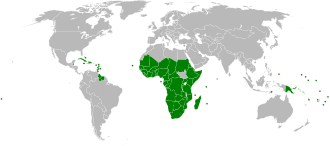
Key Facts
- Purpose: Reduction and eradication of poverty and promotion of sustainable development.
- Scope: Covers 78 ACP countries and the European Union.
- Predecessor: Replaced the Lomé Convention (established 1975).
- Successor: The Samoa Agreement.
- Core Focus: Poverty reduction, sustainable development, and integration into the global economy.
Core Principles and Objectives
The Cotonou Agreement was built to last 20 years, expanding the scope of cooperation far beyond its predecessors. It is anchored by four primary principles:
- Equality and Ownership: ACP states are empowered to determine their own economic and societal development strategies.
- Participation: Cooperation is not limited to central governments; it includes civil society, local governments, and the private sector.
- Dialogue and Mutual Obligations: The partnership is based on reciprocal commitments, such as the respect for human rights, monitored through ongoing evaluation.
- Differentiation and Regionalisation: Support is tailored to a partner's specific needs and development level, with special considerations for landlocked or island states.
Political Dimensions and Governance
A defining feature of the Cotonou Agreement is its strong political foundation. It expanded the dialogue to include critical global issues such as migration, the arms trade, and peace and security.
Central to this is the concept of good governance. Under the treaty, good governance is an "essential element"; violations can lead to the partial or total suspension of development cooperation. Similarly, serious corruption or bribery can trigger consultations and potential aid suspensions.
Expanding the Role of Non-State Actors
The agreement shifted the paradigm of aid by integrating non-state actors and local authorities. While central governments still lead development strategies, these complementary actors are now consulted during formulation and granted access to financial resources and capacity-building support.
A key example of this is the Technical Centre for Agricultural and Rural Cooperation ACP-EU (CTA), which strengthens institutional capacity for rural development organizations, partly through its publication, Spore. Additionally, the agreement emphasizes the private sector's role in economic growth, providing tools like funding via the European Investment Bank (EIB).
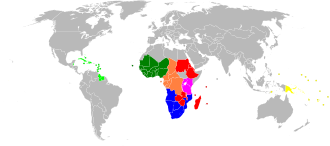
Trade Cooperation and Economic Partnership Agreements
The Cotonou Agreement introduced a radical shift in trade. It replaced the non-reciprocal trade preferences of the Lomé Convention with Economic Partnership Agreements (EPAs) in 2008. Unlike the previous system, EPAs are reciprocal: the EU provides duty-free access for ACP exports, and ACP countries provide duty-free access for EU exports.
To maintain the principle of differentiation, Least Developed Countries (LDCs) are not required to open their markets immediately and may continue under the "Everything But Arms" regulation or Lomé arrangements. Non-LDCs that cannot enter EPAs may transition to the Generalized System of Preferences (GSP) or the GSP+ arrangement for sustainable development and good governance.
Financial Programming and the European Development Fund
The agreement moved away from "aid entitlements" toward performance-based partnerships. This allows the EU to be more flexible, allocating more resources to "good performers" and reducing funds for those failing to meet benchmarks.
| Fund Cycle | Period | Total Allocation | Key Focus/Notes |
|---|---|---|---|
| 9th EDF | 2002–2007 | €13.5 billion | General ACP region allocation. |
| 10th EDF | 2008–2013 | €22.7 billion | €5.6 billion for regional programs and infrastructure. |
The 10th EDF specifically utilized "incentive amounts" to reward countries improving their legal, tax, and financial systems. Programming for the 11th EDF began in 2012, involving the European Commission and the European External Action Service.
The Fight Against Impunity
The revised Cotonou Agreement explicitly commits signatories to combat impunity and promote criminal justice via the International Criminal Court (ICC). Recognizing that impunity fuels violence, the agreement obliges states to:
- Ensure the prosecution of the most serious crimes at the national level.
- Share experiences regarding the ratification and implementation of the Rome Statute of the ICC.
- Fight international crime in accordance with international law.
Transition to the Samoa Agreement
The Cotonou Agreement is being succeeded by the Samoa Agreement. This new framework consists of three separate protocols. It maintains funding for the Organisation of African, Caribbean and Pacific States secretariat but grants the EU full authority over the issuance of development funds. It also aims to facilitate the repatriation of undocumented migrants. While the text was agreed upon in April 2021, ratification was delayed by Poland and Hungary; however, 44 ACP states signed the agreement in November 2023.
Frequently Asked Questions
What is the main difference between the Lomé Convention and the Cotonou Agreement?
The Cotonou Agreement is broader in scope, introducing performance-based aid, a stronger focus on good governance, and reciprocal trade through Economic Partnership Agreements (EPAs), whereas the Lomé Convention relied on non-reciprocal trade preferences.
How does the Cotonou Agreement handle trade for the least developed countries?
Under the principle of differentiation, Least Developed Countries (LDCs) are not forced to open their markets to EU products and can continue using the "Everything But Arms" regulation or previous Lomé arrangements.
What happens if a country violates the "essential elements" of the agreement?
Violations of essential elements, particularly regarding good governance, can lead to the partial or complete suspension of development cooperation between the EU and the offending country.
What is the role of the International Criminal Court in this treaty?
The revised agreement commits ACP and EU states to fight impunity by promoting the Rome Statute and ensuring that the most serious crimes are prosecuted either nationally or through the ICC.
What is the Samoa Agreement?
The Samoa Agreement is the successor to the Cotonou Agreement. It updates the legal basis for EU funding, maintains the ACP secretariat, and includes provisions to ease the repatriation of undocumented migrants.