Netherlands historyDutch governmentDutch economyNetherlands geographyDutch culture

Netherlands: A Comprehensive Overview of History, Geography, and Culture

Exploring the Netherlands: A Comprehensive Guide to the Low Countries The Netherlands, often referred to as the Low Countries, is a nation defined by its resilience, its relationship with...

Exploring the Netherlands: A Comprehensive Guide to the Low Countries

The Netherlands, often referred to as the Low Countries, is a nation defined by its resilience, its relationship with the sea, and its profound historical influence on global trade and science. As a constituent country within the Kingdom of the Netherlands, it stands as a highly developed, unitary parliamentary constitutional monarchy. From the bustling canals of Amsterdam to the high-tech ports of Rotterdam, the country offers a unique blend of historical depth and modern innovation.
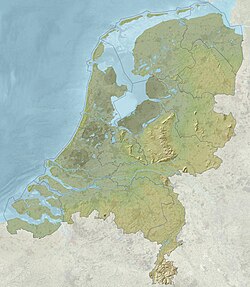
Relief map of the European Netherlands
: Relief map of the European Netherlands

Key Facts

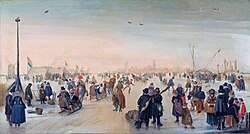
Winter landscape with skaters near the city of Kampen by Hendrick Avercamp (1620s)
  • Capital: Amsterdam
  • Government Seat: The Hague
  • Official Language: Dutch (with West Frisian and Papiamento as regional languages)
  • Monarch: King Willem-Alexander
  • Currency: Euro (€)
  • Population: Approximately 18.1 million (2026 census estimate)
  • GDP (PPP): $1.650 trillion (2027 estimate)

Historical Evolution
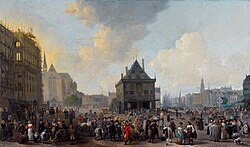
Amsterdam's Dam Square in 1656 by Johannes Lingelbach

The history of the Netherlands is a long journey from ancient Germanic tribes to a global maritime power. The region's roots can be traced back to the Bronze Age and the presence of Celts and Germanic tribes during the Roman era.
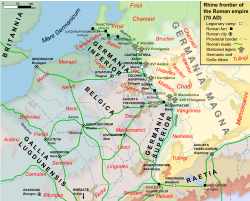
The Rhine frontier around 70 AD
: The Rhine frontier around 70 AD

From the Middle Ages to Independence

During the Early and High Middle Ages, the region saw the rise of various tribes and territories. By the late 14th century, the Low Countries were under the influence of the Burgundian and later the Habsburg dynasties. A pivotal turning point occurred on July 26, 1581, with the Act of Abjuration, which led to the establishment of the Dutch Republic. This era of independence was eventually solidified by the Peace of Münster in 1648.
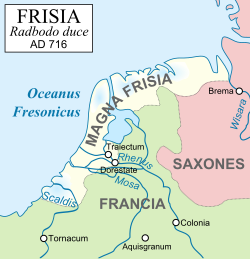
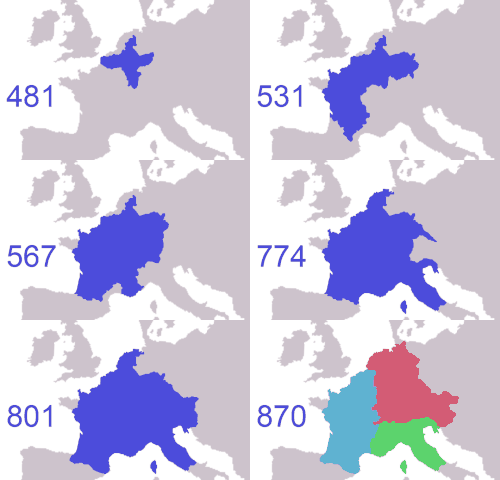
Franks, Frisians and Saxons, c. 716 AD
: Franks, Frisians and Saxons, c. 716 AD
Frankish expansion (481 to 870 AD)
: Frankish expansion (481 to 870 AD)
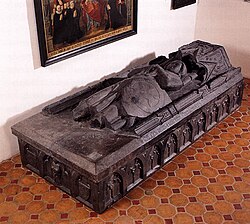
A medieval tomb of the Brabantian knight Arnold van der Sluijs
: A medieval tomb of the Brabantian knight Arnold van der Sluijs
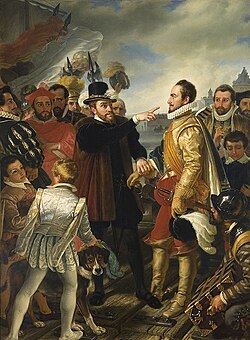
Philip II of Spain reproaches William of Orange in Vlissingen upon his departure from the Netherlands in 1559.
: Philip II of Spain reproaches William of Orange in Vlissingen upon his departure from the Netherlands in 1559.

Modern Era and Liberation

The 19th and 20th centuries brought significant political shifts, including the formation of the United Kingdom of the Netherlands in 1815. Following the hardships of the World Wars, the nation celebrated its liberation on May 5, 1945, a date now observed as Liberation Day.
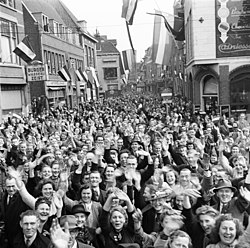
People celebrating the liberation of Utrecht at the end of World War II on 7 May 1945
: People celebrating the liberation of Utrecht at the end of World War II on 7 May 1945

Geography and the Battle Against Water
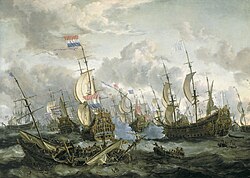
The Four Days' Battle during the Second Anglo-Dutch War, 1–4 June 1666

Geography is perhaps the most defining characteristic of the Netherlands. Much of the country is situated at or below sea level, making water management a matter of national survival. The landscape is a complex network of provinces, islands, and reclaimed land.
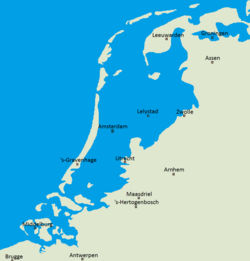
Map illustrating areas of the Netherlands below sea level
: Map illustrating areas of the Netherlands below sea level
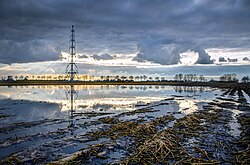
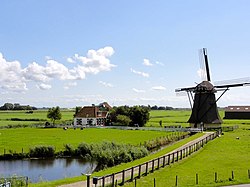
Landscape at Workum, Friesland
: Landscape at Workum, Friesland

Engineering the Landscape

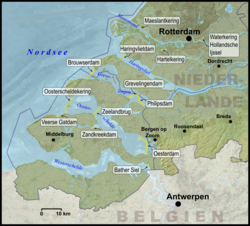
To protect its citizens from flooding, the Netherlands has implemented world-leading hydraulic engineering projects. The Delta Works, located primarily in South Holland and Zeeland, serve as a massive defense system against the sea. Despite these efforts, the history of the region is marked by significant events like the Christmas Flood of 1717.
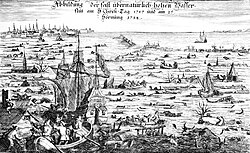
The Christmas Flood of 1717 resulted in the death of thousands.
: The Christmas Flood of 1717 resulted in the death of thousands.
The Delta Works are in the provinces of South Holland and Zeeland.
: The Delta Works are in the provinces of South Holland and Zeeland.
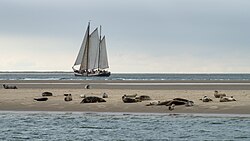
Common seals off the coast of Terschelling, a Wadden Sea island
: Common seals off the coast of Terschelling, a Wadden Sea island

Government and Political Structure

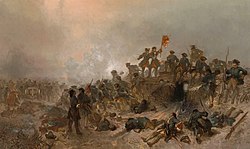
Dutch troops at the Battle of Malplaquet, 11 September 1709

The Netherlands operates as a unitary parliamentary constitutional monarchy. The government is divided into several branches, with the Monarch serving as the head of state and the Prime Minister leading the government.

The Legislature

The States General serves as the legislature, consisting of two houses:

  • The Senate (Upper House)
  • The House of Representatives (Lower House)
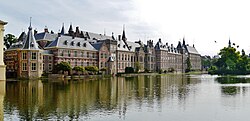
The Binnenhof, where the lower and upper houses of the States General meet
: The Binnenhof, where the lower and upper houses of the States General meet
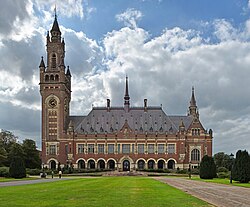
The Peace Palace (Vredespaleis), in The Hague
: The Peace Palace (Vredespaleis), in The Hague

Economy, Energy, and Infrastructure

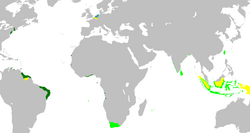
Map of the Dutch colonial empire. Light green: territories administered by or originating from territories administered by the Dutch East India Company; dark green: the Dutch West India Company. In yellow are the territories occupied later, during the 19th century.

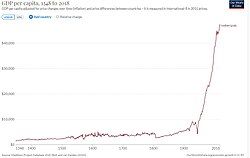
The Dutch economy is highly advanced, characterized by a high GDP per capita and a significant role in international trade. The country is a member of the European Union and the eurozone, benefiting from the EU single market.
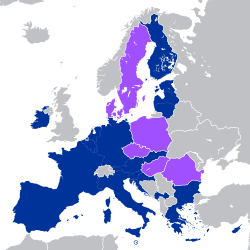
The Netherlands is part of a monetary union, the eurozone (dark blue), and the EU single market.
: The Netherlands is part of a monetary union, the eurozone (dark blue), and the EU single market.
Historical GDP per capita development (Our World in Data)
: Historical GDP per capita development (Our World in Data)

Energy and Natural Resources

A major driver of the Dutch economy has been its natural gas reserves. The discovery of the Groningen gas field in 1959 transformed the nation, making it one of the largest natural-gas producers in the EU.

Natural gas concessions in the Netherlands. The Netherlands accounts for more than 25% of all natural gas reserves in the EU.[190]
: Natural gas concessions in the Netherlands. The Netherlands accounts for more than 25% of all natural gas reserves in the EU.
The Groningen gas field, whose discovery in 1959 transformed the Dutch economy, is one of the largest natural-gas fields in the world.
: The Groningen gas field, whose discovery in 1959 transformed the Dutch economy, is one of the largest natural-gas fields in the world.

Transport and Connectivity

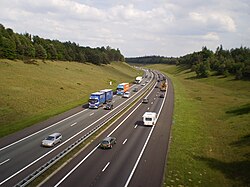
The Netherlands boasts a highly developed infrastructure, including the Port of Rotterdam—Europe's largest port—and an extensive network of motorways, railways, and cycling paths.
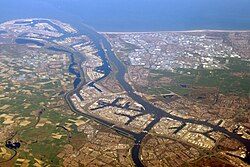
The Port of Rotterdam is Europe's largest port.
: The Port of Rotterdam is Europe's largest port.
A1 motorway, in Gelderland
: A1 motorway, in Gelderland
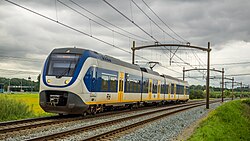
A regional train operated by Nederlandse Spoorwegen
: A regional train operated by Nederlandse Spoorwegen
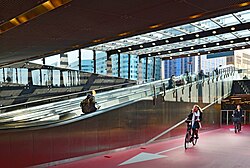
Bike passage at Rotterdam Centraal station
: Bike passage at Rotterdam Centraal station

Demographics and Culture

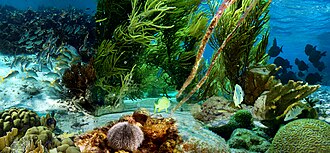
Underwater life of Klein Bonaire

The Netherlands is a diverse society. As of 2024, the population includes a significant Dutch majority alongside various European, Turkish, Moroccan, and Indonesian communities. This diversity is reflected in the country's religious landscape, where a large portion of the population identifies as having no religion, followed by Christianity.
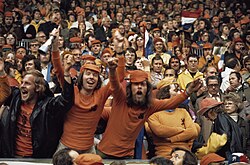
Dutch people in 1974
: Dutch people in 1974
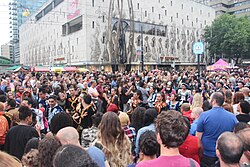
In Rotterdam, almost half the population has an immigrant background.
: In Rotterdam, almost half the population has an immigrant background.
Knowledge of foreign languages in the Netherlands, among population 15 and older, in 2006[243]
: Knowledge of foreign languages in the Netherlands, among population 15 and older, in 2006

Art, Science, and Lifestyle

The Dutch have a rich legacy in science and art. From the microscopic discoveries of Antonie van Leeuwenhoek to the iconic landscapes of the Dutch Golden Age, the nation's contributions are vast. Today, Dutch culture is celebrated through festivals like King's Day and a world-renowned passion for football.
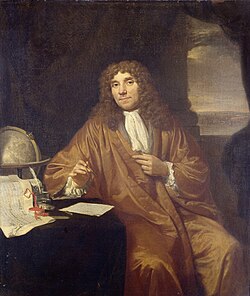
Portrait of Antonie van Leeuwenhoek (1632–1723), known as "the father of microbiology"
: Portrait of Antonie van Leeuwenhoek (1632–1723), known as "the father of microbiology"
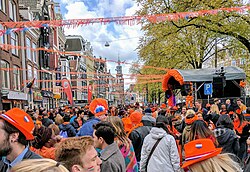
Dutch people in orange celebrating King's Day in Amsterdam, 2017
: Dutch people in orange celebrating King's Day in Amsterdam, 2017
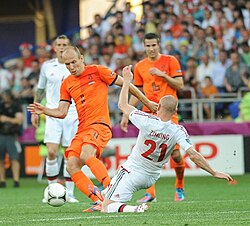
Dutch star football players Arjen Robben and Robin van Persie during a game with the Netherlands against Denmark at Euro 2012
: Dutch star football players Arjen Robben and Robin van Persie during a game with the Netherlands against Denmark at Euro 2012
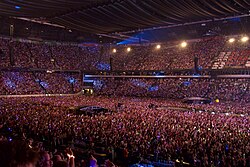
Johan Cruyff Arena, the largest Dutch concert venue
: Johan Cruyff Arena, the largest Dutch concert venue
Summary of Dutch Provinces and Major Cities
Province Capital Largest City Population (2023)
North Holland Haarlem Amsterdam 2,952,622
South Holland The Hague Rotterdam 3,804,906
North Brabant 's-Hertogenbosch Eindhoven 2,626,210
Utrecht Utrecht Utrecht 1,387,643
Gelderland Arnhem Nijmegen 2,133,208

Frequently Asked Questions

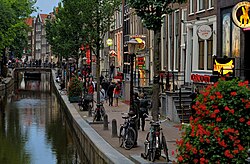
De Wallen, Amsterdam's red-light district, offers activities such as legal prostitution, symbolizing the Dutch political culture and tradition of tolerance.
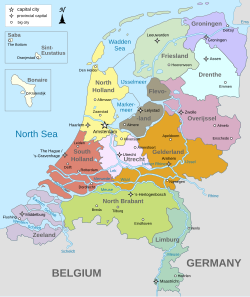
Provinces and territories of the Netherlands
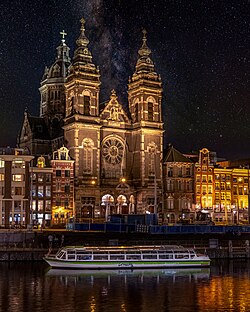
The Co-cathedral Basilica of Saint Nicholas in Amsterdam
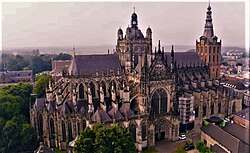
The St. John's Cathedral ('s-Hertogenbosch) in 's-Hertogenbosch
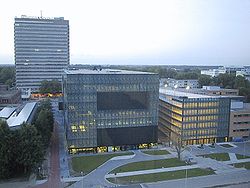
View on the Utrecht Science Park of Utrecht University. The building in the centre is the library.
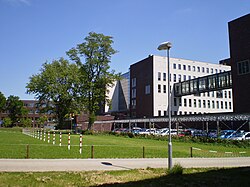
A public hospital in Amersfoort
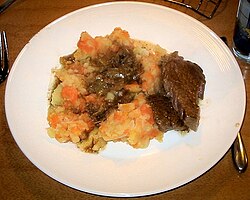
Hutspot with beef stew on plate

What is the difference between Holland and the Netherlands?

While the terms are often used interchangeably, "the Netherlands" is the correct name for the entire country. "Holland" refers specifically to two provinces: North Holland and South Holland.

How does the Netherlands manage its low-lying land?

The country uses an advanced system of dikes, pumps, and massive storm surge barriers known as the Delta Works to manage water levels and protect against flooding.

What are the official languages of the Netherlands?

The official language is Dutch. However, West Frisian and Papiamento are recognized as regional languages, and English is widely spoken.

What is the role of the King in the Netherlands?

The Netherlands is a constitutional monarchy, meaning the King serves as the head of state, but his powers are limited by the constitution and the government.

Is the Netherlands part of the European Union?

Yes, the Netherlands is a member state of the European Union and is also part of the eurozone.