Understanding Homophones: The Science of Words That Sound Alike
Have you ever been confused by a text message where "there," "their," and "they're" were used interchangeably? Or perhaps you've wondered why "aisle" and "isle" sound identical despite their vastly different origins? You have encountered homophones—a fascinating linguistic phenomenon where words share the same pronunciation but differ in meaning or spelling.
In the world of linguistics, understanding how sounds and spellings interact is key to mastering any language. From clever puns to complex phonetic shifts, homophones play a massive role in how we communicate, play with words, and even how we perceive different dialects.
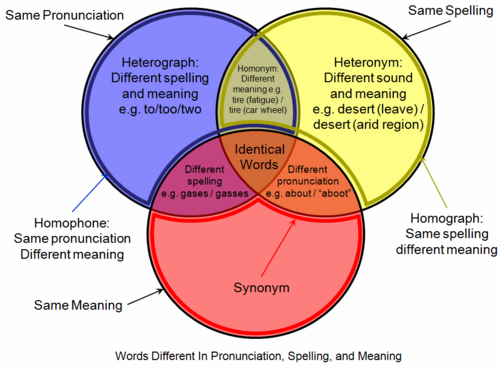
Key Facts
- Homophones are words that sound the same but have different meanings.
- Heterographs are homophones that are spelled differently (e.g., "to," "too," and "two").
- Homographs are words that are spelled the same; if they also sound the same, they are homonyms.
- Oronyms (or holorimes) are phrases that sound identical to other phrases.
- Homophony can be dialect-dependent, meaning words may sound the same in one accent but different in another.
The Linguistic Breakdown: Homophones and Their Relatives
To navigate the complexities of language, it is helpful to distinguish between several closely related terms. While people often use "homonym" as a catch-all term, linguists use more specific categories:
Homophones vs. Heterographs
A homophone is any unit—be it a word, a letter, or a phrase—that is pronounced the same as another. When these same-sounding words are spelled differently, they are known as heterographs. A classic example is the set: rain, reign, and rein.
Homographs and Homonyms
When words are spelled the same, they are called homographs. If they are both spelled the same and pronounced the same, they are considered homonyms. For instance, the word read can be a homograph because it is spelled the same in "He is well read" and "Yesterday I read that book," though the pronunciation changes based on tense.
| Term | Same Sound? | Same Spelling? | Example |
|---|---|---|---|
| Homophone | Yes | Maybe | To / Too / Two |
| Heterograph | Yes | No | Flower / Flour |
| Homograph | Maybe | Yes | Lead (metal) / Lead (guide) |
| Homonym | Yes | Yes | Bank (river) / Bank (finance) |
The Role of Accents and Dialects
Homophony is not a fixed rule; it often depends on where you are from. In linguistics, a minimal pair refers to two words that differ by only one sound. In some accents, these sounds merge, turning distinct words into homophones.
For example, in many Southern American accents, pin and pen are homophonous. Similarly, in most American accents, merry, marry, and Mary sound identical. Conversely, in some British Received Pronunciation accents, the words talk and torque may be homophones, whereas they remain distinct in rhotic accents like Scottish English.
Homophones Across Global Languages
The prevalence and nature of homophones vary significantly depending on the structure of the language.
English: Historical Evolution
Many English homophones arose from historical spelling changes. For example, discrete (meaning separate) and discreet (meaning prudent) became distinct spellings in the late 16th century. Other pairs, like born and borne, were once variant spellings of the same word but eventually standardized into two different meanings.
German and Spanish
German features many homophones, including "triples" such as Waagen (scales), Wagen (cart), and wagen (to dare). Spanish has fewer homophones than English, often arising from letters that sound identical, such as b and v (e.g., basta and vasta).
Japanese and Korean
In Japanese, the heavy use of Sino-Japanese vocabulary (words borrowed from Chinese) creates a vast number of homophones because many original tonal distinctions were lost. Korean faces similar challenges; because the Hangeul writing system has a finite number of phonemes, many words share the same sound and spelling, requiring context or Hanja (Chinese characters) to distinguish meaning.
Mandarin Chinese: The Power of Tones
Mandarin is a tonal language, meaning the pitch used when saying a syllable changes its meaning. For example, the syllable "ma" can mean mother, hemp, horse, or scold depending on the tone. While tones help distinguish words, Mandarin still contains massive amounts of homophones. The syllable Yì, for instance, has at least 125 homophones.
Vietnamese: Dialectical Differences
In Vietnamese, homophony can change based on the dialect. In the Hanoi dialect, the letters d, gi, and r are all pronounced /z/, making words like dao (knife) and giao (delivery) sound identical. However, in the Saigon dialect, these pronunciations differ.
Psychological Research: Pseudo-homophones
Scientists use pseudo-homophones to study how the human brain recognizes words. A pseudo-homophone is a "pseudoword" (a non-existent word) that sounds exactly like a real word—such as grone sounding like groan. By using these in lexical decision tasks, researchers can investigate the mechanics of word recognition and mental processing.
Frequently Asked Questions
What is the difference between a homophone and an oronym?
A homophone refers to individual words that sound the same, whereas an oronym refers to entire phrases or groups of words that sound identical to another phrase.
Why do some English words sound the same but have different spellings?
This often happens due to etymology (the study of word origins). Over centuries, spellings may change to reflect a word's history or to distinguish it from another word that sounds similar, creating heterographs.
Can a word be both a homophone and a homograph?
Yes. If a word is spelled the same as another word and sounds the same as well, it is both a homograph and a homophone. In technical terms, these are often called homonyms.
How do tones affect homophones in Mandarin?
Tones act as a way to distinguish between words that have the same consonant and vowel structure. While a single syllable might have many meanings, applying different tones allows speakers to communicate different words clearly.
What is a malapropism?
A malapropism is the mistaken use of a word in place of a similar-sounding one, often with an amusing effect. These are typically near-homophones rather than perfect homophones.