Hildegard Hamm-Brücher: A Legacy of Political Integrity and Education Policy
Hildegard Hamm-Brücher was a formidable figure in German politics, known for her unwavering commitment to democratic principles and her extensive work in education. Over several decades, she navigated the complexities of the German parliamentary system, serving in various capacities from local city councils to the federal government.
Key Facts
- Party Affiliation: Member of the Free Democratic Party (FDP) from 1948 to 2002.
- Legislative Experience: Served in the Munich city council, the Landtag of Bavaria, and the Bundestag.
- Government Roles: Secretary of State for Education and Minister of State in the German Foreign Office.
- Political Stance: Prominently opposed the 1982 coalition switch without a general election.
- Lifespan: Died on December 7, 2016, at the age of 95.
Early Political Ascent and Education Policy
Hamm-Brücher began her political journey in 1948 upon joining the Free Democratic Party. Her rise through the political ranks was steady, starting with her election to the Munich city council, where she served until 1954. She further expanded her influence in the Landtag of Bavaria (the state parliament), serving from 1950 to 1966 and again from 1970 to 1976.
A primary focus of her career was education policy. Her expertise led to her appointment as secretary of state to the Hessian Ministry for Education in 1967, followed by a similar role at the federal Ministry for Education in 1969.
Federal Leadership and Diplomatic Service
In 1976, Hamm-Brücher entered the Bundestag, the federal parliament of Germany, where she remained a member until 1990. During a period when her party was in a coalition government with the Social Democratic Party, she served as a Minister of State in the German Foreign Office from 1977 to 1982.
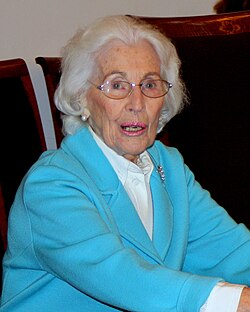
The 1982 Coalition Crisis
A pivotal moment in her career occurred in 1982 when the Free Democratic Party exited its coalition with the Social Democrats to align with the Christian Democratic Union. This transition was achieved through a constructive vote of no confidence—a parliamentary procedure where the legislature elects a new chancellor only after agreeing on a successor—resulting in the replacement of Chancellor Helmut Schmidt with Helmut Kohl.
Hamm-Brücher became a prominent critic of this maneuver, opposing both the new coalition and the decision to switch governments without holding a general election. Consequently, she lost her position as Minister of State, though she continued her work in parliament for another eight years.
Later Years and Political Transitions
In 1994, the Free Democrats nominated Hamm-Brücher as their candidate for the German presidential election. However, the party's coalition with the Christian Democratic Union under Chancellor Kohl ultimately led them to support Roman Herzog in the third round of voting. Herzog subsequently won the presidency with the combined support of both parties.
Hamm-Brücher's long association with the Free Democratic Party ended in 2002. She resigned following a controversy involving Jürgen Möllemann, whose election campaign featured harsh criticisms of Ariel Sharon, the then Prime Minister of Israel. In her later years, she remained politically active, serving as a Green Party delegate to the Federal Convention in 2012 to help elect the President of Germany.
| Period | Role/Event | Organization/Body |
|---|---|---|
| 1948–1954 | Council Member | Munich City Council |
| 1950–1976 | Member (Intermittent) | Landtag of Bavaria |
| 1967–1969 | Secretary of State | Ministry for Education (Hessian/Federal) |
| 1976–1990 | Member of Parliament | Bundestag |
| 1977–1982 | Minister of State | German Foreign Office |
| 1994 | Presidential Candidate | Free Democratic Party |
| 2002 | Departure from Party | Free Democratic Party |
Frequently Asked Questions
What was Hildegard Hamm-Brücher's primary policy focus?
She focused a significant portion of her political work on education policy, serving as secretary of state for education at both the Hessian and federal levels.
Why did she oppose the 1982 change in government?
She opposed the method of switching coalitions from the Social Democrats to the Christian Democrats via a constructive vote of no confidence without holding a new general election.
Did she ever become the President of Germany?
No. Although she was the Free Democratic Party's nominee in 1994, the party eventually supported Roman Herzog, who won the election.
Why did she leave the Free Democratic Party in 2002?
She left the party due to a controversy surrounding Jürgen Möllemann's election campaign, which contained harsh criticisms of Israeli Prime Minister Ariel Sharon.
Which other party did she associate with later in life?
In 2012, she served as a delegate for the Green Party during the Federal Convention to elect the President of Germany.