Heterotrophs: The Essential Consumers of the Natural World
In the intricate web of life, every organism must acquire energy to survive. While some can create their own food from sunlight or chemicals, others must rely on the organic matter produced by other living things. These organisms are known as heterotrophs. Derived from the Ancient Greek words héteros (other) and trophḗ (nourishment), a heterotroph is an organism that cannot produce its own food and must instead take nutrition from sources of organic carbon.
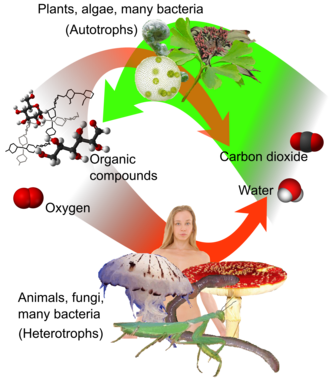
Heterotrophs are found across nearly every biological kingdom. They include most animals, all fungi, many parasitic plants, and various protists and bacteria. In the context of a food chain, heterotrophs function as primary, secondary, and tertiary consumers. Unlike autotrophs, which occupy the first trophic level as producers, heterotrophs occupy the second and third trophic levels, feeding on either autotrophs, other heterotrophs, or a combination of both.
Key Facts
- Definition: Organisms that obtain energy by consuming organic carbon from other organisms.
- Trophic Position: They act as consumers in the food chain (2nd and 3rd trophic levels).
- Diversity: Includes animals, fungi, some bacteria, protists, and certain parasitic plants.
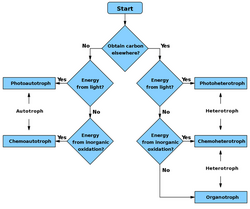
- Energy Sources: Divided into chemoheterotrophs (chemical energy) and photoheterotrophs (light energy).
- Ecological Role: Crucial for the carbon, nitrogen, and sulfur cycles through respiration and mineralization.
Types of Heterotrophs
Heterotrophs are categorized based on the primary source of energy they use to fuel their metabolic processes:
- Chemoheterotrophs: These organisms derive energy from the oxidation of chemical compounds. Common examples include humans and mushrooms.
- Photoheterotrophs: These organisms use light for energy but cannot use carbon dioxide as their sole carbon source. Examples include green non-sulfur bacteria and Haloquadratum walsbyi.
Origin and Diversification
The scientific understanding of how heterotrophic life began emerged in the early 20th century. In 1924, Alexander Ivanovich Oparin proposed that life began with heterotrophic organisms, a theory he later detailed in "The Origin of Life." Independently, John Burdon Sanderson Haldane proposed similar ideas in English in 1929. While they agreed on the atmospheric gases of early Earth, Oparin focused on the increasing complexity of organic matter, whereas Haldane considered the role of genes and the possibility of autotrophy (light-driven synthesis).
This theory gained significant empirical support in 1953 through the Miller-Urey experiment. Stanley Miller simulated early Earth conditions by introducing water (H2O), methane (CH4), ammonia (NH3), and hydrogen (H2) into a flask and applying electrical sparks to mimic lightning. The experiment successfully produced amino acids—the building blocks of proteins. Modern re-analyses indicate that over 40 different amino acids were created, some of which are not used by current life forms, launching the field of synthetic prebiotic chemistry.
Ecological Impact and Biogeochemical Cycles
Heterotrophs play a vital role in maintaining the Earth's chemical balance through the catabolism (breakdown) of organic compounds. This occurs via two primary methods: respiration and fermentation.
Respiration and Fermentation
Heterotrophs that use respiration couple ATP production with oxidative phosphorylation, releasing carbon dioxide (CO2) and reduced wastes like water (H2O), hydrogen sulfide (H2S), or nitrous oxide (N2O). Fermenting heterotrophs, which can be obligate or facultative anaerobes (organisms that can live without oxygen), operate in low-oxygen environments. They produce end products such as alcohol, CO2, and sulfide, which then serve as substrates for other bacteria during anaerobic digestion.
Mineralization and Nutrient Cycling
A critical process performed by heterotrophs is mineralization, the conversion of organic compounds back into inorganic forms. When heterotrophs break down organic matter containing nitrogen (N), sulfur (S), and phosphorus (P), they release these elements back into the environment:
- Deamination: Converts organic nitrogen into ammonium (NH4).
- Desulfurylation: Converts organic sulfur into hydrogen sulfide (H2S).
- Dephosphorylation: Releases phosphorus during decomposition.
These inorganic forms are then oxidized by lithotrophs and phototrophs, making essential nutrients available for plants and autotrophs, thereby sustaining the entire ecosystem.
Summary of Nutritional Types
| Feature | Autotrophs | Heterotrophs |
|---|---|---|
| Food Source | Self-produced (from inorganic CO2) | Consumed (from organic carbon) |
| Trophic Level | 1st Level (Producers) | 2nd & 3rd Levels (Consumers) |
| Energy Sources | Sunlight or inorganic oxidation | Chemical compounds or light |
| Examples | Plants, algae, some bacteria | Animals, fungi, some bacteria |
Frequently Asked Questions
What is the main difference between an autotroph and a heterotroph?
The primary difference is the source of carbon. Autotrophs can synthesize their own organic compounds from inorganic carbon dioxide, while heterotrophs must ingest or absorb organic carbon from other organisms.
Can an organism be both a photo- and a heterotroph?
Yes, these are called photoheterotrophs. They use light as an energy source but cannot use carbon dioxide as their sole carbon source, requiring organic compounds instead.
Why are heterotrophs important for plant survival?
Heterotrophs perform mineralization, which converts organic nitrogen, sulfur, and phosphorus into inorganic forms. These inorganic nutrients are essential for plants to grow and survive.
What was the significance of the Miller-Urey experiment?
The experiment demonstrated that the conditions of early Earth could spontaneously produce amino acids from simple gases and electricity, supporting the theory that life may have originated from heterotrophic chemical processes.
How do heterotrophs contribute to the carbon cycle?
Through respiration and fermentation, heterotrophs release CO2 back into the atmosphere. This CO2 is then used by autotrophs (like plants) to synthesize cellulose and other organic matter via photosynthesis.