Chemosynthesis: Life Powered by Inorganic Energy
While most life on Earth relies on the sun for energy, there exists a fascinating biological process that thrives in total darkness. Chemosynthesis is the biological conversion of carbon-containing molecules—typically carbon dioxide or methane—and nutrients into organic matter. Unlike photosynthesis, which harnesses sunlight, chemosynthesis derives its energy from the oxidation of inorganic compounds, such as hydrogen gas or hydrogen sulfide, or from ferrous ions.
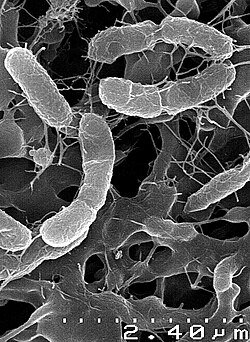
Organisms that obtain carbon from carbon dioxide through this process are known as chemoautotrophs. These organisms are phylogenetically diverse, spanning several groups including the sulfur-oxidizing Gammaproteobacteria, Campylobacterota, Aquificota, methanogenic archaea, and neutrophilic iron-oxidizing bacteria.
Key Facts
- Energy Source: Uses inorganic compounds (e.g., H2S, H2) instead of sunlight.
- Carbon Source: Primarily utilizes carbon dioxide (CO2) or methane (CH4).
- Habitat: Common in dark oceanic regions, hydrothermal vents, cold seeps, and cave waters.
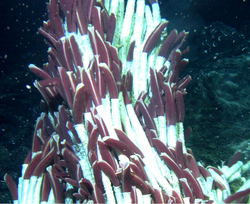
- Symbiosis: Often forms mutualistic relationships with heterotrophic animals, such as giant tube worms.
- Astrobiology: Hypothesized as a potential mechanism for life on Mars and Europa.
Mechanisms of Energy Production
In the deep ocean, microorganisms employ different strategies for chemosynthesis depending on the available chemical resources. In rare environments where hydrogen molecules (H2) are present, the reaction between CO2 and H2 can produce methane (CH4), releasing enough energy to drive the production of biomass.
In most other oceanic environments, energy is derived from the oxidation of substances like ammonia or hydrogen sulfide. This process can occur regardless of whether oxygen is present. A prime example is found in giant tube worms (Riftia pachyptila), which lack a traditional gut. Instead, they possess a specialized organ called a trophosome containing symbiotic bacteria that fix carbon dioxide using hydrogen sulfide as an energy source to produce amino acids and sugars.
The Chemical Process of Sulfide Oxidation
The chemical reaction for hydrogen sulfide chemosynthesis is represented as follows:
18 H2S + 6CO2 + 3 O2 → C6H12O6 (carbohydrate) + 12 H2O + 18 S
Unlike photosynthesis, which releases oxygen gas, this process produces solid sulfur globules. In chemoautotrophic bacteria, such as purple sulfur bacteria, these yellow sulfur globules are often visible within the cytoplasm.
The History of Discovery
The scientific understanding of chemosynthesis evolved over a century. In 1890, Sergei Winogradsky proposed the concept of "anorgoxydant," suggesting that certain microbes could survive solely on inorganic matter. By 1897, Wilhelm Pfeffer coined the term "chemosynthesis" to describe the oxidation of inorganic substances associated with autotrophic carbon dioxide assimilation—a process now referred to as chemolithoautotrophy.
The term was later expanded to include chemoorganoautotrophs (organisms using organic energy substrates to assimilate CO2), making chemosynthesis a synonym for chemoautotrophy. In the 1940s, André Lwoff introduced the broader term "chemotrophy" to describe energy production via the oxidation of any electron donor, whether organic or inorganic.
Chemosynthesis in the Deep Ocean
Winogradsky's theories were empirically confirmed in 1977 when the submersible Alvin discovered hydrothermal vents at the Galapagos Rift. Around this time, researcher Colleen Cavanaugh proposed and later confirmed that tube worms survived by hosting sulfide-oxidizing bacteria, a discovery that brought chemosynthesis to the forefront of biological science.
Beyond hydrothermal vents, chemosynthetic life is found in methane clathrates, cold seeps, whale falls, and isolated cave waters. In 2013, researchers discovered bacteria living within the basalt of the oceanic crust. These bacteria survive on hydrogen produced by the chemical reduction of olivine by seawater, combining it with carbon dioxide to synthesize methane.
| Feature | Photosynthesis | Chemosynthesis |
|---|---|---|
| Energy Source | Sunlight | Inorganic chemical oxidation |
| Carbon Source | Carbon Dioxide (CO2) | CO2 or Methane (CH4) |
| By-products | Oxygen (O2) | Sulfur, Water, etc. |
| Primary Environment | Sunlit surfaces/waters | Deep ocean, crust, caves |
Modern Research and Future Implications
Chemosynthesis remains a vital area of study for understanding biogeochemical cycles, particularly the role of nitrifying bacteria in oxidizing ammonia into nitric acid. Because these bacteria can convert inorganic substances into organic matter, they offer potential for accumulating resources for human use.
Furthermore, the study of thermophilic sulfate-reducing bacteria, such as Thermodesulfovibrio yellowstonii, provides insights into early Earth metabolism. It is hypothesized that anaerobic chemosynthesis may have been the first metabolism to evolve on Earth and could potentially support life on other planetary bodies, such as Mars or Jupiter's moon Europa.
Frequently Asked Questions
How does chemosynthesis differ from photosynthesis?
The primary difference is the energy source: photosynthesis uses light energy from the sun, whereas chemosynthesis uses chemical energy derived from the oxidation of inorganic molecules.
Where can chemosynthetic organisms be found?
They are commonly found in environments without sunlight, such as hydrothermal vents, cold seeps, the oceanic crust, whale falls, and deep cave systems.
What is the role of the trophosome in tube worms?
The trophosome is a specialized organ that replaces the gut in giant tube worms; it houses symbiotic chemosynthetic bacteria that provide the worm with nutrients like sugars and amino acids.
Can chemosynthesis occur on other planets?
Scientists hypothesize that anaerobic chemosynthesis could support life in the subsurface environments of Mars and Europa, where sunlight cannot reach but chemical energy may be available.
What are some examples of inorganic compounds used in chemosynthesis?
Common inorganic energy sources include hydrogen sulfide (H2S), hydrogen gas (H2), ammonia, and ferrous ions.