Hermann Minkowski: The Architect of Four-Dimensional Spacetime
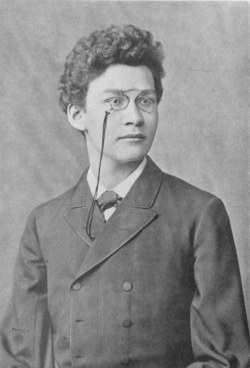
Hermann Minkowski was a visionary mathematician and physicist whose work fundamentally altered our perception of the universe. By bridging the gap between abstract geometry and physical reality, he provided the mathematical framework necessary to understand one of the most significant breakthroughs in science: Albert Einstein's special theory of relativity.
Minkowski is most celebrated for conceptualizing space and time not as separate entities, but as a single, unified four-dimensional continuum. This synthesis, now known as Minkowski spacetime, allowed scientists to visualize the complex interactions of relativity through geometric interpretations.
Key Facts
- Born: June 22, 1864, in Aleksotas, Kingdom of Poland (now Lithuania).
- Died: January 12, 1909, in Göttingen, German Empire, at age 44.
- Major Contribution: Developed the geometry of numbers and the concept of four-dimensional spacetime.
- Academic Legacy: Taught at the University of Bonn, University of Königsberg, ETH Zurich, and the University of Göttingen.
- Honors: Awarded the Mathematics Prize of the French Academy of Sciences at age 18.
Early Life and Academic Ascent
Born to Lewin Boruch Minkowski, a merchant, and Rachel Taubmann, Hermann grew up in a Jewish family. To escape persecution in the Russian Empire, his family relocated to Königsberg in 1872. It was here that Minkowski began his academic journey at the Albertina University of Königsberg, where he earned his doctorate in 1885 under Ferdinand von Lindemann.
Minkowski's brilliance was evident early on. In 1883, while still a student, he shared the Mathematics Prize of the French Academy of Sciences for his work on the theory of quadratic forms. The decision was controversial at the time, as the 18-year-old Minkowski was relatively unknown compared to the eminent English mathematician Henry Smith, with whom he shared the award.
Contributions to Mathematics
Beyond his work in physics, Minkowski was a pioneer in several mathematical fields. He created the geometry of numbers, a method that uses geometric properties of n-dimensional space to solve complex problems in number theory. His research into the arithmetic of quadratic forms led him to explore convex geometry, resulting in the creation of the Minkowski cover of a curve and the "Minkowski Sausage."
His academic career took him through several prestigious institutions. He taught at the University of Bonn, returned to Königsberg, and later served at ETH Zurich, where he was one of Albert Einstein's teachers. He eventually settled at the University of Göttingen in 1902, where he formed a deep and lasting friendship with the mathematician David Hilbert.
Summary of Scientific Contributions
| Field | Key Contribution | Description |
|---|---|---|
| Physics | Minkowski Spacetime | Unified 3D space and 1D time into a 4D manifold. |
| Number Theory | Geometry of Numbers | Used geometric methods to solve number theory problems. |
| Mathematics | Minkowski Question-Mark Function | A singular continuous function used in number theory. |
| Physics | Stress–Energy Tensor | Work on the electromagnetic stress–energy tensor. |
| Mathematics | Diophantine Approximations | Research into the approximation of real numbers by rationals. |
The Revolution of Space and Time
In 1908, Minkowski realized that the special theory of relativity (1905) could be more effectively understood if space and time were treated as a single four-dimensional space. In this model, the Lorentz geometry—which describes how measurements of space and time change for observers moving at different speeds—could be represented using an invariant interval.
During a famous address titled "Space and Time" in September 1908, Minkowski declared that space and time as independent concepts were "doomed to fade away into mere shadows," asserting that only a union of the two preserved an independent reality. This geometric approach provided the essential foundation for the subsequent development of general relativity.
Final Years and Legacy
Minkowski's life was cut short when he died of appendicitis on January 12, 1909, at the age of 44. His death was a profound loss to the scientific community. David Hilbert remembered him as his most dependable friend, describing their shared passion for science as a "garden full of flowers."
Today, Minkowski's legacy lives on not only in the textbooks of physics and mathematics but also in the stars; the main-belt asteroid 12493 Minkowski is named in his honor. His influence persists through the use of M-matrices and the continued application of Minkowski space in modern cosmology.
Frequently Asked Questions
What is Minkowski spacetime?
Minkowski spacetime is a four-dimensional mathematical model that fuses the three dimensions of space with the one dimension of time into a single continuum. This framework is used to geometrically represent the special theory of relativity.
What is the geometry of numbers?
The geometry of numbers is a field created by Minkowski that applies geometric methods to solve problems in number theory, specifically by looking at the properties of lattices and convex bodies in n-dimensional space.
How did Minkowski influence Albert Einstein?
While Einstein developed the special theory of relativity, Minkowski provided the four-dimensional geometric language that made the theory easier to understand and mathematically manipulate, effectively formalizing the relationship between space and time.
Why was Minkowski's 1883 prize controversial?
The controversy arose because Minkowski was only 18 years old and virtually unknown when he was awarded the Mathematics Prize of the French Academy of Sciences, sharing it with the much more famous (and posthumous) Henry Smith.
What are Diophantine approximations?
Diophantine approximations involve the study of how well real numbers can be approximated by rational numbers, a subject in which Minkowski made significant contributions through his published research.