Herbert von Karajan: The Dominant Maestro of 20th Century Classical Music
Herbert von Karajan stands as one of the most influential and controversial figures in the history of European classical music. A conductor of unmatched precision and ambition, he shaped the sound of the 20th century through his long tenure with the world's leading orchestras and an unprecedented embrace of recording technology. From his roots in Salzburg to his global dominance in the mid-to-late 1900s, Karajan's career was a study in musical perfectionism and power.
Known for his rigorous control and polished interpretations, Karajan became a household name not only in concert halls but through the millions of records he produced. By some estimates, he sold 200 million records, ensuring his artistic vision reached a global audience far beyond the elite circles of opera houses.
Key Facts
- Principal Conductor: Led the Berlin Philharmonic for 34 years.
- Recording Legacy: Sold an estimated 200 million records during his lifetime.
- Beethoven Specialist: Recorded four complete cycles of Beethoven's symphonies.
- Birthplace: Born in Salzburg, Austria-Hungary, on April 5, 1908.
- Death: Passed away on July 16, 1989, in Anif, Austria.
Early Life and Musical Foundations
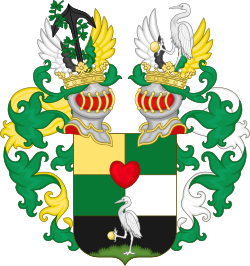
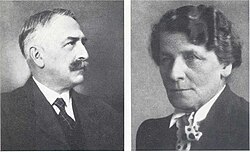
Born Heribert Adolf Ernst Ritter von Karajan, he was the second son of Ernst von Karajan, a distinguished surgeon, and Marta von Karajan (née Kosmač). The family had Greek-Macedonian origins, with the original surname being Karajannis, before migrating through Germany to Austria several generations prior.
Karajan's musical journey began early with the piano. Between 1916 and 1926, he studied at the Mozarteum in Salzburg, where he developed his skills in piano, harmony, composition, and chamber music under the guidance of Franz Ledwinka, Franz Sauer, and Bernhard Paumgartner.
Rise to Prominence and the Nazi Era
Karajan made his professional conducting debut in Salzburg on January 22, 1929. This performance launched his career, leading to his first appointment as assistant Kapellmeister (music director) at the Stadttheater in Ulm. Following the departure of his senior colleague in 1933, Karajan was promoted to first Kapellmeister.
The 1930s marked a period of rapid ascent and political complexity. In 1933, he debuted at the Salzburg Festival, and by 1934, he was leading the Vienna Philharmonic. During this time, he joined the Nazi Party, a membership that would later spark significant controversy. He continued to conduct at the Theater Aachen and the Berlin State Opera throughout World War II.
Post-War Transition and Denazification
As the war neared its end, Karajan fled Germany for Milan with the help of Victor de Sabata. In March 1946, he faced a denazification tribunal in Vienna, which cleared him of illegal activities during the Nazi period. While his party membership remained a point of historical debate, former West German Chancellor Helmut Schmidt later characterized him as a Mitläufer (a follower or opportunist) rather than a committed Nazi.
The Golden Era: Berlin and Beyond
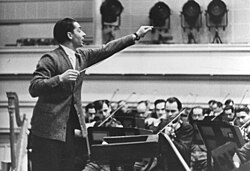
The postwar years saw Karajan ascend to the pinnacle of the musical world. His most defining role was as the principal conductor of the Berlin Philharmonic, a position he held for over three decades. During this era, he became a dominant force in European music, known for his exacting standards and his ability to mold an orchestra into a seamless, powerful instrument.
Karajan was a pioneer in the use of recording technology, utilizing the studio to achieve a level of sonic perfection that was impossible in live performance. His relationship with the works of Ludwig van Beethoven was particularly profound; he recorded the complete Beethoven symphony cycles four separate times—once with the Philharmonia Orchestra and three times with the Berlin Philharmonic.


Personal Life and Final Years
Karajan's personal life was marked by three marriages. His first wife, Elmy Holgeroef, was an operetta singer; his second, Anna Maria Sauest, was the daughter of a yarn manufacturer; and his third, Eliette Mouret, remained his partner until his death. He had two daughters, including Isabel.
In his final years, Karajan struggled with heart and back problems. He resigned from the Berlin Philharmonic on April 24, 1989. His final performance was a rendition of Bruckner's 7th Symphony with the Vienna Philharmonic. He died of a heart attack on July 16, 1989, at his home in Anif.
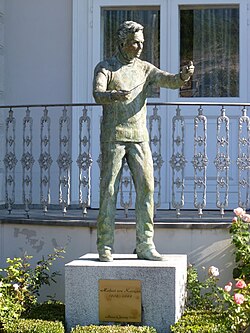
Summary of Career and Legacy
| Category | Details |
|---|---|
| Primary Role | Conductor |
| Key Orchestra | Berlin Philharmonic (Principal Conductor for 34 years) |
| Major Honors | Austrian Medal for Science and Art; Grand Merit Cross of Germany |
| Notable Works | Beethoven Symphony Cycles (4 versions) |
| Estimated Estate | Over 500 million German marks (~256 million euros) |
Frequently Asked Questions
Was Herbert von Karajan a member of the Nazi Party?
Yes, Karajan was a member of the Nazi Party from 1933 to 1945. However, a denazification tribunal in 1946 cleared him of illegal activities, and some historians and political figures have described him as a follower rather than an ideologue.
Which orchestra is most closely associated with Karajan?
The Berlin Philharmonic is most closely associated with him, as he served as its principal conductor for 34 years, shaping its sound and international reputation.
How many Beethoven symphony cycles did he record?
Karajan recorded four complete cycles: one with the Philharmonia Orchestra (1951–1955) and three with the Berlin Philharmonic (1961–62, 1975–76, and 1982–84).
What was Karajan's approach to recording technology?
Karajan was a perfectionist who embraced recording technology to refine and control every aspect of the musical output, contributing to his massive commercial success and the sale of an estimated 200 million records.
Where is Herbert von Karajan buried?
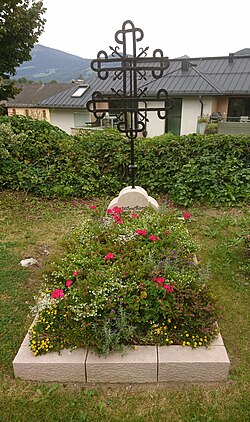
He is buried in the churchyard of the Anif parish church, located just outside of Salzburg, Austria.