Heraldic Law: The Legal Framework of Coats of Arms
The law of heraldic arms, often referred to as the laws of heraldry, is the specialized legal system governing the possession, display, and use of armorial bearings. While originally designed for the practical purpose of identifying knights on the battlefield, heraldry evolved into a sophisticated system of social and institutional identification. Today, these symbols are utilized by sovereign nations, public institutions, private organizations, and individuals.
The administration of these laws is typically handled by specialized officials known as pursuivants, heralds, or kings of arms. While the foundational principles were early established by Bartolus de Saxoferrato, the modern application of heraldic law varies significantly across different jurisdictions, ranging from strict criminal statutes to simple copyright protections.
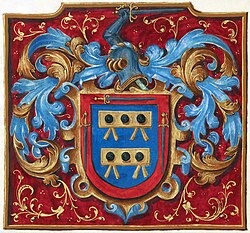
Key Facts
- Purpose: Originally for battlefield identification; now used for institutional and personal identity.
- Acquisition: Arms are generally acquired through ancestral right (male descent) or a formal grant from a state or crown authority.
- Legal Status: Varies by country; it is a criminal matter in Scotland and Denmark, but largely a matter of custom or civil law in England and France.
- Enforcement: Specialized courts, such as the Court of the Lord Lyon in Scotland, still actively enforce heraldic law.
The Right to Bear Arms
In the traditional framework of the law of arms, emblems of honor—including coats of arms, flags, standards, and armorial badges—are borne via two primary methods: ancestral right or due authority. Ancestral right is defined as descent in the male line from an ancestor who lawfully bore arms. Due authority refers to a grant issued by the State or the Crown.
Regional Variations in Acquisition
The requirements for legal authenticity differ by region:
- Ireland: A formal grant is not a legal prerequisite. Symbols from the Gaelic tradition (pre-1552) and arms without an official basis may still be used.
- Spain: The King holds the exclusive power to grant new arms, while Cronistas de Armas (Chroniclers of Arms) certify existing arms. As of 2008, this authority is limited to the provinces of Castile and León.
- Denmark: Since the end of the absolutist era in 1849, the state does not claim an exclusive right to grant arms; individuals may acquire them through assumption (self-adoption).
National Legal Frameworks
United Kingdom: England, Wales, and Scotland
In England and Wales, jurisdiction over arms is vested in the Court of Chivalry. Unlike common law, the Law of Arms here is based on the customs and usages of this specific court. While the court was revived in 1954, it is rarely convened, making the practical enforcement of unauthorized arms difficult.
Scotland maintains a much more rigorous system. The Lord Lyon King of Arms presides over the Lyon Court, which is fully integrated into the Scottish legal system. Under a 1592 act of the Scottish parliament, the unauthorized use of arms is a criminal offense. Furthermore, some legal commentators view a Scottish grant of arms as a fief annoblissant, effectively granting the bearer the status of nobility within the Noblesse of Scotland.
Continental Europe
Across Europe, the legal nature of arms often shifts from personal property to family identity:
- France: Case law since 1949 treats coats of arms as marks of recognition attached to the family name rather than titles of nobility. They enjoy the same legal protection as the family name itself.
- Germany: Arms are linked to the family name and passed through the male line. Since 1918, these are handled under Civil Law and are protected by courts similarly to name rights.
- Italy: Heraldry is primarily familial. Since the abolition of the Consulta Araldica in 1948, there has been no official state regulation of familial arms, and the Constitutional Court ruled in 1967 that heraldic matters are outside the scope of the law.
- Denmark: While private arms are not officially regulated, the unlawful use of official insignia is a criminal offense under the Danish Criminal Code.
North America
In the United States and other non-monarchical republics, there are generally no laws prohibiting the assumption of arms. Legal protection is typically sought through pictorial copyright or trademark law. In Canada, heraldic matters are regulated by the Canadian Heraldic Authority.
Summary of Heraldic Law by Jurisdiction
| Jurisdiction | Primary Authority | Legal Nature | Enforcement Level |
|---|---|---|---|
| Scotland | Lord Lyon King of Arms | Criminal/Statutory | High |
| England | Court of Chivalry | Customary | Low (Rarely convened) |
| France | Judicial Courts | Civil (Family Name) | Moderate |
| Germany | Civil Law Courts | Civil (Name Right) | Moderate |
| USA | None (Private) | Copyright/Trademark | Low (Private Law) |
Frequently Asked Questions
What is the difference between a grant of arms and the assumption of arms?
A grant of arms is a formal authorization issued by a recognized heraldic authority, such as the Crown or a State office. Assumption of arms occurs when an individual or family adopts a coat of arms on their own initiative without official authorization.
Is using a coat of arms without permission illegal?
It depends on the country. In Scotland, it can be a criminal offense. In England, while technically unlawful, it is rarely prosecuted due to the inactivity of the Court of Chivalry. In the US and many European republics, it is generally not illegal, though it may infringe on copyright or trademark laws.
Does owning a coat of arms make someone a noble?
In most jurisdictions, a coat of arms is an indication of nobility or status but does not automatically ennoble the bearer. However, in Scotland, some legal interpretations suggest that a grant of arms confers a specific noble status within the Scottish system.
How are coats of arms passed down through generations?
Traditionally, armorial bearings are passed via ancestral right, which typically follows the male line of descent from the original lawful bearer.
Who are the officials that manage heraldry?
The officials responsible for administering heraldic law are known as pursuivants, heralds, or kings of arms, depending on their rank and the specific national system.