Heraldic Crests: History, Evolution, and Usage
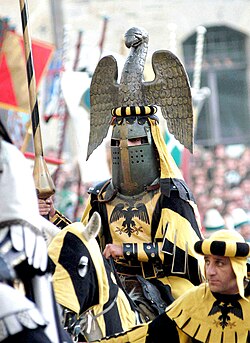
In the world of heraldry, a crest is a specific component of a heraldic display, consisting of the device borne on top of the helm (helmet). While often confused with the entire coat of arms, the crest is actually just one part of a larger heraldic achievement, which typically includes the shield, the helm, and the crest itself.
Originally, crests were physical, decorative sculptures worn by knights during tournaments and occasionally in battle. However, after the 16th century, they transitioned into purely pictorial representations—a period heraldists refer to as the era of "paper heraldry."
Key Facts
- Definition: A crest is the ornament placed atop the helmet in a heraldic achievement.
- The Torse: The crest usually sits upon a torse, a circlet of twisted cloth that hides the join between the crest and the helm.
- Origin: Derived from the Latin crista (tuft or plume), evolving from Roman and Viking helmet adornments.
- Evolution: Transitioned from functional metal fans to 3D sculptures, and finally to 2D illustrations.
- Usage: Historically reserved for those of "tournament rank" (knights and above), though now common in most personal arms.
The Origin and Evolution of the Crest
The concept of adorning helmets dates back to antiquity. Roman officers utilized fans of horsehair or feathers, while Viking helmets often featured animal heads or wings. In the 12th and 13th centuries, these evolved into heraldic metal fans worn by knights. These fans were primarily decorative but may have served a practical purpose by deflecting weapon blows, which likely explains their serrated edges.
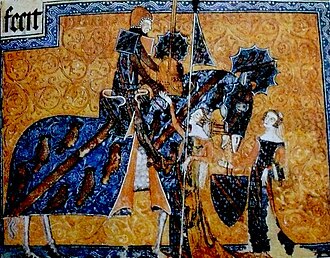
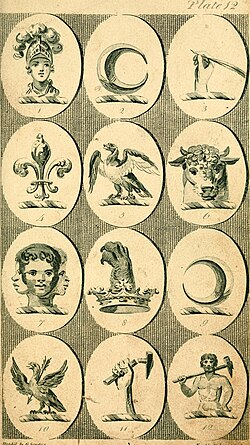
By the late 13th and early 14th centuries, these flat fans evolved into three-dimensional sculptures. Crafted from leather, cloth, or paper over wire or wood frameworks, these sculptures often took the form of animals, wings, horns, or human figures. Because of their weight and the risk of an opponent using them as a handle to pull a knight's head down, these 3D crests were generally reserved for tournaments rather than active combat.
From Physical to Pictorial
As the age of tournaments ended in the 16th century, physical crests disappeared, replaced by two-dimensional drawings. This shift allowed for "impossible" crests that could never have been worn on a real helmet. A notable example is the 1581 grant to Sir Francis Drake, which depicted a disembodied hand emerging from clouds to lead a ship around the globe.
Components and Technical Details
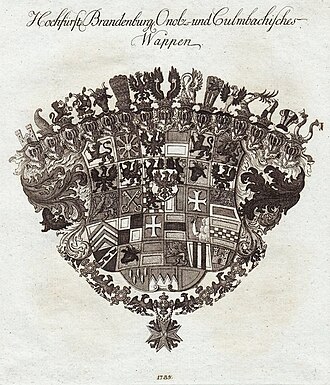
A standard heraldic achievement is structured with the shield at the base, the helm above it, and the crest atop the helm. The connection between the helm and the crest is typically covered by a torse (a wreath of twisted cloth) or, for high-ranking nobles, a coronet.
In some instances, crests are mounted on a chapeau (a furred cap), as seen in the royal crest of England. While the torse is standard in British heraldry since the 15th century, it is less common on the European continent, where the crest is often depicted as merging directly into the mantling (the drapery hanging from the helm).
Regional Differences and Modern Usage
The application of crests varies significantly between different heraldic traditions:
- Britain: Generally, no two families may use the same crest. Crests are personal to the armiger.
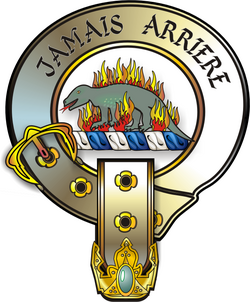
- Scotland: Crests are less ornamental and often shared by unrelated people. Members of a clan may use a crest badge—the chief's crest encircled by a strap and buckle—but the crest itself remains the personal property of the chief.
- Continental Europe: In countries like Germany, crests hold greater significance. High-ranking nobles may display multiple crests (up to seventeen), whereas multiple crests are rare in Britain.
The "Crest" Misnomer
Because armigers began detaching the crest and torse from the helm to use them as badges on stationery, carriage doors, or crockery, the term "crest" is now frequently and erroneously used to refer to the entire coat of arms or the shield alone.
Summary of Heraldic Crest Elements
| Element | Description | Purpose/Meaning |
|---|---|---|
| Helm | The helmet base | Indicates rank based on orientation (e.g., affronté for sovereigns). |
| Crest | The device on top of the helm | Personal identification and decoration. |
| Torse | Twisted cloth circlet | Hides the join between helm and crest. |
| Crest-Coronet | Simplified ducal coronet | Decorative element, not necessarily an indicator of rank. |
Physical Crests Today
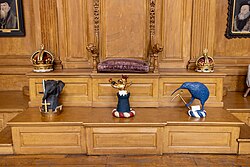
While rare, physical crests still exist in the chapels of Britain's orders of chivalry, including the Order of the Garter, the Order of the Thistle, and the Order of the Bath. In these chapels, carved lime wood helms and crests—painted and gilded by the royal household's official sculptor, Ian Brennan—are placed above the knights' stalls.
Frequently Asked Questions
Is a family crest the same as a coat of arms?
No. A coat of arms (or heraldic achievement) is the entire display, including the shield. The crest is specifically the ornament that sits on top of the helmet above the shield.
Who is allowed to use a crest?
Historically, crests were restricted to those of "tournament rank," such as knights. In modern times, most personal arms include crests, though they are generally not used by clergymen or women (except reigning queens), as these groups did not traditionally participate in tournaments.
What is a crest badge in Scottish heraldry?
A crest badge consists of a clan chief's crest surrounded by a strap and buckle featuring the chief's motto. While the crest itself is personal to the chief, the badge can be worn by clan members and retainers.
What is a torse in heraldry?
A torse is a circlet of twisted cloth, resembling a wreath, used to cover the point where the crest is attached to the helmet.
Can a person have more than one crest?
Yes, particularly in Continental European heraldry (such as in Germany), where some nobles may display many crests. In Britain, multiple crests are rare and usually acquired through marriage to an heiress or as a special grant (augmentation).