Heraldry: The Art and History of Armorial Bearings
Heraldry, also referred to as armoury, is the specialized discipline concerned with the design, display, study, and transmission of armorial bearings. At its most complete, a heraldic achievement consists of a coat of arms displayed on a shield, accompanied by a helmet and crest. These may be further enhanced by supporters, badges, banners, and mottoes. To ensure precision and consistency, these achievements are formally described using a technical language known as a blazon.
While humans have used symbols to identify groups and individuals since antiquity, the specific concept of regular, hereditary designs—the hallmark of true heraldry—did not emerge until the High Middle Ages. Contrary to popular belief, there is little evidence to support the claim that heraldry developed solely because face guards on helmets made commanders unrecognizable on the battlefield.
Despite the decline of physical armor in the 17th century, the pageantry and aesthetic appeal of heraldic designs ensured their survival. Often described as the "shorthand of history," heraldry continues to be used today by individuals, corporations, cities, and nations to symbolize their heritage and aspirations.
Key Facts
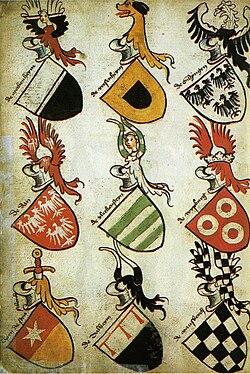
- Purpose: Originally used for identification, now used to symbolize heritage, achievements, and identity.
- Core Element: The shield is the central component of any heraldic achievement.
- Blazonry: The formal, written description of a coat of arms.
- Regulation: In England, the Kings of Arms conducted "visitations" to regulate the legal use of arms.
- Global Reach: While rooted in Europe, heraldic conventions have influenced emblems globally, from Japanese mon to Soviet state emblems.
The Origins of Modern Heraldry

In England, the shift toward heraldic symbolism became evident in the 12th century through the use of official seals. While seals from the 11th century show no such symbolism, those from 1135 to 1155 indicate the adoption of heraldic devices across England, France, Germany, Spain, and Italy. A prominent example is the seal of Philip I, Count of Flanders, from 1164.
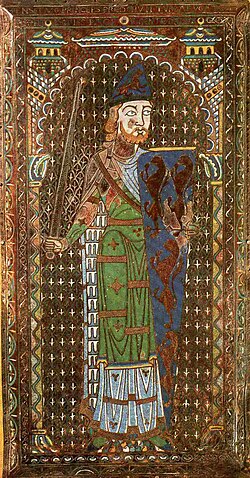
One of the earliest physical examples of modern armoury is found on the tomb of Geoffrey Plantagenet, Count of Anjou (d. 1151). An enamel piece created between 1155 and 1160 depicts him with a blue shield featuring six golden lions rampant, a blue helmet with a lion, and a cloak lined in vair (a type of heraldic fur).
The Rise of Heraldic Authority
Initially, individuals assumed arms without official oversight. However, by the mid-14th century, the principle that a specific coat of arms belonged to only one individual became widely accepted. This led to the creation of heraldic jurisprudence, with Bartolus de Saxoferrato writing De Insigniis et Armis around 1350.
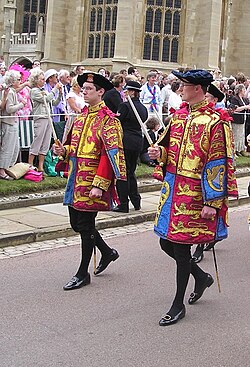
Legal disputes, such as the famous 1390 case of Scrope v Grosvenor, highlighted the need for regulation. In 1419, Henry V prohibited anyone who had not fought at the Battle of Agincourt from assuming arms unless they did so via inheritance or a royal grant. Later, under Henry VIII, the Kings of Arms conducted "visitations" (1530–1700) to record authorized arms and deface those used improperly.
Elements of a Heraldic Achievement
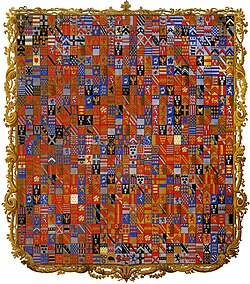
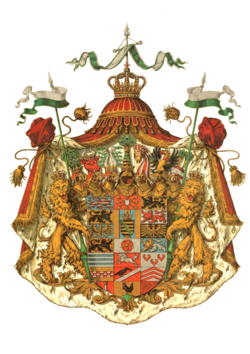
A full achievement is a complex assembly of various symbolic components. The shield is the primary focus, featuring tinctures (colors and metals) and charges (figures or symbols placed on the shield). Marshalling is the art of combining multiple coats of arms on a single shield to denote marriage or the acquisition of territory, which can range from simple impalement to complex quartering.

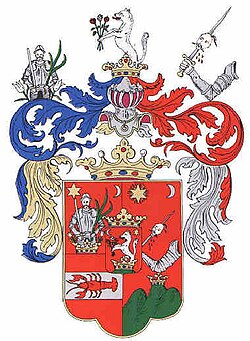
Beyond the shield, the crest sits atop the helmet, often repeating themes from the shield. Supporters are figures placed on either side of the shield, and mottoes provide a brief statement of the bearer's philosophy or lineage.
Regional Variations and Styles
- Germanic Heraldry: Often features shields with numerous crests. For example, the arms of Saxe-Altenburg feature seven crests, while some coins have displayed up to fifteen.
- Dutch Heraldry: Known for a simpler, more sober style. Unlike the UK, the Netherlands did not have a strict official system; any person, including merchant families (known as burgher arms), could adopt a coat of arms.
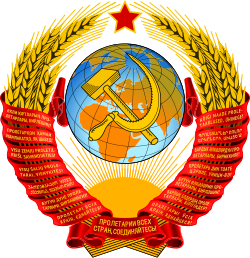
- Eastern European & Non-European: Various cultures developed quasi-heraldic systems, such as the Japanese mon or the Soviet Union's state emblems, which utilized a distinct socialist style from 1922 until the early 1990s.
Heraldic Summary Table
| Term | Definition | Example/Context |
|---|---|---|
| Blazon | The formal written description of arms | Used to recreate a shield exactly without an image |
| Tincture | The colors and metals used in heraldry | Or (gold), Argent (silver), Azure (blue) |
| Marshalling | Combining multiple coats of arms | Quartering or Impalement |
| Crest | The ornament above the helmet | Often mirrors the shield's primary charge |
| Supporters | Figures holding up the shield | Animals, humans, or flags |
Frequently Asked Questions
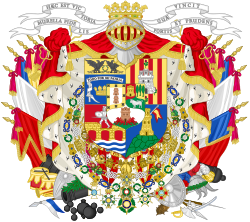
![The coat of arms of Mikkeli, a city of South Savo, Finland, has been drawn up in honour of the headquarters of the Finnish Army led by Marshal C. G. E. Mannerheim; this was stationed in the city during the Winter War, the Continuation War and the Lapland War. The coat of arms was originally used without the Mannerheim Cross, and is the third coat of arms affixed to the city.[89]](/images/27/98/2798652811f9426516ac020378265d9c8b84461573a170229fb1d73c4aa8ce9f.webp)
Did heraldry start because of helmets?
While it is often claimed that face guards made it hard to recognize commanders, necessitating symbolic shields, there is very little historical evidence to support this specific view.
What is a blazon?
A blazon is a formal, technical description of a coat of arms. It uses a specific vocabulary so that any heraldic artist can accurately recreate the arms based solely on the text.
Can anyone have a coat of arms?
This varies by tradition. In the Netherlands, Roman Dutch law historically allowed any person, including non-nobles, to adopt arms. In England, however, the use of arms was strictly regulated by the Kings of Arms.
What is marshalling in heraldry?
Marshalling is the practice of arranging several coats of arms on one shield to show the union of different families or the ownership of multiple estates, often through methods like quartering or impalement.
How did the Soviet Union's emblems differ from traditional heraldry?
The Soviet Union used a quasi-heraldic style of emblem starting in 1922. This style was adopted by many communist states after World War II, though many of these nations returned to traditional heraldic practices after 1991.