Fleur-de-lis: History, Symbolism, and Global Influence
The fleur-de-lis—a stylized lily or iris—is one of the most enduring and recognizable symbols in human history. While most famously associated with the French monarchy, this elegant motif has transcended national borders to become a global emblem of nobility, faith, and identity. From the royal courts of medieval Europe to the modern logos of sports teams and international organizations, the fleur-de-lis continues to carry deep cultural weight.
At its core, the symbol is a heraldic representation of a flower, though its exact botanical origin is often debated between the lily and the yellow iris (Iris pseudacorus).

Key Facts

- Origin: Closely linked to the French monarchy, specifically the House of Capet.
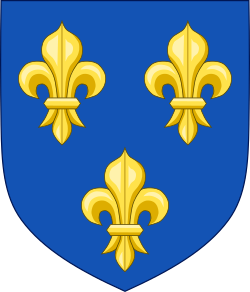
- Heraldry: Traditionally depicted as three golden lilies on a blue field (Azure, three fleurs-de-lis or).
- Global Reach: Used in the national symbols of Canada, Quebec, and historically in Bosnia and Herzegovina.
- Modern Use: Serves as the primary emblem for the World Organization of the Scout Movement.
- Regional Identity: A prominent symbol of French heritage in the United States, particularly in Louisiana and New Orleans.
The Royal Symbol of France
![Iris compared with fleur-de-lis ornament[7]](/images/63/e3/63e32572b74df24cbe50e4caa9e1cf3895e7603c4a7fa8835af48a45cc3fba7c.png)
The fleur-de-lis became the definitive symbol of the French crown during the Middle Ages. Louis VI (r. 1108–1137) and Louis VII (r. 1137–1180) of the House of Capet were among the first to utilize the emblem on royal sceptres. By 1179, Louis VII ordered the use of fleur-de-lis clothing for the coronation of his son, Philip.
The first clear evidence of its use in formal heraldry dates to 1211, appearing on a seal for the future Louis VIII. Over time, the design evolved from "France Ancient" (a field strewn with lilies) to "France Modern," which featured three distinct lilies.
English Claims to the French Throne
The symbol's prestige led to geopolitical disputes. In 1328, King Edward III of England claimed the French crown. To signal this claim, he quartered the French lilies with the Plantagenet arms. English and later British monarchs continued this practice until 1801, when George III formally abandoned the claim to the French throne.

Global Spread and National Identity

Beyond France, the fleur-de-lis has been adopted by various nations and regions to signify royal connections, religious devotion, or ethnic heritage.
North America
In Canada, the symbol is deeply embedded in national and provincial identity. It appears on the flag of Quebec (the fleurdelisé) and the flags of Montreal, Sherbrooke, and Trois-Rivières. The Canadian royal cypher and the arms of Canada also feature the symbol via St Edward's Crown.
In the United States, the fleur-de-lis is prevalent in cities settled by the French colonial empire, particularly along the Mississippi and Missouri rivers. It is an official symbol of the state of Louisiana and serves as a powerful emblem of recovery and pride in New Orleans following Hurricane Katrina.

Europe and the Balkans
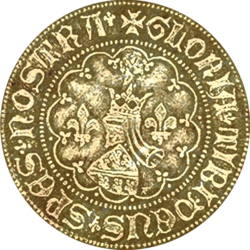
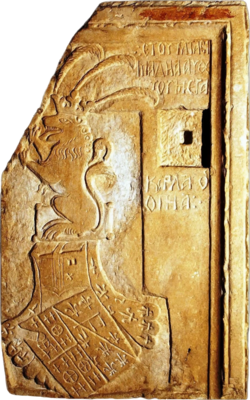
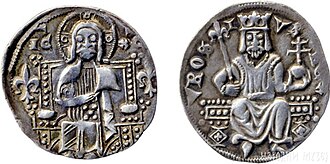
The symbol appears in various European contexts, including the coat of arms of Florence, Italy, and the insignia of the Order of Malta. In the Balkans, it was used by the medieval Kingdom of Serbia under King Stefan Milutin Nemanjić and by Bosnian King Tvrtko I. In 1992, it was revived as a national symbol for the Republic of Bosnia and Herzegovina.
The Fleur-de-lis in Other Contexts
Scouting and Education
Sir Robert Baden-Powell, the founder of Scouting, adopted the fleur-de-lis as a badge for scouts. He likened the symbol to a compass needle pointing North, representing the "right direction." The three points of the emblem symbolize the three parts of the Scout Promise: duty to God and country, helping others, and keeping the Scout Law.

Military and Sports
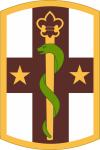
Various military units have used the symbol to commemorate service in France. The British Manchester Regiment adopted it as a cap badge, and several U.S. Army units, including the 176th Medical Brigade, incorporate it into their insignia. In sports, the symbol appears in the logo of the New Orleans Saints and has been used in the branding of the 2019 FIFA Women's World Cup.
Religion and Art
In religious art, the fleur-de-lis often represents purity. In the Huguenot cross, twelve petals of the fleur-de-lis are used to represent the twelve Apostles.

Historical Use as Punishment

Less gloriously, the fleur-de-lis was used as a mark of shame. In Metropolitan France and the French colonial empire (under the Code Noir), criminals—particularly thieves—were sometimes branded with the fleur-de-lis. This historical detail was popularized in Alexandre Dumas's novel The Three Musketeers through the character Milady de Winter.
Summary of Fleur-de-lis Usage

| Category | Primary Examples | Symbolic Meaning |
|---|---|---|
| Monarchy | House of Capet (France), British Royal Arms (pre-1801) | Royal authority and sovereignty |
| National/Regional | Quebec, Louisiana, Bosnia and Herzegovina | Cultural heritage and identity |
| Organizations | World Organization of the Scout Movement | Guidance, truth, and the Scout Promise |
| Military | Manchester Regiment, 176th Medical Brigade | Commemoration of service/victory |
| Religion | Huguenot Cross | The Twelve Apostles / Purity |
Frequently Asked Questions




What does the fleur-de-lis actually represent?
While it literally translates to "lily flower," it historically represents royal power, purity, and light. In the context of Scouting, it represents a compass needle pointing in the right direction.
Is the fleur-de-lis a lily or an iris?
Botanically, it is widely believed to be a stylized representation of the yellow iris (Iris pseudacorus), though it is commonly referred to as a lily.
Why is the fleur-de-lis so common in New Orleans?
It reflects the city's French colonial roots. Following Hurricane Katrina, it evolved into a symbol of grassroots support and resilience for the city's recovery.
How did the fleur-de-lis end up on British royal arms?
King Edward III of England claimed the French throne in 1328 and added the fleur-de-lis to his coat of arms to signify this claim, a practice that continued until 1801.
Was the fleur-de-lis ever used for something other than honor?
Yes, in historical France, the fleur-de-lis was used as a brand to mark criminals, such as thieves, as a permanent form of punishment.