College of Armsheraldrycoats of armsGarter King of ArmsEarl Marshal

College of Arms: The Guardians of British Heraldry

College of Arms: The Guardians of British Heraldry The College of Arms is the official royal corporation responsible for the recording, granting, and regulation of heraldry, coats of arms...

College of Arms: The Guardians of British Heraldry

The College of Arms is the official royal corporation responsible for the recording, granting, and regulation of heraldry, coats of arms, and pedigrees. Based in the City of London, this historic institution serves as the authority on armorial bearings for England, Wales, Northern Ireland, Australia, and New Zealand. As part of the Royal Household of the United Kingdom, it blends ancient tradition with legal administration to maintain the visual history of the Commonwealth.

Founded on March 2, 1484, by King Richard III, the College was later reincorporated on July 18, 1555, by Mary I of England and Philip II of Spain. Throughout its long history, the College has evolved from a medieval necessity of the battlefield to a sophisticated genealogical and ceremonial body.
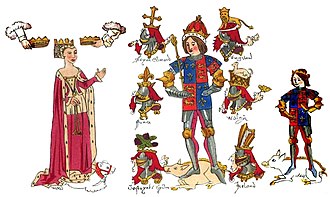
Depiction of King Richard III, the College of Arms' founder, his wife Queen Anne Neville, and their son Edward of Middleham, Prince of Wales, with their heraldic crests and badges from the Rous Roll. A roll of arms painted by John Rous around 1483–1485 for the Earl of Warwick.

Key Facts

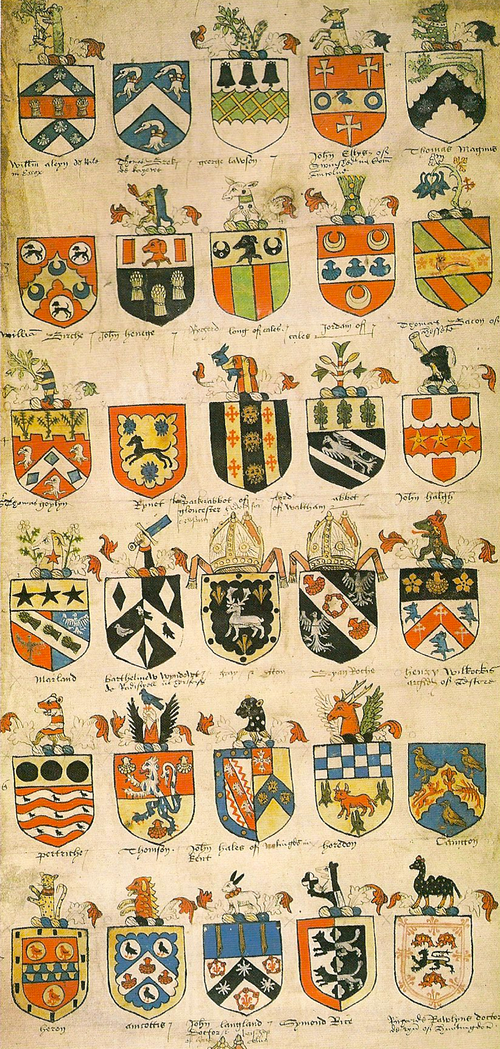
Roll of grants of arms during the Tudor period by Sir Thomas Wriothesley, c 1528
  • Founded: 1484 (incorporated); 1555 (reincorporated).
  • Jurisdiction: England, Wales, Northern Ireland, Australia, and New Zealand.
  • Headquarters: 130 Queen Victoria Street, London.
  • Primary Roles: Granting new coats of arms, proving descent of existing arms, and maintaining genealogical records.
  • Leadership: Headed by the Earl Marshal (the Duke of Norfolk) and the Garter Principal King of Arms.

A History of Resilience and Tradition
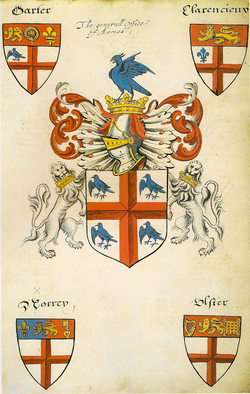
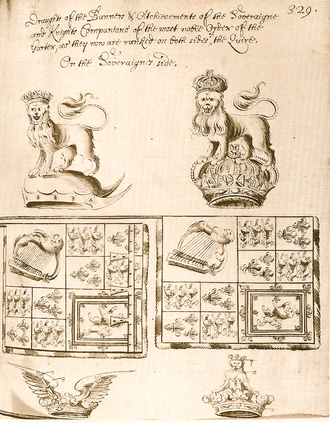
Armorial achievement of the College and its Kings of Arms, from Lant's Roll painted by Thomas Lant around 1595. It depicts the arms of Garter, Clarenceux, Norroy and Ulster. The additional charge in the first quarter of the first two shields, does not appear subsequently.

Foundation and Early Years

The College was established to provide a centralized authority for heraldic matters. In its early centuries, it navigated the turbulent waters of English politics, including the Civil War and the Glorious Revolution. While the institution faced periods of decline—such as between 1704 and 1706 when no grants of arms were issued—it remained a vital part of the state's ceremonial fabric.
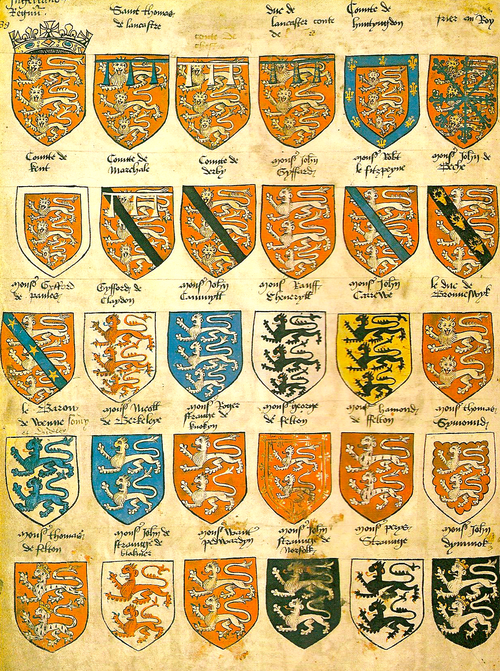
Prince Arthur's Book, an armorial of arms for Arthur, Prince of Wales, c. 1520, depicting the proliferation of lions in English heraldry

Survival and Modernization

The 20th century brought significant challenges. During World War II, the College's invaluable records were evacuated to Thornbury Castle in Gloucestershire to protect them from bombing. On May 10 and 11, 1941, the College building was nearly destroyed by a massive fire that leveled surrounding structures on Queen Victoria Street; the building was only saved by a timely change in wind direction.
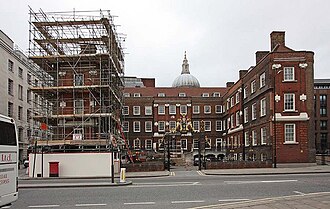
The College of Arms in March 2009, with scaffolding on the west wing of the building after the 2009 fire

Roles and Responsibilities

Heraldic banners and crests of King Charles II and his brother James, Duke of York (later James II), observed by Elias Ashmole, Windsor Herald. On a visitation to Berkshire in 1664–1665, the banners and crests were found at the choir stalls of St. George's Chapel, Windsor Castle.

Ceremonial Duties

The officers of the College play a prominent role in state ceremonies. They are frequently seen in procession during the State Opening of Parliament, royal coronations, and the annual service of the Order of the Garter at St George's Chapel, Windsor Castle.
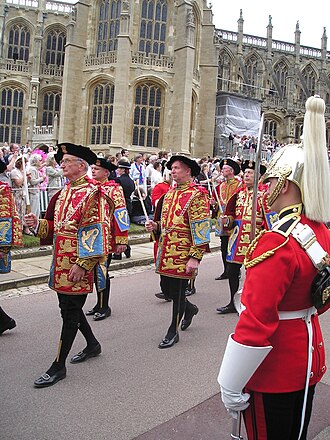
Heralds in procession to St George's Chapel, Windsor Castle (in the background), for the annual service of the Order of the Garter, 19 June 2006

Granting and Proving Arms

The College manages the legal right to bear arms. This includes granting new arms to individuals or corporations and proving the descent of arms for those claiming an ancestral right. They also handle changes of name and arms, ensuring that heraldic achievements accurately reflect the bearer's status and lineage.
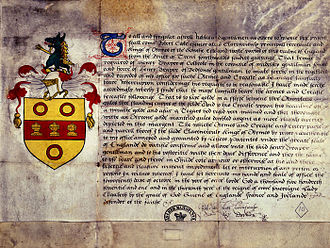
A grant of Arms for Henry Draper of Colnbrook in Berkshire, as issued by the Clarenceux King of Arms, Robert Cooke in 1571. The grant gave him the right to use the arms shown. The blazon reads: Golde, on a ffesse betwene thre Annulettes gules, thre standing cuppes of the felde.

Genealogical Records and the Roll of the Peerage

Beyond visual symbols, the College is a repository of genealogical data. In 2004, a Royal Warrant from Queen Elizabeth II established the Roll of the Peerage, a full record of all subjects who are Peers. While the Secretary of State for Constitutional Affairs (and later the Ministry of Justice) holds responsibility for the roll, the College of Arms publishes it in consultation with the Garter King of Arms and the Lord Lyon King of Arms.
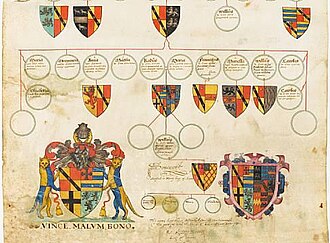
An example of an Elizabethan pedigree of the Euery (de Euro) family of Northumberland, barons of Warkworth and Clavering. Scrivened and illuminated by Somerset Herald, Robert Glover circa 1570 to 1588

The Hierarchy of the College

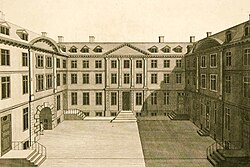
The College of Arms as it looked in the 18th century, engraved by Benjamin Cole, and published in William Maitland's The History and Survey of London From Its Evolution to the Present Time in 1756.

The Earl Marshal

The College is headed by the Earl Marshal, a hereditary position held by the Duke of Norfolk. The Earl Marshal oversees the College and the Court of Chivalry.

Officers of Arms

The College is staffed by three tiers of officers known as Officers in Ordinary:

  • Kings of Arms: The highest rank, including Garter Principal King of Arms, Clarenceux King of Arms, and Norroy and Ulster King of Arms.
  • Heralds: Mid-level officers such as York, Lancaster, Somerset, Chester, Richmond, and Windsor Heralds.
  • Pursuivants: Junior officers, including Rouge Croix, Rouge Dragon, Portcullis, and Bluemantle Pursuivants.
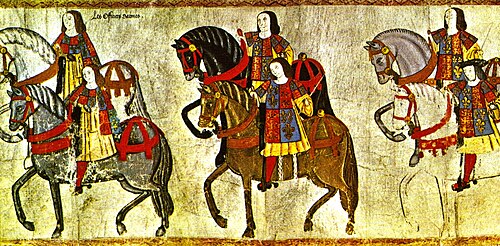
Officers of the College of Arms riding in procession to the Westminster Tournament, from a tourney roll, made during the reign of King Henry VIII in 1511. The pursuivants to the left are identified by their reversed tabards, while the figure in the right (with the black hat) is probably Garter King of Arms Sir Thomas Wriothesley.

Uniforms and Symbols

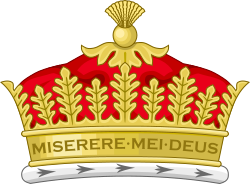
Officers are recognized by their tabards—distinctive ceremonial coats of silk satin bearing the Royal Arms. Kings of Arms also wear a specific crown during formal occasions.
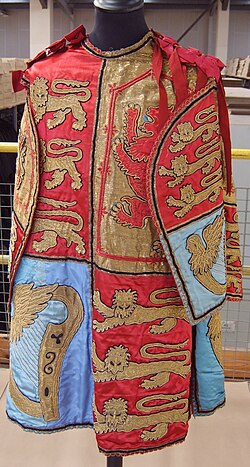
A modern-day tabard of a Herald of Arms, made of silk satin

Summary of Institutional Structure

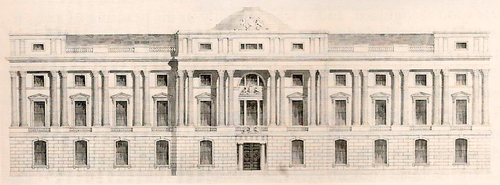
Design by Robert Abraham (1773–1850) for a new College of Arms in Trafalgar Square, at the heart of Regency London in the 1820s; the plan was not executed due to a lack of funds.
Category Details
Legal Status Royal Corporation
Hereditary Head Earl Marshal (Duke of Norfolk)
Principal Officer Garter Principal King of Arms
Jurisdictions England, Wales, Northern Ireland, Australia, New Zealand
Official Church St Benet Paul's Wharf (since 1555)

Frequently Asked Questions
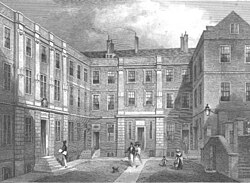
Herald's College, Bennet's Hill. Drawn by Thomas H. Shepherd, engraved by W. Wallis. Jones & Co. Temple of the Muses, Finsbury Square, London, 17 April 1830
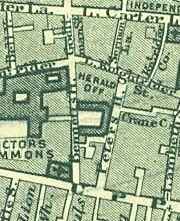
1862 map showing layout of the College (labelled Herald Off.). Carter Lane and Upper Thames Street can be seen running parallel to the north and south of the College, respectively. St Benet's, Paul's Wharf, the official church of the College since 1555, can be seen to the south west.
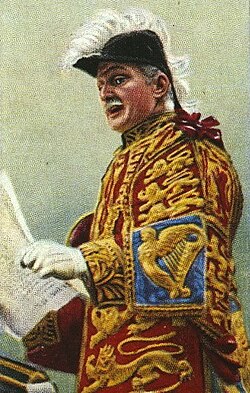
Sir Algar Howard, KCB, KCVO, MC, TD, was appointed Norroy King of Arms in 1931. In 1943 he became the first Norroy and Ulster King of Arms, when the two titles were merged. He served in this office until 1944 when he was promoted to Garter King of Arms; he retired in 1950.
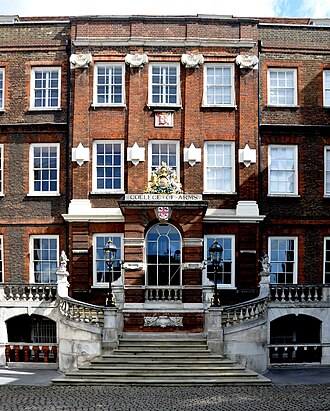
Main entrance to the College of Arms, 2011
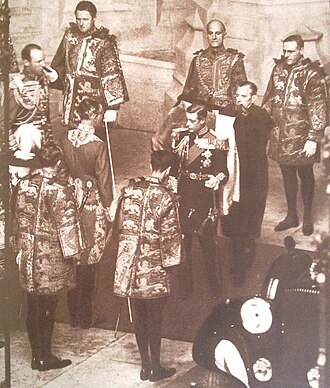
King Edward VIII surrounded by heralds of the College of Arms prior to his only State Opening of Parliament on 3 November 1936
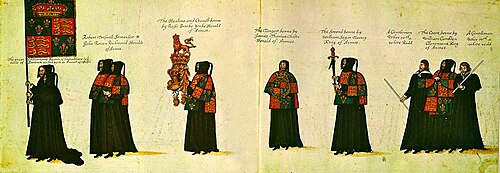
The heraldic funeral procession of Queen Elizabeth I of England in 1603, depicting some the heralds of the College of Arms, each carrying a piece of the Sovereign's armour
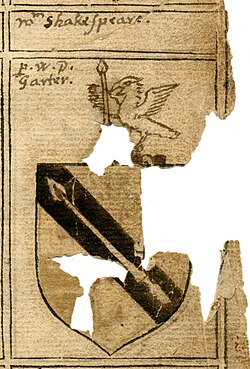
1602 drawing of the Shakespeare coat of arms, granted in 1596
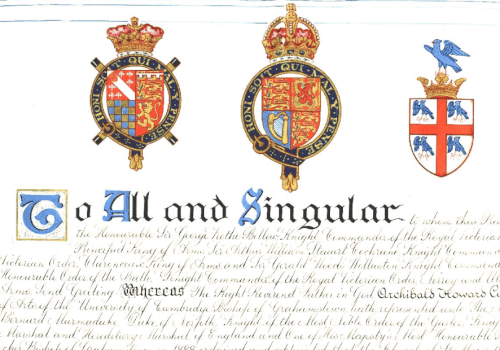
A section of a modern grant of arms for the Rt. Rev Archibald Howard Cullen the 6th Bishop of Grahamstown in South Africa. The grant was issued by the Garter King of Arms, Sir George Rothe Bellew in the 1950s.
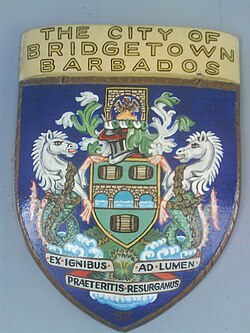
The coat of arms of city of Bridgetown in the capital and largest city of Barbados. The arms were granted to the city on 20 September 1960 by the College of Arms.
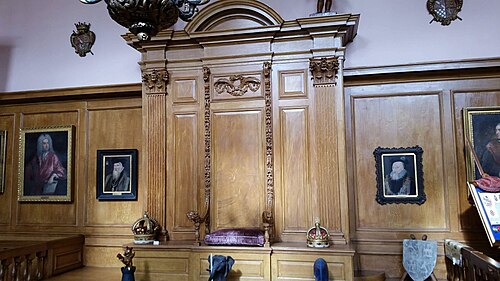
Courtroom of the Earl Marshal, Court of Chivalry, College of Arms, London
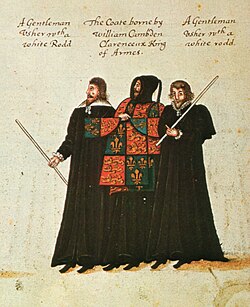
William Camden as Clarenceux King of Arms in the funeral procession of Elizabeth I in 1603. Camden is holding a "coate" possibly a royal tabard or surcoat bearing the Royal Arms of England.
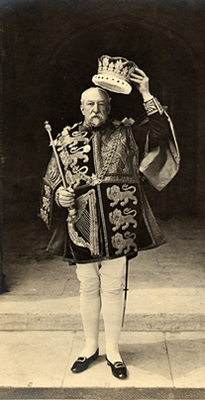
Sir William Henry Weldon, the Norroy King of Arms from 1894 until 1911, wearing the tabard and donning the crown of the King of Arms at the 1902 coronation of King Edward VII
Heraldic representation of a King of Arms's crown

What is the difference between a King of Arms and a Pursuivant?

Kings of Arms are the senior-most officers with the authority to grant arms. Heralds are mid-ranking officers, and Pursuivants are the junior officers of the College.

Does the College of Arms operate in Scotland?

No. Heraldry in Scotland is the jurisdiction of the Court of the Lord Lyon. The two institutions exist side by side in their respective realms.

What is a tabard?

A tabard is the official ceremonial uniform worn by heralds, typically made of silk satin and embroidered with the Royal Arms of England.

How does the College handle international heraldry?

The College has jurisdiction over heraldry in several Commonwealth realms, including Australia and New Zealand, and may grant arms to entities in these regions, such as the city of Bridgetown in Barbados.

What is the Roll of the Peerage?

Established by Royal Warrant in 2004, it is a comprehensive record of all subjects who hold peerages, published by the College of Arms in consultation with the Ministry of Justice.

References

  1. The College originally occupied a property between St Paul's and Thames St, known as Derby Place, which burned in the Great Fire. The replacement building, known simply as the College of Arms or Herald's College, was built on the same property. When Queen Victoria St was built it crossed the south end of the College's property; the building was then remodelled to front onto the new street.
  2. "The history of the Royal heralds and the College of Arms". College of Arms. Archived from the original on 13 April 2009. Retrieved 27 January 2012.
  3. "Privy Council: Record of Charters Granted". Privy Council Office. Archived from the original on 14 October 2011. Retrieved 27 January 2012.
  4. "Contact Us". College of Arms. Archived from the original on 30 June 2019. Retrieved 6 December 2019.
  5. "How the College of Arms works". College of Arms. Archived from the original on 30 January 2012. Retrieved 27 January 2012.