Helipads: Types, Locations, and Operational Standards
A helipad is a designated landing area for helicopters, designed to provide a safe space for aircraft to touch down and take off. While they may seem like simple concrete or metal platforms, their placement and specifications are carefully planned based on the intended use, whether for emergency services, commercial transport, or industrial logistics.
Common Locations and Use Cases
Helipads are often integrated into larger aviation hubs, such as heliports or airports. These locations are advantageous because they provide essential support services, including fuel, air traffic control, and specialized maintenance facilities.
Due to constraints involving noise, wind, available space, and construction costs, most helipads are situated away from densely populated urban centers. However, there are notable exceptions in city environments:
- Skyscrapers: Some high-rise buildings feature rooftop pads to support air taxi services.
- Emergency Evacuation: Basic rooftop pads are sometimes installed on tall buildings specifically for evacuation during major fire outbreaks.
- Law Enforcement: Major police departments often utilize dedicated helipads at heliports as operational bases for their helicopter fleets.
Maritime and Industrial Helidecks
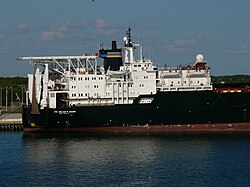
In maritime and offshore environments, helipads are critical for logistics and safety. Large ships and oil platforms typically feature an onboard landing area used for standard boarding and offboarding or for emergency evacuations. In these specific contexts, the landing area is commonly referred to as a helicopter deck, helideck, or helodeck.
Medical Aviation and Hospital Helipads
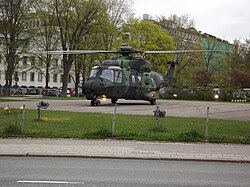
Helipads are essential components of modern healthcare infrastructure. They facilitate medical evacuation (the emergency movement of a patient) and air ambulance transfers. These facilities allow hospitals to move patients quickly to specialized trauma centers or receive patients from remote areas that lack the necessary emergency medical facilities.
In crowded urban settings, these hospital heliports are frequently located on the roof of the medical facility to maximize space and accessibility.
Technical Specifications and Identification
To ensure safety, rooftop helipads often display specific technical data. A large two-digit number is frequently painted on the pad to indicate the weight limit in thousands of pounds. In some cases, a second number is provided to denote the maximum rotor diameter (the total width of the spinning blades) in feet.
For tracking and communication, aviation authorities may issue location identifiers for helipads. These identifiers are managed by various global and national agencies, including:
- The Federal Aviation Administration (FAA) in the United States.
- Transport Canada in Canada.
- The International Civil Aviation Organization (ICAO).
- The International Air Transport Association (IATA).
It is common for a single helipad to have multiple identifiers from different sources, which may vary in name and format.
Key Facts
- Terminology: On ships and oil rigs, helipads are called helidecks or helodecks.
- Medical Use: Hospital pads are vital for air ambulance transfers and trauma center access.
- Markings: Rooftop numbers typically represent weight limits (thousands of lbs) and maximum rotor diameter (feet).
- Regulation: Identifiers are issued by bodies such as the FAA, ICAO, IATA, and Transport Canada.
- Placement: Most are located away from cities to avoid noise and cost issues, though air taxis and fire evacuations utilize rooftops.
| Type | Common Location | Primary Purpose |
|---|---|---|
| Heliport/Airport | Dedicated aviation hubs | Fueling, maintenance, and traffic control |
| Helideck | Ships and oil platforms | Boarding, offboarding, and emergency use |
| Hospital Helipad | Medical facility roofs/grounds | Medical evacuation and trauma transfers |
| Urban Rooftop | Skyscrapers/High-rises | Air taxis and fire evacuations |
Frequently Asked Questions
What is the difference between a helipad and a helideck?
While both are landing areas for helicopters, the term "helideck" (or helodeck) is specifically used for landing platforms located on ships or offshore oil platforms.
What do the numbers on a rooftop helipad mean?
The primary two-digit number usually indicates the maximum weight limit of the pad in thousands of pounds. A second number may indicate the maximum allowable rotor diameter in feet.
Why are most helipads located away from populated areas?
They are typically placed in remote areas to minimize the impact of noise, manage wind constraints, and reduce the high costs and space requirements associated with urban construction.
Who is responsible for issuing helipad location identifiers?
Identifiers may be issued by several authorities, including the FAA (USA), Transport Canada, the ICAO, and the IATA.
How do hospitals use helipads?
Hospitals use them to facilitate the rapid transfer of patients via air ambulance, allowing patients from remote areas or other facilities to reach specialized trauma centers quickly.