Runway Design and Operations: The Engineering of Aviation Landing Strips
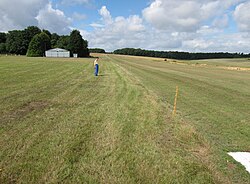
In the world of aviation, a runway is more than just a strip of pavement; it is a precision-engineered rectangular surface designed specifically for the takeoff and landing of aircraft. While often colloquially referred to as "tarmac," very few modern runways actually use tarmac. Instead, they are constructed from human-made materials like asphalt and concrete, or natural surfaces such as grass, gravel, ice, or sand. For seaplanes, these areas are designated as waterways.
The evolution of the runway reflects the growth of aircraft technology. In the early 20th century, aviation pioneers like Orville Wright noted the high cost of preparing flat ground for landing. By 1919, the U.S. Army Air Service suggested square landing fields with cross-shaped runways. However, as aircraft grew in size and tire pressures exceeded 70 psi after 1935, the old "all-over turf fields" became obsolete. By 1932, concrete runways had become the standard for major U.S. airports to ensure regularity and safety.
Key Facts
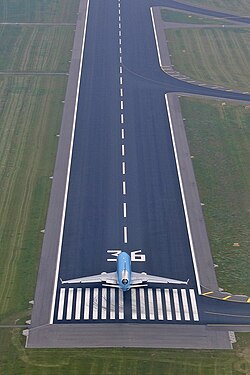
- Naming: Runways are numbered based on their magnetic azimuth (heading) rounded to the nearest 10 degrees.
- Materials: Surfaces range from high-strength concrete and asphalt to natural grass, sand, or ice.
- Dimensions: Lengths vary from small general aviation strips (245m) to massive lake bed runways like Edwards Air Force Base (11,917m).
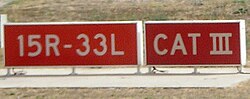
- Parallel Identification: When multiple runways face the same direction, they are labeled Left (L), Center (C), and Right (R).
- Lighting: Precision runways use a complex system of centerline and touchdown zone lights for low-visibility operations.
Runway Orientation and Naming
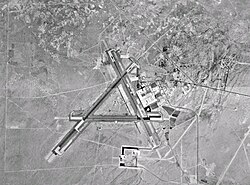
Early airport layouts, particularly in the UK during the 1920s and 30s, often featured a triangular pattern with three runways set at 60° angles. This design ensured that aircraft could always take off or land into the wind, regardless of the direction. Over time, the most heavily used strip would become the main runway, while others were abandoned or converted into taxiways.
The Numbering System
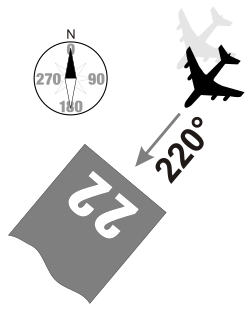
Runways are named using a number between 01 and 36, representing the magnetic azimuth (the compass heading) in deca-degrees. For example, Runway 09 points east (90°), Runway 18 points south (180°), Runway 27 points west (270°), and Runway 36 points north (360°). Because a runway can be used in both directions, it has two names that differ by 18 (180°). To ensure clarity in radio communication, pilots and controllers pronounce each digit individually (e.g., "runway one-five" instead of "fifteen").

Parallel Runways and Suffixes
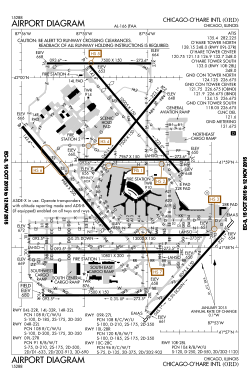
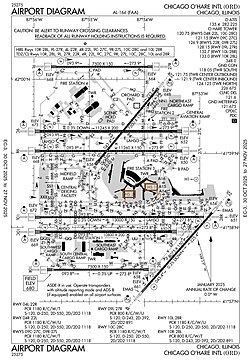
When an airport has multiple runways pointing in the same direction, suffixes are added: L (Left), C (Center), and R (Right). At massive hubs like Chicago O'Hare or Los Angeles, where four or more parallel runways exist, identifiers may be shifted by one digit to avoid confusion. For instance, four parallel runways might be labeled 6L, 6R, 7L, and 7R despite all sharing the same approximate heading.
Magnetic Drift and Renumbering
Because the Earth's magnetic poles shift, the magnetic heading of a runway can change over time. If a heading shifts enough to change the rounded deca-degree, the runway must be renumbered. This process is typically done at night to minimize disruption, involving the repainting of runway numbers and the updating of taxiway signs and aeronautical charts.
![Runway Identifying numbers being painted at Rocky Mountain Metropolitan Airport [KBJC]](/images/c1/f1/c1f110c3ff9da2e5531bd49916ee4e7d66de89b80080ba4da75c9ec235ad5bbb.jpg)
Technical Design and Dimensions

Runway size is dictated by the aircraft they are intended to serve. While small airports may have strips as narrow as 8 meters, international airports accommodate widebody jets with widths up to 80 meters. The Boeing 747, known for its long takeoff distance, has largely set the standard for international runway lengths.
Declared Distances
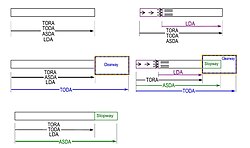
Aviation authorities use specific terms to define available space. A clearway is an area beyond the paved runway, under airport control and free of obstacles, which can be included in the takeoff distance available. This allows larger aircraft to take off at heavier weights.
Runway Classifications
- Non-precision instrument runways: Common at small-to-medium airports, these provide horizontal guidance via centerlines and vertical guidance via aiming points.
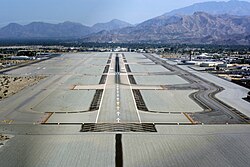
- Precision instrument runways: Found at large airports, these include blast pads, thresholds, and touchdown zone marks, providing full horizontal and vertical guidance for instrument approaches.
Surface Engineering and Safety
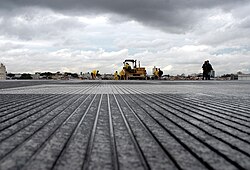
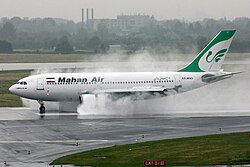
The surface of a runway must withstand immense pressure and environmental stress. Many runways feature grooving—small channels cut into the surface—to increase friction and reduce the risk of hydroplaning during rain.
Below the surface, drainage is critical. At airports like Hartsfield-Jackson Atlanta, subsurface underdrains consisting of perforated plastic tubes and crushed stone prevent moisture buildup, which could otherwise cause pavement cracking or joint failure.
Surface Type Reference
| Abbreviation | Surface Meaning |
|---|---|
| ASP | Asphalt |
| CON | Concrete |
| GRS | Grass or earth (not graded) |
| GVL | Gravel |
| ICE | Ice |
| WAT | Water |
| PSP | Marston Matting (pierced steel planking) |
Lighting and Visual Aids
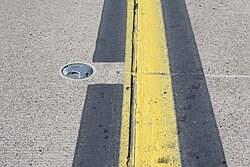
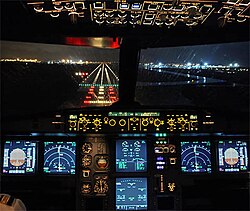
Lighting systems are essential for night operations and low-visibility landings. The Runway Centerline Lighting System (RCLS) uses embedded lights at 50-foot intervals. These are white for most of the runway, alternating red and white for the final 600 meters, and solid red for the last 300 meters.

Additionally, Touchdown Zone Lights (TDZL) consist of rows of white light bars on either side of the centerline for the first 900 meters of the runway, helping pilots identify the optimal landing point.

Frequently Asked Questions
Why are runways numbered the way they are?
Runways are numbered based on their magnetic heading. The number represents the compass direction in tens of degrees. For example, a runway facing 270° (West) is called Runway 27.
What happens if the magnetic north shifts?
If magnetic drift causes a runway's heading to change significantly, the runway must be renumbered. This involves repainting the numbers on the pavement and updating all aeronautical charts.
What is the difference between a precision and non-precision runway?
Precision runways provide both horizontal and vertical guidance for instrument landings and feature more extensive markings and lighting. Non-precision runways typically provide only horizontal guidance.
What is a runway overrun?
A runway overrun, or overshoot, is a safety incident where an aircraft is unable to stop before reaching the end of the runway surface.
How long does a typical international runway need to be?
While aircraft under 100,000 kg can usually use 1,800m strips, widebody jets typically require at least 2,400m at sea level, with some heavy international flights requiring 4,000m for takeoff.