Helen Rappaport: A Diverse Career in Acting, Writing, and Historical Research
Helen Rappaport is a multifaceted professional whose career has spanned the performing arts, academic editing, and acclaimed historical authorship. From her early days on the stage to becoming a bestselling historian and translator, Rappaport has demonstrated a remarkable ability to uncover forgotten narratives and bring them to a modern audience.
From the Stage to the Page
Rappaport began her professional journey in acting, starting with the Leeds University Theatre Group. Her early career included roles in several television series, such as Crown Court, Love Hurts, and The Bill. However, this period was not without struggle; she later described a twenty-year stretch as an out-of-work actress, characterized by financial hardship and professional frustration.
In the early 1990s, she transitioned into the world of publishing. She served as a copy editor for prestigious academic publishers, including Oxford University Press (OUP) and Blackwell. During this time, she also contributed to biographical and historical reference works for publishers such as Reader's Digest and Cassell.
Establishing a Literary Legacy
By 1998, Rappaport transitioned into full-time writing. Her early work with the US publisher ABC-CLIO established her as a serious researcher. In 2001, she published An Encyclopaedia of Women Social Reformers, featuring a foreword by Marian Wright Edelman. The work was highly regarded, earning an award from the American Library Association in 2002 as an Outstanding Reference Source and receiving praise from the Times Higher Education Supplement for being wide-ranging and informative.
Historical Discoveries and Major Works
Rappaport is perhaps best known for her ability to find and highlight overlooked historical figures. In 2003, she discovered and purchased an 1869 portrait of Mary Seacole, a Jamaican nurse, painted by Albert Charles Challen. This significant find now resides in the National Portrait Gallery.
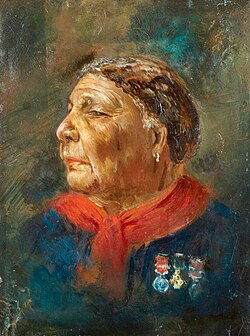
Seacole's story became a focal point of Rappaport's 2007 book, No Place for Ladies: The Untold Story of Women in the Crimean War. The book received positive reviews from The Guardian and The Times, and was described by Simon Sebag Montefiore as poignant, inspirational, and well-researched.
Exploring Russian History and the Romanovs
Rappaport has a deep expertise in Russian history, aided by her fluency in the Russian language. Her 2008 bestseller, Ekaterinburg: The Last Days of the Romanovs, received laudatory reviews across the US and UK. She continued this exploration of Russia with Conspirator: Lenin in Exile (2009), which sparked significant publicity due to her claim that Vladimir Lenin died from syphilis rather than a stroke. More recently, in 2016, she published Caught in the Revolution: Petrograd, Russia, 1917 – A World on the Edge, which was well-received in the UK.
Victorian Society and the Arts
Beyond Russia, Rappaport has examined the intricacies of Victorian life. Her 2010 book, Beautiful For Ever, explores the growth of the Victorian cosmetics industry through the story of Madame Rachel, a figure known for selling products that claimed to possess magical powers of preservation and restoration.
She also marked the 150th anniversary of the death of Prince Albert with the publication of Magnificent Obsession on November 3, 2011. Additionally, she co-authored Capturing the Light: The Birth of Photography with Roger Watson, detailing the contributions of Louis Daguerre and Henry Fox Talbot. The authors discussed this work at the Edinburgh Book Festival on August 14, 2013.
Translation and Collaboration
Leveraging her fluency in Russian, Rappaport is an accomplished translator of Russian plays. She has worked extensively with renowned figures such as Tom Stoppard, David Hare, Nicholas Wright, and David Lan, specifically focusing on the works of Anton Chekhov.
Key Facts
- Academic Recognition: Won a 2002 American Library Association award for An Encyclopaedia of Women Social Reformers.
- Artistic Contribution: Discovered an 1869 portrait of Mary Seacole now held by the National Portrait Gallery.
- Linguistic Skill: Fluent in Russian and a translator of Anton Chekhov's plays.
- Diverse Subjects: Author of works covering the Crimean War, the Romanovs, Vladimir Lenin, and the birth of photography.
| Year | Title | Primary Subject |
|---|---|---|
| 2001 | An Encyclopaedia of Women Social Reformers | Women's Social Reform |
| 2007 | No Place for Ladies | Women in the Crimean War |
| 2008 | Ekaterinburg: The Last Days of the Romanovs | The Romanov Family |
| 2009 | Conspirator: Lenin in Exile | Vladimir Lenin |
| 2010 | Beautiful For Ever | Victorian Cosmetics |
| 2011 | Magnificent Obsession | Death of Prince Albert |
| 2013 | Capturing the Light | Early Photography |
| 2016 | Caught in the Revolution | Petrograd 1917 |
Frequently Asked Questions
What was Helen Rappaport's career before she became a writer?
Before becoming a full-time writer in 1998, Rappaport was an actress appearing in series like The Bill and Crown Court, and later worked as a copy editor for academic publishers such as OUP and Blackwell.
Which historical figure did Rappaport help bring more attention to via a portrait?
Rappaport discovered and purchased an 1869 portrait of the Jamaican nurse Mary Seacole, which is now displayed in the National Portrait Gallery.
What controversial claim did Rappaport make regarding Vladimir Lenin?
In her 2009 book Conspirator: Lenin in Exile, Rappaport claimed that Lenin died from syphilis rather than a stroke.
What is Rappaport's connection to the Russian language?
She is a fluent Russian speaker and translates Russian plays, most notably those of Anton Chekhov, collaborating with playwrights and directors like Tom Stoppard and David Hare.
Which of her books focused on the Victorian era?
She wrote Beautiful For Ever about the Victorian cosmetics industry and Magnificent Obsession regarding the death of Prince Albert.