Royal Albert Hall: A Masterpiece of Victorian Architecture and Culture
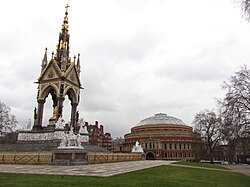
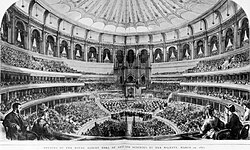
Standing as an iconic symbol of London's cultural landscape, the Royal Albert Hall is more than just a concert venue; it is a monument to the arts and sciences. Located in Kensington Gore, this architectural marvel has hosted some of the world's most influential performers, thinkers, and leaders since the 19th century.
The hall was conceived as a tribute to Prince Albert, the consort of Queen Victoria. It serves as a centerpiece of the "Albertopolis" area, reflecting the Victorian era's passion for education, industry, and the arts.
Key Facts
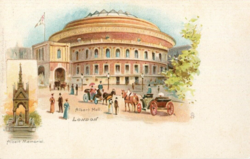
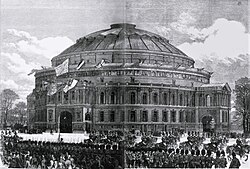
- Inauguration: Officially opened on 29 March 1871 by Queen Victoria and the Prince of Wales.
- Architectural Style: Italianate, designed by Captain Francis Fowke and Major-General Henry Y. D. Scott of the Royal Engineers.
- Capacity: Accommodates 5,272 guests.
- Dimensions: The structure reaches a height of 135 feet (41 meters).
- Cost: The original construction cost was £200,000.
Design and Architectural Grandeur
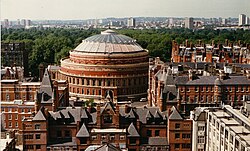
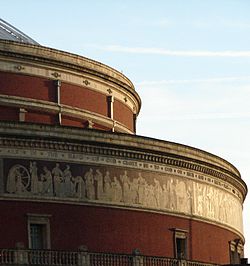
The Royal Albert Hall is renowned for its Italianate style, characterized by its grand proportions and ornate detailing. The construction, which began in 1867 and was completed in 1871, was managed by the Lucas Brothers under the guidance of the Royal Engineers.
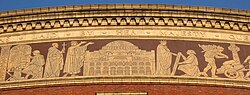
One of the most striking features of the building is its exterior frieze, which depicts "The Triumph of Arts and Sciences." This intricate artwork illustrates various disciplines, including agriculture, horticulture, astronomy, navigation, engineering, and the mechanical powers, as well as the contributions of philosophers and students.
Interior Innovations and Acoustics
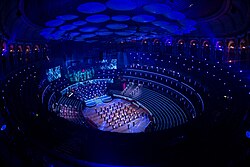
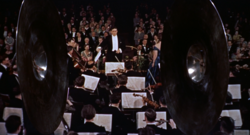
Inside, the hall has evolved to meet modern acoustic standards. To manage sound quality, acoustic diffusing discs—fluted aluminium panels—were installed, hanging from the roof to prevent echoes and improve clarity for the audience.
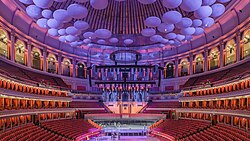
The venue also features a massive Grand Organ and a unique layout including the Royal Box and various tiers of seating, providing a diverse range of viewing angles for every performance.
A Legacy of World-Class Events
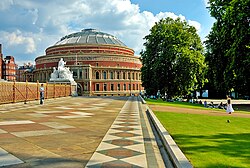
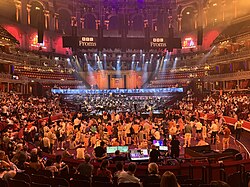
Since its opening, the Royal Albert Hall has been a hub for a vast array of events, from royal celebrations to cutting-edge musical performances. It is perhaps most famous for hosting the BBC Proms, a seasonal series of orchestral concerts.
The venue's versatility is evidenced by its diverse programming, which includes:
- Annual Traditions: The Festival of Remembrance, the Royal Choral Society, and the National Brass Band Championships of Great Britain.
- Arts and Entertainment: Cirque du Soleil, the English National Ballet, and Classic FM Live.
- Special Events: Graduation ceremonies, the Teenage Cancer Trust concerts, and high-profile film premieres such as the James Bond series (Skyfall, Spectre, and No Time To Die).
Notable Performers and Cultural Icons
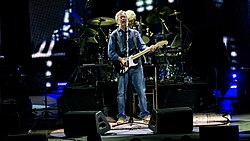
The hall has a storied history of legendary appearances. Petula Clark made her debut in 1943 and returned for a landmark 40th-anniversary concert in 1983. James Last holds the record as the most frequent non-British performer, appearing 90 times between 1973 and 2015. Other icons who have graced the stage include Eric Clapton, Adele, Bob Dylan, and David Bowie.
This rich history is immortalized in a specially commissioned mural by Sir Peter Blake. The work acts as a visual "who's who," featuring over 400 figures from 140 years of culture, ranging from Albert Einstein and Winston Churchill to Beyoncé and even the fictional Dalek.
![Appearing at the Royal Albert Hall (2014) is a specially commissioned mural by Sir Peter Blake. The work serves as a visual "who's who" of more than 140 years of culture at the venue, featuring over 400 notable figures who have appeared on its stage since 1871. Alongside musicians such as Bob Dylan, David Bowie, Jimi Hendrix, Adele, Beyoncé and Jay-Z, the mural also includes historical and cultural icons such as Albert Einstein, Sir Winston Churchill, Muhammad Ali, astronaut Buzz Aldrin, and even the fictional Dalek and wrestling legend Big Daddy.[41]](/images/53/26/5326223084a9a43930b5741296840700d2eb83f2cd88b740d23d6eb95c8d02b0.jpg)
Venue Summary
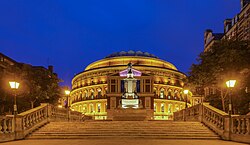
| Feature | Detail |
|---|---|
| Location | Kensington Gore, London, SW7 |
| Architects | Captain Francis Fowke & Major-General Henry Y. D. Scott |
| Seating Capacity | 5,272 |
| Major Renovations | 1996–2004 |
| Key Awards | Pollstar 'International Venue of the Year' (1994-1998, 2003) |
Frequently Asked Questions
Who opened the Royal Albert Hall and when?
The hall was officially opened on 29 March 1871 by Queen Victoria and her eldest son, the Prince of Wales, in honor of Prince Albert.
What is the significance of the acoustic discs on the ceiling?
The diffusing discs are designed to improve the hall's acoustics by breaking up sound waves, reducing echoes, and ensuring a clearer auditory experience for the audience.
Which non-British performer played the venue most frequently?
James Last is the most frequent non-British performer, having appeared at the Royal Albert Hall 90 times between 1973 and 2015.
What is the "Triumph of Arts and Sciences"?
It is the grand exterior frieze that wraps around the building, depicting various fields of human achievement, including the arts, sciences, and industrial trades.
Has the Royal Albert Hall been used for film awards?
Yes, the hall hosted the British Academy Film Awards (BAFTAs) starting in 2017, and it also hosts the Olivier Awards.