Coburg: A Bavarian Gem of Royal History and Architectural Splendor
Nestled at the foot of the Thuringian Highland on the banks of the river Itz, Coburg is a town where royal legacy and Bavarian charm converge. Located in the administrative region of Oberfranken (Upper Franconia), Coburg occupies a unique geographical position; while it is part of Bavaria, it is bordered on three sides by Thuringia. This positioning made it a significant point on the inner German border during the era of division between West and East Germany until the reunification in 1990.
From its origins as a strategic outpost to its role as a cradle for European royalty, Coburg offers a rich tapestry of history, art, and industry. Whether exploring its massive fortresses or walking through its neoclassical squares, visitors find a town that has balanced its aristocratic past with a modern, prosperous economy.
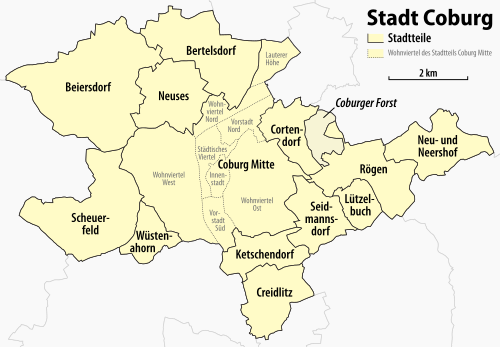
Key Facts
- State: Bavaria, Germany.
- Population: 41,064 (as of December 31, 2024).
- Economic Status: High GDP per inhabitant (€91,506 in 2017), ranking 5th among Bavarian urban and rural districts.
- Royal Ties: Former capital of the Duchy of Saxe-Coburg and Gotha, with strong links to the British, Belgian, Bulgarian, and Portuguese royal families.
- Major Landmark: Veste Coburg, one of Germany's largest castles.
A Journey Through History
Medieval Origins and the House of Wettin
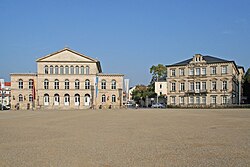
The name "Coburg" originally referred to a property centered on the hill where the Veste Coburg fortress now stands. The earliest remains of the site date back to the 12th or 13th century. By 1248, the castle was held by the House of Henneberg, and in 1353, it passed to the House of Wettin through the marriage of Frederick III and Catherine of Henneberg, serving as a Saxon outpost within Franconia.
The Era of Royal Influence
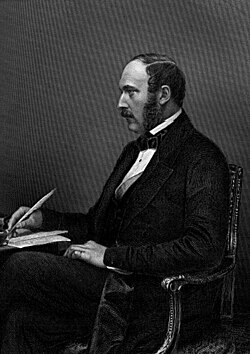
In 1596, Coburg became the capital of the Duchy of Saxe-Coburg under Duke John Casimir. Over the following centuries, the town served as a capital for various iterations of the duchy, including Saxe-Coburg-Saalfeld and Saxe-Coburg-Gotha. During the 19th century, the ducal family rose to international prominence through strategic marriages. This influence peaked with Leopold Frederick, who became the King of Belgium in 1831, and Prince Albert, born at Schloss Rosenau, who married Queen Victoria in 1840.
The 20th Century: Turmoil and Transition
The end of the monarchy came in November 1918 when the last duke, Charles Edward, abdicated during the German Revolution. In a 1919 referendum, 88% of the population voted to join the Free State of Bavaria, a merger finalized on July 1, 1920.
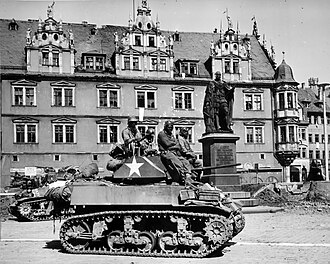
The town also experienced a dark chapter during the Nazi era. In 1929, Coburg was the first German town where the Nazi Party won an absolute majority in municipal elections, and in 1932, it was the first to name Adolf Hitler an honorary citizen. The local Jewish community, present since the 14th century, faced severe persecution. Their synagogue, converted from the Church of St. Nicholas, was closed in 1933. During Kristallnacht in 1938, Jewish homes and businesses were destroyed, and many residents were subsequently deported to Riga, Izbica, and Theresienstadt.
Architectural Highlights and Attractions
Veste Coburg
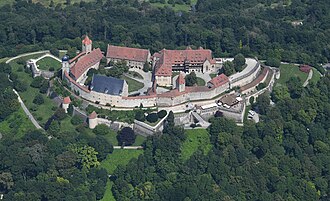
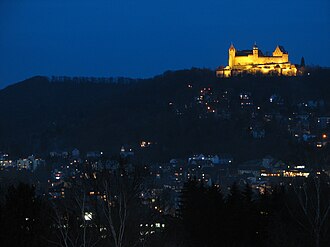
The Veste Coburg is one of Germany's most imposing castles, built starting in 1225. It features a triple line of walls and numerous towers. The fortress houses three museums: the Fürstenbau (ducal palace), which includes the room where Martin Luther lived in 1530; the Rüstkammer (armory), boasting Germany's largest collection of medieval weaponry with over 10,500 items; and the Kunstsammlungen, featuring a massive collection of copperplate engravings and coins.
Palaces and Civic Buildings
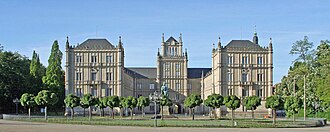
- Ehrenburg Palace: Originally a 13th-century convent, it was transformed into a palace and later rebuilt in Baroque style after a fire in 1690. Its Gothic Revival exterior was designed by Karl Friedrich Schinkel.
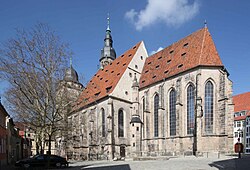
- Stadtkirche St. Moriz: A Gothic hall church known for the 13-meter-tall alabaster funerary monument of Duke Johann Casimir.
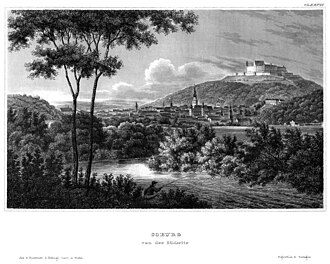
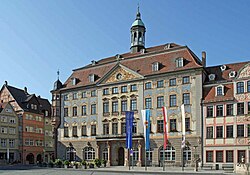
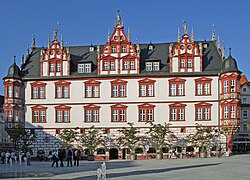
- Coburger Rathaus: The town hall, which has served as the seat of public administration since 1438, features a colorful 18th-century façade and a prominent balcony overlooking the market square.
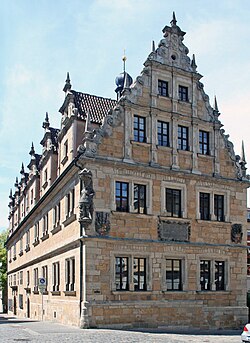
- Gymnasium Casimirianum: A stunning example of Renaissance architecture begun in 1601.
Economy and Infrastructure
Coburg maintains a robust economy with a high concentration of goods-producing employees. In 2013, 31% of the workforce was employed in manufacturing or construction, significantly higher than the national average of 24%. A notable industrial presence is Waldrich-Coburg, a manufacturer of large-scale CNC-milling machines.
Tourism also plays a vital role, with hotels recording over 61,000 overnight visitors in 2014. The town is well-connected via four train stations (including Coburg main station) and two airfields: Coburg Brandensteinsebene and Coburg Steinrücken.
| Category | Detail |
|---|---|
| Total Area | 48.30 km² |
| Elevation | 292 m |
| Population (2024) | 41,064 |
| GDP per Inhabitant (2017) | €91,506 |
| Postal Code | 96450 |
Climate
Coburg experiences a temperate climate with distinct seasonal variations. The warmest month is typically July, with a mean daily maximum of 24.4°C, while January is the coldest, averaging 2.6°C. The town receives an average annual precipitation of 681 mm, with the highest rainfall occurring in July.
Frequently Asked Questions
Why is Coburg known for its royal connections?
Coburg was the capital of the Duchy of Saxe-Coburg and Gotha. Through strategic marriages in the 19th century, the ducal family established ties with the royal houses of Great Britain, Belgium, Bulgaria, and Portugal, making the town a center of European political influence.
What is the significance of Veste Coburg?
Veste Coburg is one of the largest castles in Germany. It is historically significant for its massive fortifications and its museums, which house the country's largest collection of medieval armor and weaponry.
How did Coburg become part of Bavaria?
Following the abdication of the last duke in 1918, the Free State of Coburg held a referendum in November 1919. The citizens voted with an 88% majority to join Bavaria rather than Thuringia, and the merger was completed on July 1, 1920.
What is the economic profile of the town?
Coburg has a strong industrial base, particularly in manufacturing and construction, and boasts a GDP per inhabitant that is significantly higher than the Bavarian average.
Who is Prince Albert in relation to Coburg?
Prince Albert, the husband of Queen Victoria, was born at Schloss Rosenau near Coburg. His marriage helped elevate the House of Saxe-Coburg and Gotha to global prominence.